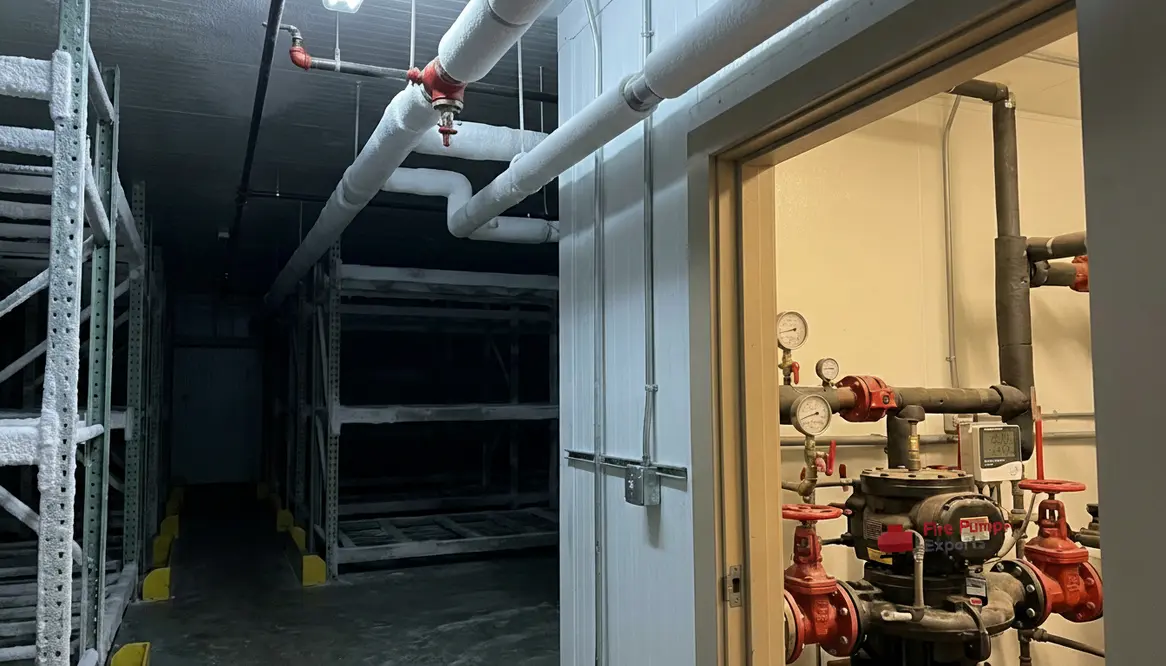
Industrial Freezer Warehouse Fire Protection Systems
Step inside a massive freezer warehouse and you will feel it right away. The air bites. The floor crunches. And every machine hums like it knows its job matters. I spend a lot of time thinking about what happens when something goes wrong in places like this. Because when fire meets subzero temperatures, ordinary safety systems simply will not cut it.
That is where industrial freezer warehouse fire protection water systems come into the picture. These systems quietly stand guard over millions of dollars in inventory and infrastructure. However, they do more than protect frozen pizzas and pharmaceutical stock. They protect people, operations, and the continuity of entire supply chains. So today I want to walk through how water supply systems actually support fire sprinklers in freezer warehouses. And trust me, it is more interesting than it sounds. Fire engineering in the cold can feel a little like building Iron Man’s suit. Except instead of saving the world, we are saving frozen chicken nuggets. Still important.
Why Freezer Warehouses Need a Different Fire Protection Approach
First, let us acknowledge the obvious problem. Water freezes. I know, shocking revelation. If you run standard sprinkler piping through a minus twenty degree environment, the system turns into a row of very expensive ice sculptures.
Because of that, engineers design water supply networks differently for cold storage facilities. Instead of relying on traditional wet pipe systems, many freezer warehouses depend on dry pipe or preaction sprinklers. These designs keep water out of exposed piping until activation.
However, that is only part of the story. The water supply itself must be powerful, reliable, and ready to move quickly once the system triggers. In large commercial facilities, fire pumps and dedicated water storage often drive that reliability. Otherwise, the sprinkler system may activate but struggle to deliver enough pressure and flow.
Additionally, fire loads in freezer warehouses can be surprisingly intense. Packaging materials, pallet racks, plastics, and insulation all burn with enthusiasm once ignition begins. Therefore the supporting water infrastructure must deliver serious fire suppression capacity.
In other words, designing protection here is less about sprinklers alone and more about the entire water supply ecosystem behind them.
How Do Water Supply Systems Work with Sprinklers in Freezer Warehouses?
When someone asks me this question, I usually start with a simple picture. Imagine the sprinkler heads as the final actors on stage. They get the applause. Yet behind the curtain stands a complex support crew that makes the performance possible.
The water supply network includes several critical elements working together.
- Dedicated fire pumps that maintain pressure during high demand
- Large onsite water storage tanks for reliable supply
- Heated valve rooms that protect control equipment
- Dry pipe or preaction systems that prevent freezing
- Underground mains designed for high flow rates
Once a sprinkler activates, the system releases air pressure inside the piping. Immediately afterward, water rushes in from the supply network. If a fire pump is present, it boosts pressure to maintain the required flow across multiple sprinkler heads.
Meanwhile, monitoring equipment signals alarms and supervisory systems. Facility managers receive alerts and emergency responders gain early warning.
All of this happens in seconds. The system does not panic. It simply does its job. Kind of like a veteran firefighter who has seen enough action to stay calm while everyone else runs around shouting.
Industrial Freezer Warehouse Fire Protection Water Systems That Actually Work
I have seen a lot of facilities over the years, and the ones that perform best share a few design principles. They treat water supply as the backbone of fire protection rather than an afterthought.
Planning for high demand
First, engineers plan for high demand scenarios. Rack storage can push sprinkler flow requirements to serious levels. Therefore the water supply must sustain large volumes without pressure collapse.
Putting reliability at the center
Second, reliability takes center stage. Industrial operations cannot afford downtime from fire system failures. Redundant pumps, backup power, and properly sized tanks create resilience.
Managing temperatures around the cold
Third, temperature management becomes critical. Valve rooms, pump houses, and supply connections often require heating to keep equipment operational. After all, a frozen fire pump is about as useful as a chocolate teapot.
Seeing problems early with monitoring
Finally, system monitoring plays a huge role. Modern commercial facilities integrate alarms, supervisory signals, and building management systems. Because early awareness allows staff to respond quickly and reduce loss.
When these elements come together, industrial freezer warehouse fire protection water systems become remarkably dependable. They quietly protect massive facilities that operate around the clock.
Key Components That Keep the Water Flowing
Let me break down the supporting water infrastructure in a way that mirrors how engineers often think about it. Consider the system in two coordinated halves.
Water Supply Infrastructure
- Fire pumps sized for high demand sprinkler systems
- Onsite water storage tanks for consistent supply
- Underground fire mains feeding multiple risers
- Backflow prevention assemblies protecting municipal systems
Freeze Protection Strategy
- Dry pipe sprinkler systems in cold zones
- Heated riser rooms and valve enclosures
- Air compressors maintaining pipe pressure
- Insulated piping where transitions occur
When both sides operate together, the system balances reliability with environmental protection. Water stays ready without freezing inside vulnerable piping.
And yes, a lot of engineering goes into making that balance work. Designing these systems often feels like solving a puzzle where every piece is cold, heavy, and worth several million dollars.
Industrial Freezer Warehouse Fire Protection Water Systems and Pump Reliability
Now let me talk about the unsung hero of many large facilities. The fire pump.
In high density storage warehouses, municipal water pressure alone rarely satisfies sprinkler demand. Fire pumps step in to provide the required flow and pressure.
These pumps activate automatically when system pressure drops. Once engaged, they move massive volumes of water through the fire protection network. That means sprinklers at the farthest corners of a building still receive adequate flow.
For major industrial properties, reliability standards become strict. Pump rooms often include redundant controllers, emergency power connections, and continuous monitoring. Regular testing ensures the equipment will perform when needed.
I like to think of the fire pump as the gym trainer of the sprinkler system. When things get intense, it pushes the whole operation to perform at its best.
And frankly, without it, many large freezer warehouses would struggle to meet modern fire protection requirements. If your facility depends on high demand pumping capacity, working with a specialist fire pump service such as a dedicated fire pump inspection and maintenance provider can keep the heart of the system ready for real emergencies.
What Facility Owners Often Overlook
Even well designed systems can run into trouble if long term maintenance falls behind. In freezer environments, small issues can escalate quickly.
Condensation, corrosion, and air leaks can affect dry pipe systems over time. Additionally, fire pumps require routine testing to verify pressure and flow performance.
Facility managers sometimes focus heavily on refrigeration equipment while overlooking fire protection infrastructure. I understand why. Refrigeration keeps the business running day to day.
However, the water supply supporting the sprinkler system protects the entire operation from catastrophic loss.
So routine inspection, professional testing, and proper system upgrades remain essential. Otherwise the system might wait decades for its moment only to discover it skipped leg day.
At the end of the day, industrial freezer warehouse fire protection water systems are less about shiny hardware and more about quiet reliability. The real measure of success is how uneventful they make real emergencies feel.
FAQ
Below are some common questions that come up when people start looking seriously at industrial freezer warehouse fire protection water systems and the infrastructure that keeps them running.
Conclusion
Protecting a freezer warehouse requires more than sprinklers hanging from the ceiling. It demands strong water supply infrastructure, reliable fire pumps, and careful engineering that respects both fire behavior and extreme cold. When designed and maintained properly, these systems safeguard massive commercial operations and the goods inside them.
If your operation depends on uninterrupted cold storage, making sure your industrial freezer warehouse fire protection water systems are treated as mission critical infrastructure is non-negotiable. With the right design, monitoring, and maintenance, the system quietly protects everything you built while your products sit on racks, frozen, boring, and exactly the way they should be.