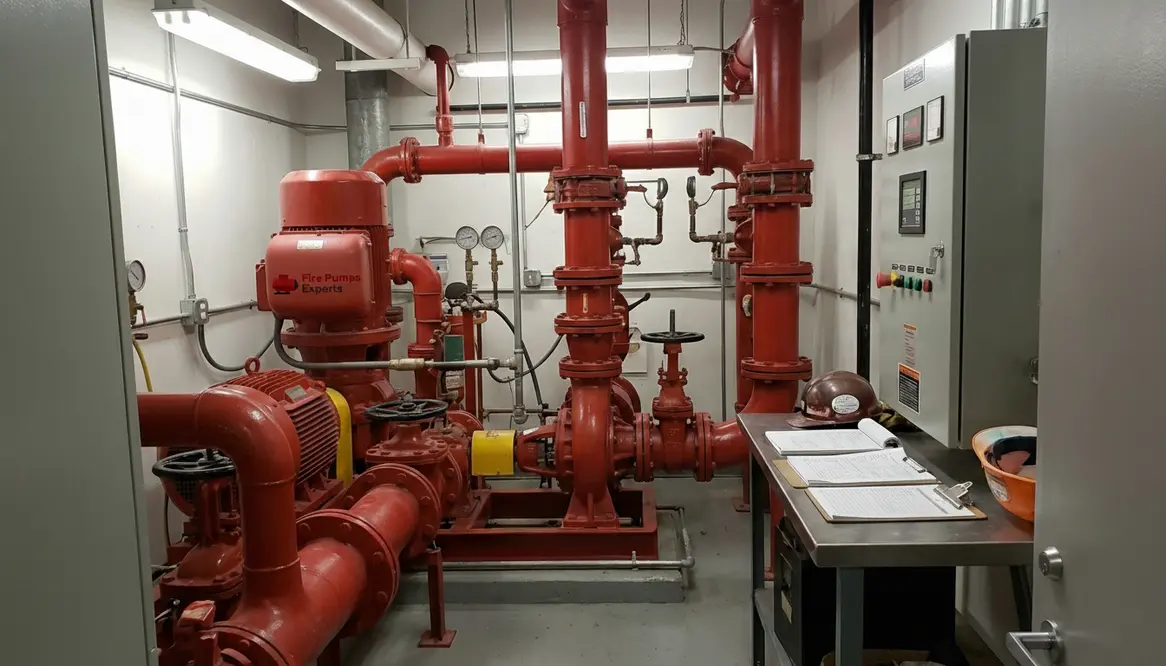
Fire Pump Permit and Acceptance Test Process New York
In New York City, the fire pump is the quiet workhorse behind every serious fire protection strategy. Paperwork, permits, and acceptance testing decide whether that pump ever gets a chance to do its job.
I have spent enough time around fire protection systems in New York City to know one simple truth. Nothing moves in this town without paperwork, approval, and a healthy respect for the rules. Especially when we talk about fire pumps in large commercial and industrial buildings. If you own, manage, or develop a major property, the fire pump permit and acceptance test process new york city requires careful planning, proper documentation, and good timing.
Now, I know what you might be thinking. Permits and testing sound about as exciting as watching paint dry in slow motion. However, when that pump is the beating heart of a building’s fire protection system, the stakes get real. So today I am going to walk you through what I submit, when I submit it, and how the entire process unfolds in NYC. And yes, along the way we will keep things clear, practical, and maybe even a little entertaining. Because if a calm narrator walked you through permit paperwork, I imagine it would still sound oddly comforting.
Why this process matters more than it looks
A fire pump does not just satisfy a code requirement. It makes or breaks whether sprinklers and standpipes can deliver enough water when the building is at its worst moment. The permit trail and the acceptance test prove that your installation is not just powerful on paper, but reliable in reality.
Understanding the Fire Pump Permit and Acceptance Test Process New York City
Before a fire pump ever moves water in a New York high rise, it moves through paperwork first. That paperwork travels through the Department of Buildings and the Fire Department of New York. Both agencies play a role, and both expect everything to be precise.
In my experience, the process begins long before installation. Engineers design the system based on building size, hazard level, and water supply conditions. Once the design reaches completion, the permit phase begins. This is the point where the fire pump permit and acceptance test process new york city quietly starts deciding when your building can actually open its doors.
What I typically prepare for review
- Fire protection drawings sealed by a licensed engineer
- Hydraulic calculations for the sprinkler system
- Fire pump specifications and manufacturer data sheets
- Equipment room layout and piping diagrams
- Electrical coordination plans
After that, the design package goes through plan examination with the Department of Buildings. Meanwhile, FDNY also reviews fire protection details for compliance with city code.
Now here is where timing matters. If documents arrive incomplete or inconsistent, the review stops cold. And trust me, city reviewers have the patience of a chess grandmaster. They will wait as long as needed until the paperwork is perfect.
What Documents Do I Submit Before Installation?
Let me answer the question I hear most from building owners and facility managers.
What exactly needs to be submitted before installing a fire pump in a large NYC building?
First, the permit filing must be approved. Without that approval, installing a fire pump is like trying to premiere a Broadway show without a theater. It simply does not happen.
Therefore I always focus on submitting a complete package that includes:
- Detailed fire pump shop drawings
- Controller specifications and wiring diagrams
- Pressure maintenance system details
- Suction and discharge piping layout
- Test header location and design
Additionally, equipment documentation matters more than many expect. FDNY reviewers want to see clear proof that the pump, controller, and related equipment meet national standards such as NFPA 20.
Because of that, I double check every product sheet. Even a missing page can slow approval. And in New York City, delays can feel longer than the extended edition of every Lord of the Rings movie combined.
Helpful resource beyond NYC
If you want a practical look at fire pump layouts and field expectations, Kord Fire Protection’s fire pump service pages, such as their Carlsbad Fire Protection Services overview at this Carlsbad fire protection services page, give a good sense of how real-world systems are supported and maintained.
Once approvals come through, installation can begin. But the story does not end there. In fact, the most important moment is still ahead in the fire pump permit and acceptance test process new york city, when theory has to match performance.
Coordinating Installation in Large Commercial and Industrial Buildings
Installing a fire pump inside a major facility is not just a plumbing task. Instead, it becomes a coordinated dance between mechanical contractors, electricians, engineers, and inspectors.
First, the pump room must meet strict requirements. Clearances around the equipment must allow inspection and maintenance. Ventilation must protect motors from overheating. Drainage must handle full flow testing.
However, the biggest coordination challenge usually involves power.
Fire pump controllers require reliable electrical service. Therefore I always work closely with electrical contractors to ensure dedicated feeders, transfer switches, and emergency power connections are correctly installed.
At this stage, I also begin preparing for the acceptance test. Because once the system is installed, the city will expect proof that everything performs exactly as designed.
Common Preparation Steps
- Verify pump rotation and alignment
- Confirm controller programming
- Flush underground supply piping
- Check pressure gauges and sensors
- Confirm test header discharge locations
Items Inspectors Will Look For
- Proper pump room signage
- Clear access to valves and controllers
- Correct pressure readings
- Reliable automatic start function
- Documentation of system flow performance
Preparing these items in advance saves enormous time during the official test. Otherwise inspectors arrive, something fails, and suddenly the entire team is rescheduling calendars like a group chat trying to plan dinner.
The Acceptance Test: Where the System Proves Itself
The acceptance test is the moment when theory meets reality. All the drawings, calculations, and permits now face one simple question. Does the system actually perform the way it should?
During the fire pump permit and acceptance test process new york city, FDNY representatives attend the official test. The pump must demonstrate performance at multiple flow levels.
Typical elements of the acceptance test
- Churn test at no flow conditions
- Rated capacity flow test
- 150 percent overload flow test
- Automatic start demonstration
- Controller alarm verification
Meanwhile water discharges through the test header outside the building. If you have never seen it before, it looks like a fire hydrant decided to join a pressure washing competition.
Inspectors compare actual pressure and flow readings against the manufacturer performance curve. If numbers match expectations, the system passes.
If they do not match, well… the pump room becomes a very quiet place for a few minutes.
Fortunately, careful preparation usually prevents surprises. I always conduct internal pre tests before the official inspection. That way any adjustments happen before the city arrives.
Timing the Fire Pump Permit and Acceptance Test Process New York City for Major Buildings
Timing plays a critical role in large commercial developments. Fire pump approvals, installation, and testing must align with broader construction milestones.
For example, a high rise cannot obtain final occupancy without functioning fire protection systems. Therefore the fire pump testing schedule often sits on the critical path of the entire project.
A practical timeline I usually follow
- Design approval before major mechanical installation
- Equipment procurement early in construction
- Installation coordination during core system buildout
- Pre testing before city inspection
- Final acceptance testing with FDNY
In addition, documentation after the test matters just as much. Contractors must submit final reports, pump performance curves, and inspection records.
These documents confirm that the building now has a compliant fire pump system ready to protect occupants and property.
And honestly, there is something satisfying about hearing that pump start automatically for the first time. It sounds like the building just cleared its throat and said, “Relax. I have this.”
Frequently Asked Questions
Here are some of the most common questions I hear about the fire pump permit and acceptance test process new york city, along with straightforward answers.
Conclusion
If you manage a large commercial or industrial building in New York City, navigating the fire pump permit and acceptance test process new york city requires planning, coordination, and the right expertise. My advice is simple. Start early, submit complete documentation, and prepare thoroughly for the acceptance test. When done right, the system protects lives and property for decades.
Treat the permits, drawings, and test reports as the building’s long-term safety record. They tell the story of how your fire pump was designed, installed, and proven. When that story is solid, everyone from inspectors to occupants can rest a little easier knowing that when the alarm sounds, the pump will be ready to work.
And if you need guidance along the way, the team at FirePumps.org stands ready to help keep your building safe and fully compliant.