Fire Pump Flow Test Phoenix: Setup, Safety, And Measuring Results Correctly
What it really takes to put your building’s most important emergency pump under pressure without turning the mechanical room into a scene from an action movie.
I have spent a fair amount of time around mechanical rooms in large commercial buildings across Phoenix. Some are quiet as libraries. Others sound like the opening scene of an action movie once the equipment starts up. And right at the center of that controlled chaos sits the fire pump. It is the unsung hero of fire protection. However, that hero only earns its cape when it proves it can perform. That is where a proper fire pump flow test phoenix setup safety measuring results process comes in.
In commercial towers, manufacturing plants, distribution centers, and massive mixed use properties, the flow test is not a formality. It is proof that the system can deliver water at the pressure firefighters depend on. Today I will walk you through how I approach testing in Phoenix facilities. We will cover preparation, safety practices, and how to measure results correctly without guesswork or crossed fingers.
Because when a fire pump test goes right, nobody notices. When it goes wrong, well… that is the kind of story that keeps risk managers awake at night.
Understanding The Purpose Behind A Fire Pump Flow Test In Phoenix
Before anyone touches a valve, I always step back and remember the real purpose of the test. A fire pump exists to move water with enough force to protect a large building when demand spikes during a fire event. Over time, wear, corrosion, valve issues, and controller problems can change how that pump behaves.
Therefore, the flow test confirms three essential performance points.
- The pump can reach churn pressure with no flow
- The pump can deliver rated flow at rated pressure
- The pump can push up to one hundred fifty percent of rated flow without collapsing pressure
In Phoenix commercial properties, these numbers matter even more because systems often serve high rise structures, huge warehouse footprints, or data centers packed with expensive equipment. Consequently, the testing process must show exactly how the pump performs under realistic demand.
When I conduct a fire pump flow test phoenix setup safety measuring results evaluation, I treat it like a diagnostic check for the building’s most important emergency machine. Think of it as a stress test for the heart of the fire protection system. Except instead of a treadmill, we use hoses, gauges, and a lot of water.
Why The Phrase “Setup, Safety, And Measuring Results” Actually Matters
That little phrase – fire pump flow test phoenix setup safety measuring results – sums up the real workflow. First, you set the test up correctly so the pump has a fair chance to perform. Then you protect people and property while it runs. Finally, you measure what happened in a way that is accurate enough to be trusted months later during audits, insurance reviews, or actual fire events.
Preparing The Test Setup In Large Phoenix Facilities
Good testing begins long before the pump starts. In fact, preparation is where most mistakes either appear or disappear.
Reviewing The Design, Nameplate, And Water Supply
First, I review the building plans and the pump nameplate. Rated flow, rated pressure, driver type, and suction supply all shape how the test should run. Additionally, I confirm that the discharge test header and hose valves are in good condition. A rusted valve on a test header is like a stunt double who forgot the choreography. Something is about to go sideways.
Staging Gauges, Hoses, And Flow Equipment
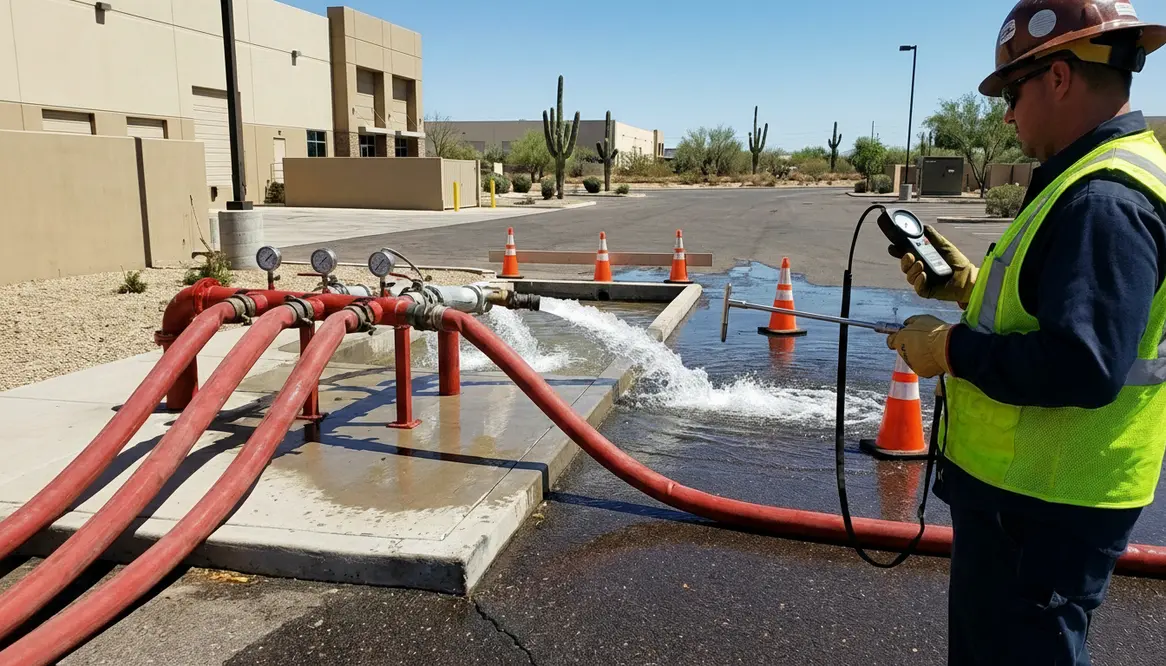
Next comes equipment staging. Accurate gauges matter. Flow measurement devices must be calibrated. In larger commercial campuses around Phoenix, we often use multiple hose lines connected to the test header. Each line contributes to the total discharge needed to reach the target flow points.
Meanwhile, coordination with building operations is essential. The facility team needs to know when water will discharge. Some properties route test water into large drainage systems or retention areas. Others may direct it to designated industrial drains. Either way, planning prevents a surprise river in the parking lot.
Confirming Controllers, Monitoring, And Communication
Finally, I verify the controller operation and confirm that all monitoring points are ready. Because once the test begins, the goal is simple. Gather accurate data quickly and safely.
Safety Practices That Protect People And Property
A flow test moves serious water volume. In a large industrial facility, that discharge can look like a fire hose scene from a disaster movie. Therefore, safety is never optional.
Core Safety Habits During A Phoenix Fire Pump Flow Test
- First, I establish a clear testing zone around the discharge area. High pressure streams can whip hoses if connections fail. So the area stays restricted to trained personnel.
- Second, communication stays constant. The person operating the pump controller, the technician at the gauges, and the team monitoring the hoses must stay in sync. Radios help, but clear hand signals work too, because the roar of water can drown out conversation quickly.
- Third, we watch system pressure carefully during each flow stage. Sudden pressure drops can signal supply problems, suction restrictions, or mechanical issues inside the pump itself. Catching those signs early prevents damage.
- Finally, electrical and mechanical hazards inside the pump room demand attention. Motors, diesel engines, rotating shafts, and controllers all operate simultaneously during testing. Respecting that environment is not just smart. It is survival level common sense.
When handled correctly, a fire pump flow test phoenix setup safety measuring results process runs smoothly and predictably. When rushed or poorly planned, it becomes a stress test for everyone involved.
How I Measure And Interpret The Results
This is where the science shows up.
Data I Record
- Suction pressure
- Discharge pressure
- Total flowing pressure
- Number of open hose outlets
- Estimated gallons per minute
What Those Numbers Reveal
- Water supply strength
- Pump efficiency
- Potential suction restrictions
- Impeller wear or damage
- Overall system reliability
During testing, I capture pressure readings at key points while gradually increasing flow through the test header. Each stage represents a different demand on the pump.
However, numbers alone mean nothing without context. So I compare each reading to the pump’s rated performance curve. That curve tells us whether the pump is operating where it should. As flow increases, pressure naturally drops. That part is expected. However, the drop must follow the pump curve within acceptable limits. If the pressure falls too fast, the pump may have internal wear, supply issues, or mechanical trouble.
In Phoenix commercial and industrial facilities, accurate measurement during a fire pump flow test phoenix setup safety measuring results review helps owners avoid future surprises during inspections or real emergencies.
And believe me, discovering a pump problem during a calm Tuesday morning test is far better than discovering it during an actual fire alarm.
Common Testing Mistakes I See In Large Buildings
Even experienced teams occasionally miss details. Over the years I have seen a few patterns repeat themselves.
- Inaccurate gauges cause misleading data. If the instruments are not calibrated, the entire test becomes unreliable. It is like checking your weight on a carnival scale. Entertaining perhaps, but not exactly scientific.
- Some teams open too many outlets too quickly. Gradual flow increases provide better control and clearer data.
- Documentation sometimes gets rushed. However, detailed records are critical for property managers, insurance reviews, and code compliance.
- Ignoring small performance changes can lead to larger problems later. Pumps rarely fail suddenly. Instead, they slowly drift away from their original curve. Therefore, consistent annual testing helps spot those trends early.
For large Phoenix properties such as hospitals, logistics centers, and high rise commercial towers, that insight becomes part of the building’s long term risk strategy and feeds directly back into how you plan each future fire pump flow test phoenix setup safety measuring results cycle.
How This Connects To Fire Pump Design And Compliance Standards
Behind every successful test sits a design that actually follows the rules. Standards like NFPA 20 define how pumps should be selected, installed, and tested so that the performance curve you are chasing on test day is realistic and achievable. If you want a deeper look at how design and compliance shape real-world testing expectations, resources like Kord Fire Protection’s NFPA 20 overview at https://kordfire.com/how-nfpa-20-regulates-fire-pump-systems/ are worth a read.
FAQ: Fire Pump Flow Testing In Phoenix
Conclusion
When I walk into a pump room in Phoenix, I know that building owners rely on one thing above all else. Confidence that their system will perform when it matters most. A properly conducted fire pump flow test phoenix setup safety measuring results process delivers that confidence by showing exactly how the pump behaves at churn, rated flow, and one hundred fifty percent of rated flow.
From reviewing plans and staging calibrated equipment to locking in safety zones and interpreting the final pressure readings, every step either adds to or subtracts from that confidence. The more disciplined the setup, the safer the test, and the cleaner the results, the easier it becomes to look at the pump curve and say, “Yes, this system is ready.”
If your commercial or industrial property needs expert testing, accurate data, and clear reporting, partnering with a team that understands both code requirements and real-world building operations turns the fire pump flow test phoenix setup safety measuring results cycle into something more than a checkbox. It becomes a predictable, repeatable way to protect people, property, and the long, sleepless nights of every risk manager who depends on that pump to run when everything else is going wrong.