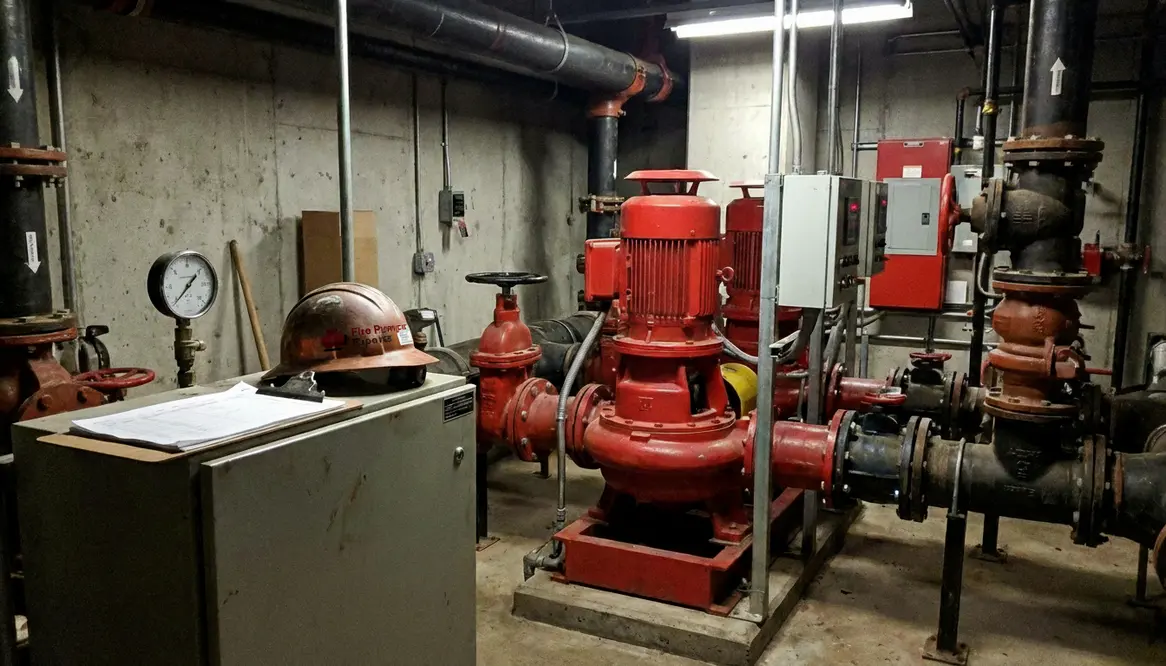
Fire Pump Permit Inspection Steps San Diego Delays
What actually happens between your first fire pump drawing and the day the system is finally trusted to protect a San Diego building.
Fire Pump Permits in San Diego: What Actually Happens Before the System Saves the Day
I have spent enough time around commercial fire protection projects to know one thing with certainty. A fire pump system might look like a big red piece of equipment quietly waiting in a mechanical room, but the path to getting it approved is anything but quiet. The process moves through plans, reviews, inspections, and the occasional bureaucratic curveball.
When people ask me about the fire pump permit inspection steps san diego common delays, they usually expect a quick checklist. However, the real story runs deeper. San Diego enforces strict life safety standards for commercial and industrial properties, and that means the approval process demands accuracy from the first drawing to the final flow test.
So today I am going to walk you through what really happens. I will explain the typical permit path, where projects slow down, and how experienced teams keep large buildings moving toward final approval without losing months to paperwork limbo. And yes, occasionally the process moves slower than a DMV line in a movie montage. But once you understand the rhythm, things start to make sense.
Understanding the Fire Pump Permit Inspection Steps San Diego Common Delays
Before a fire pump ever spins up during an emergency, it must survive the approval process. In San Diego, that process focuses heavily on plan verification and system integration with the building’s fire protection design.
From First Drawing To Final Test
First, the project team submits engineered plans to the local authority having jurisdiction. For large commercial and industrial facilities, these plans often include pump curves, hydraulic calculations, controller details, power supply data, and seismic anchoring information.
Next comes plan review. City reviewers evaluate whether the design meets NFPA standards and local fire code. At this stage, many projects pause. Not because the system is wrong, but because the documentation lacks detail. A missing electrical diagram or unclear pump rating can send plans right back to the engineer.
Once approved, the permit is issued and installation begins. However, approval does not mean smooth sailing. During installation, inspectors verify alignment, power supply, controller configuration, and system integration with the building sprinkler network.
Finally comes the acceptance test. This is the moment where the pump proves it can deliver water at the required pressure and flow. When that test passes, the system earns its place as a silent guardian of the building.
That entire journey explains why discussions around fire pump permit inspection steps san diego common delays often pop up during major construction planning meetings.
How Commercial Facilities Move Through The Permit Process
Large properties such as distribution centers, manufacturing facilities, high rise office towers, and logistics hubs follow a fairly predictable approval path. Still, each stage requires careful coordination.
Here is the typical progression I see during commercial projects.
- Engineering design and hydraulic calculations
- Permit application and plan submission
- Municipal fire department review
- Plan corrections and resubmission if required
- Permit issuance
- Fire pump installation and system integration
- Rough inspection of piping and electrical components
- Final acceptance testing and performance verification
Each step builds on the previous one. Therefore, if an early stage contains errors, delays ripple forward. It is a little like stacking dominoes. If the first one leans the wrong way, the whole line refuses to cooperate.
Experienced contractors know this. As a result, they invest extra time in the early design stage to prevent slowdowns later.
Where Projects Usually Slow Down
Now let us talk about the part everyone whispers about during project meetings. The delays.
The phrase fire pump permit inspection steps san diego common delays exists for a reason. While the city maintains clear procedures, several predictable obstacles appear in large commercial developments.
First comes incomplete engineering documentation. Fire pump systems require exact calculations. If the plans do not clearly show pump curves or pressure requirements, reviewers request corrections. That means another review cycle.
Second is electrical coordination. Fire pumps often require dedicated power sources or backup generators. When electrical plans and fire protection drawings fail to align, inspectors pause the project until everything matches.
Third involves equipment specifications. Believe it or not, specifying the wrong pump model can stall approvals quickly. The system must meet precise performance standards based on the building’s hydraulic demand.
Then there is scheduling. Acceptance testing requires coordination between inspectors, contractors, and sometimes utility providers. Getting everyone in the same place at the same time can feel like organizing the Avengers. Except fewer capes and more clipboards.
Frequent Delay Triggers
- Incomplete hydraulic calculations
- Incorrect pump sizing
- Electrical power conflicts
- Controller documentation gaps
- Late equipment delivery
Strategies That Keep Projects Moving
- Early coordination with fire authorities
- Third party design reviews before submission
- Integrated electrical and fire protection drawings
- Pre inspection equipment verification
- Detailed acceptance test planning
When teams anticipate these challenges, the permit process becomes far smoother. And honestly, inspectors appreciate well prepared projects. It saves everyone time.
What Inspectors Actually Look For During Testing
Acceptance testing marks the final checkpoint in the fire pump permit inspection steps san diego common delays journey. This is where theory meets reality.
Inspectors verify several key elements during this stage. First, they confirm the pump starts automatically when system pressure drops. This ensures the building receives water during a real emergency.
Next, they evaluate performance using flow tests. Technicians measure pressure and water output at multiple demand levels. The results must match the pump curve provided during plan review.
Additionally, inspectors review controller operation, alarm integration, and backup power systems. In large industrial facilities, these components connect to broader life safety networks that monitor fire alarms, suppression systems, and emergency power.
If everything works correctly, approval follows quickly. However, if performance falls short, adjustments must be made and the test repeated.
And trust me, no contractor enjoys repeating a pump test after hauling hoses across a loading yard at sunrise.
Why Large Commercial Properties Require Extra Precision
Commercial and industrial buildings operate at a scale that changes the stakes. Distribution centers, factories, and high rise structures often protect millions of dollars in equipment and inventory. More importantly, they protect the people working inside.
Because of that scale, San Diego officials pay close attention to every phase of the fire pump permit inspection steps san diego common delays process.
High demand sprinkler systems require pumps that deliver massive water volume at consistent pressure. A miscalculation could weaken the entire suppression system during a fire.
Therefore, every document, inspection, and test ensures the pump can perform exactly as designed. When everything aligns, the result is a system that quietly stands ready for decades.
Kind of like the wise old character in a movie who rarely speaks but saves the day when things go sideways.
Why Do Fire Pump Permits In San Diego Take Time?
The answer lies in safety. Officials must verify engineering accuracy, electrical integration, hydraulic performance, and equipment certification before approving systems in large commercial buildings.
Although the process may feel slow, every review step protects occupants and property. And once you understand the structure behind the fire pump permit inspection steps san diego common delays, the timeline starts to look less mysterious.
FAQ About Fire Pump Permits And Inspections In San Diego
These are the questions that most frequently come up when commercial property teams start planning around fire pump permits, inspections, and the very real possibility of schedule slip.
Planning Ahead To Avoid San Diego Fire Pump Delays
If your facility project involves a fire pump system, preparation makes all the difference. Understanding the fire pump permit inspection steps san diego common delays helps commercial property owners avoid costly setbacks and move confidently from design to final approval.
Smart teams build a realistic schedule that factors in plan review, potential comment cycles, material lead times, electrical coordination, and at least one contingency day for acceptance testing. That same planning mindset also includes partnering with specialists who live and breathe pump performance, documentation, and inspections.
When experienced specialists guide the process, inspections become smoother, documentation becomes cleaner, and your building gains a reliable life safety system ready for the moment it is needed most. If your project is approaching this stage, now is the time to plan it right.
If you are looking for a place to start that goes beyond permits and into long term reliability, it is worth exploring how a dedicated partner approaches fire pump systems, testing, and maintenance over the full life of a building.