Fire Pump Permit Inspection Steps San Diego Common Delays
A practical, boots-in-the-mechanical-room guide to keeping your fire pump project on schedule in San Diego’s permit maze.
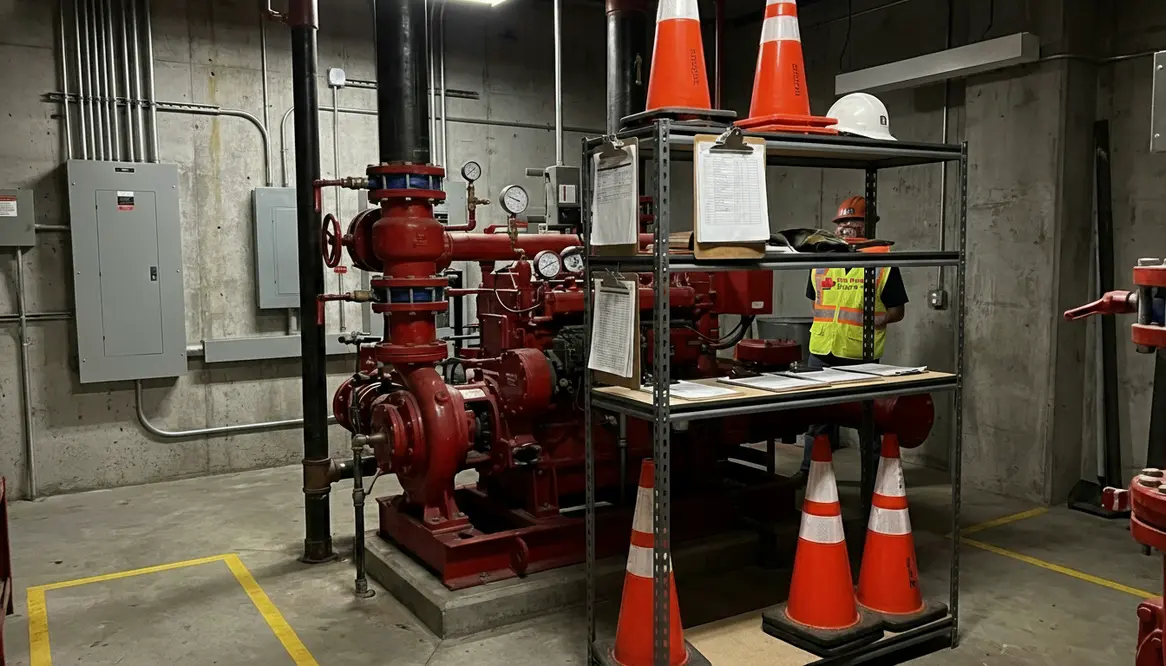
I have spent years walking mechanical rooms that hum like quiet engines beneath the bones of large buildings. Hospitals. Distribution centers. Towering offices. Places where thousands of people rely on systems they will hopefully never notice. And among those silent guardians sits the fire pump. Powerful. Patient. Waiting.
But before that pump ever spins its first confident rotation, there is paperwork, review, testing, and a series of steps that San Diego takes very seriously. When people ask me about the fire pump permit inspection steps san diego common delays, I usually smile and say the process is straightforward. Then I pause. Because straightforward does not always mean fast.
Still, if you know the path ahead, you can move through it smoothly. Think of it less like a maze and more like a checklist with a few bureaucratic plot twists. In this guide, I walk through the typical permitting and inspection journey for fire pumps in San Diego commercial and industrial facilities, while pointing out where projects often slow down and how to avoid those traps.
What Is the Permit and Inspection Path for Fire Pumps in San Diego?
When a commercial property installs or modifies a fire pump system in San Diego, the city requires approval before the equipment ever touches the floor. This oversight protects occupants, property, and the firefighters who may depend on that system during an emergency.
So the journey usually begins with engineered plans.
First, a licensed fire protection engineer prepares detailed drawings that follow NFPA 20, California Fire Code, and local amendments. These plans outline pump capacity, suction supply, controller type, power sources, and room layout.
Next, the plans move to the local authority having jurisdiction. In San Diego, that typically means the Fire Prevention Bureau reviewing the design alongside building department reviewers.
Once approved, contractors can install the system. However, the story does not end there. Several inspections follow, culminating in a full operational test where the pump proves it can deliver the required water pressure.
It is a bit like auditioning for a movie role. The pump must show up on time, hit its marks, and perform under pressure. Literally.
Typical Fire Pump Permit Inspection Steps San Diego Common Delays Happen Within
Although each project varies slightly, the process usually unfolds in a predictable sequence. Understanding these stages helps building owners avoid schedule surprises.
Typical process for large commercial facilities
- Engineering design and hydraulic calculations prepared by qualified professionals.
- Permit submission to San Diego fire prevention and building departments.
- Plan review corrections where reviewers request adjustments or clarifications.
- Permit approval and issuance allowing installation to begin.
- Equipment installation including pump, controller, piping, and test headers.
- Rough inspections verifying layout, clearances, and pipe connections.
- Electrical and controller inspections confirming proper power supply and emergency circuits.
- Final acceptance test where the pump runs through full flow conditions.
At first glance, the steps look clean and organized. However, projects rarely glide through without a few bumps. Even seasoned contractors occasionally run into a review comment that feels like a surprise sequel nobody asked for.
Where Projects Slow Down and Why Permits Stall
Now we arrive at the part of the story that most property managers know all too well. Delays.
San Diego’s review teams handle a large volume of commercial construction. Meanwhile, fire pumps demand careful scrutiny because they serve as a building’s last line of defense.
As a result, several common issues tend to slow progress.
Incomplete engineering submittals
Sometimes the drawings look polished but lack crucial hydraulic calculations or pump curves. Reviewers immediately pause the process and request clarification. Consequently, the project timeline stretches while engineers revise documents.
Conflicts with building layout
Fire pump rooms require clearances, drainage, ventilation, and dedicated power supplies. If the architectural design crowds the pump room or blocks service access, reviewers will flag it.
And trust me, nothing halts momentum faster than realizing the pump room door opens the wrong direction.
Electrical coordination issues
Fire pumps must connect to reliable power sources, often including emergency generators. When electrical drawings do not align with fire protection plans, inspectors request revisions.
Equipment lead times
Even after approval, pump assemblies and controllers sometimes take months to arrive. Supply chain delays can turn a tidy project schedule into something resembling a suspense film.
Although these issues sound frustrating, most are preventable with strong coordination between engineers, contractors, and facility managers.
How I Keep Commercial Fire Pump Projects Moving Smoothly
Over time, I have learned that preparation solves most problems before they appear.
Large facilities such as hospitals, distribution warehouses, and high rise office buildings operate on tight schedules. Every inspection delay can ripple across construction timelines. Therefore, I focus on aligning every detail early.
Here is how I approach the process.
Planning focus
- Coordinate pump sizing with sprinkler demand calculations
- Confirm room dimensions and service clearances early
- Verify electrical capacity and generator integration
- Review city specific fire code amendments
Inspection readiness
- Pre test pump operation before city inspection
- Confirm pressure gauges and relief valves work properly
- Ensure test header piping supports full flow
- Prepare documentation for inspectors on site
When these steps happen early, inspectors arrive to a clean, organized installation. And inspectors appreciate preparation the same way pilots appreciate clear weather.
Meanwhile, property owners gain confidence knowing their life safety system works exactly as designed. Partnering with a dedicated fire pump service provider like Kord Fire Protection’s fire pump team keeps those systems maintained, documented, and inspection ready.
How Long Do Fire Pump Permits and Inspections Usually Take in San Diego?
The honest answer is that timelines vary widely.
However, most commercial projects follow a general window.
Plan review for fire pump permits often takes several weeks depending on the complexity of the building. Large industrial campuses or medical facilities may require multiple review cycles.
After approval, installation can range from a few weeks to several months depending on equipment availability and construction progress.
Finally, the acceptance test itself typically occurs within days of scheduling once the system is ready.
In other words, the process resembles airport security. Sometimes you breeze through. Other times you remove your shoes, laptop, dignity, and still get pulled aside.
Yet with proper planning, most projects move steadily forward without major disruptions.
Fire Pump Permit Inspection Steps San Diego Common Delays Facility Managers Ask About
Facility managers often reach out during construction wondering where their project stands. The good news is that most delays come from a short list of predictable issues.
For large commercial and industrial properties, I usually see the same questions arise again and again.
And once those issues are addressed, the rest of the process tends to move quickly toward approval.
FAQ
Final Thoughts for Commercial Property Owners
If your facility is planning a new fire pump installation or upgrade, understanding the permitting and inspection journey can save months of frustration. The process may look complex, but with the right preparation it becomes predictable. Our team helps large commercial and industrial buildings move smoothly through every phase from design coordination to final acceptance testing. Reach out today and let’s make sure your system is ready long before anyone ever needs it.