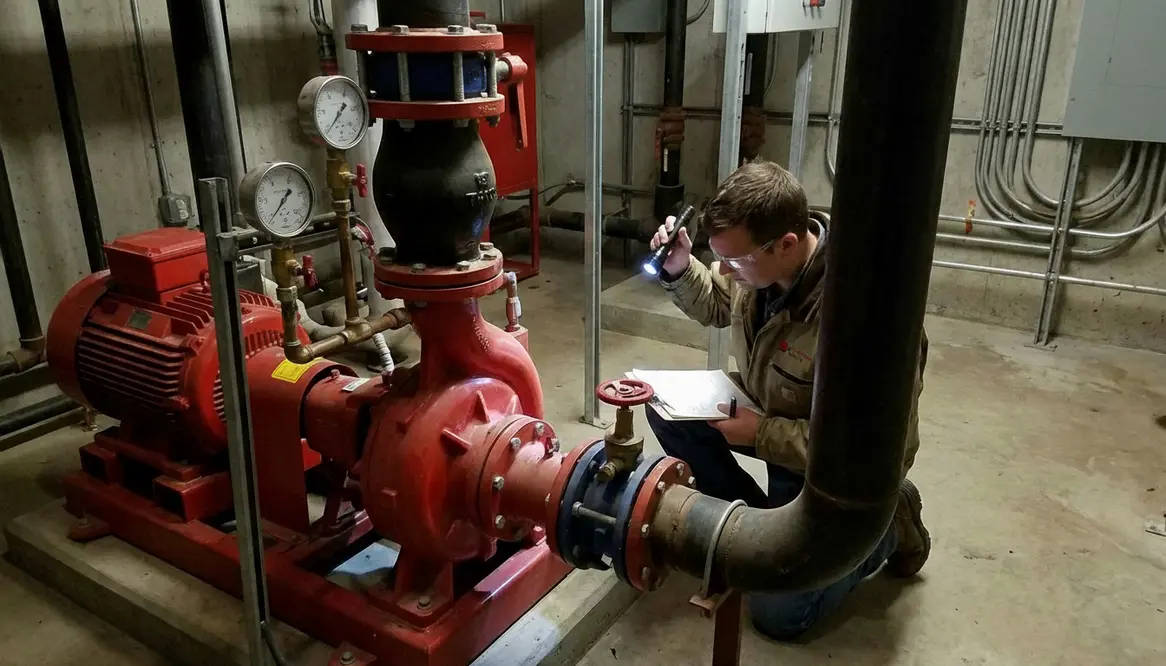
Preparing for Annual Fire Pump Testing Guide
I have seen it time and time again. A facility runs smoothly all year, then suddenly everyone holds their breath when annual fire pump testing rolls around. It is a bit like a surprise pop quiz, except the stakes are far higher than your high school GPA. In commercial and industrial properties, this process is not just a requirement. It is your safety net. So, I take preparation seriously, and I approach it with a calm, methodical rhythm that keeps surprises where they belong, in movie theaters, not mechanical rooms.
What does preparing for annual fire pump testing actually involve?
Let me answer this plainly. Preparing for annual fire pump testing means making sure every component of your system is ready to perform under pressure before anyone turns the key. I do not wait until test day to discover problems. Instead, I verify mechanical, electrical, and water supply conditions ahead of time.
First, I review previous test reports. Then, I check for unresolved deficiencies. After that, I walk the site. I look for leaks, unusual vibrations, or anything that feels off. Think of it as a pre flight check, except instead of a plane, we are dealing with a system that protects an entire facility.
And yes, sometimes it feels like talking to a stubborn machine. But unlike your old laptop, this one cannot freeze when it matters most.
Start with the essentials before the big day
Preparation begins with the basics, and I never skip them. These small steps often prevent the biggest headaches.
- Inspect valves: I confirm all control valves are in the correct position and sealed if required.
- Check gauges: I make sure pressure readings are accurate and consistent.
- Verify power sources: Electric or diesel, both need to be ready without hesitation.
- Review controllers: I ensure settings match operational requirements and alarms function properly.
Additionally, I coordinate with facility teams. Communication matters here. If someone shuts off water supply during testing, well, that turns a planned test into an unplanned comedy. And not the good kind.
Mechanical readiness and system integrity
Now we get into the heart of it. The pump itself. I approach this step with focus because this is where performance lives or fails.
I examine the pump assembly for alignment issues, worn bearings, and seal conditions. Then, I check lubrication levels. After that, I listen. Yes, listen. A well tuned pump has a steady sound. If it starts sounding like a drum solo gone wrong, something needs attention.
Moreover, I inspect suction and discharge piping. Obstructions or corrosion can quietly reduce efficiency. Over time, these hidden issues build up. Therefore, I treat every inspection like a chance to catch a problem early, before it becomes expensive.
This mindset turns annual fire pump testing from a stressful event into a structured checkup. When the mechanical side is prepared, the test becomes confirmation, not a surprise.
Electrical and diesel drivers deserve equal attention
Whether the system runs on electricity or diesel, I give both equal respect. Each has its own personality, and both can surprise you if ignored.
Electric Driven Pumps
- Confirm stable power supply
- Inspect wiring and connections
- Test controller response times
- Verify alarm signals
Diesel Driven Pumps
- Check fuel levels and quality
- Inspect batteries and chargers
- Test engine start sequence
- Review exhaust and cooling systems
At this stage, I also simulate start conditions. Because when the real moment comes, there is no room for hesitation. It either starts, or it does not. And in this business, not starting is not an option.
Flow testing preparation and safety coordination
Before any flow test begins, I make sure the environment is ready. Water will move fast and in large volumes, so planning matters.
I verify discharge locations and ensure they will not damage property or disrupt operations. Then, I confirm that all test equipment is calibrated and ready. Flow meters, hoses, and gauges must work as expected.
Meanwhile, I coordinate with building management and local authorities if needed. A sudden drop in water pressure can raise eyebrows, and sometimes alarms. It is better to give everyone a heads up than to explain later why the building sounded like it was auditioning for a disaster movie.
When this planning is done well, annual fire pump testing becomes a controlled event. The building keeps operating, people know what to expect, and the focus stays on performance and safety instead of scrambling to react.
Documentation and compliance for annual fire pump testing
Once preparation is complete, I focus on documentation. Because if it is not recorded, it might as well not have happened.
I organize past records, inspection logs, and maintenance reports. Then, I ensure everything aligns with current standards. This step supports compliance and provides a clear history of system performance.
Also, I prepare a checklist tailored to the facility. No two properties are exactly alike, especially in large commercial and industrial environments. Customization keeps the process efficient and accurate.
The more organized your records are, the easier it is to compare this year’s annual fire pump testing results to last year’s performance. Trends become visible, recurring issues stand out, and you get real value instead of just a checked box.
FAQ: Quick answers you actually need
What is the goal of annual fire pump testing?
To confirm the pump delivers required pressure and flow during an emergency.
How long does preparation take?
It varies, but I usually plan several days depending on system size and complexity.
Can testing disrupt operations?
Yes, but proper coordination minimizes impact on facility operations.
What happens if issues are found?
Repairs should be scheduled immediately, followed by retesting if needed.
Do all commercial facilities need this?
Yes, especially large properties where fire protection systems are critical.
Final thoughts and your next move
I treat preparation like a quiet investment. It pays off when everything runs smoothly and no one has to scramble. If you manage a commercial or industrial facility, now is the time to get ahead of the process. Work with experienced professionals, review your system, and plan your next annual fire pump testing with intention. Because when the moment comes, confidence should not be a guess. It should be the result of preparation done right.
When annual fire pump testing is approached this way, it shifts from a stressful calendar event into a predictable routine. Your team knows what is coming, your equipment is ready before anyone arrives on site, and your documentation backs up every decision you make about maintenance and upgrades.