Commercial Fire Pump Retrofits and AHJ Approval
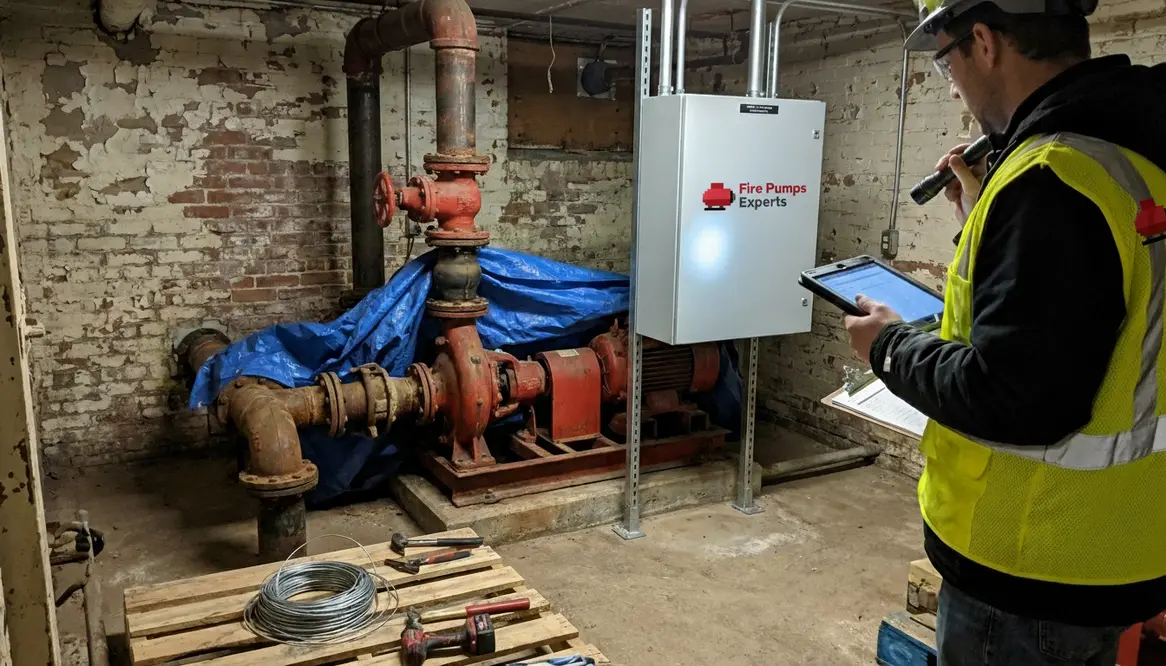
I have spent enough time in older city buildings to know this truth: what you cannot see can absolutely hurt you. Behind brick walls and beneath concrete floors, aging fire protection systems often tell a quiet story. And when it comes to commercial fire pump retrofits in older urban buildings, that story usually begins with one critical checkpoint: local AHJ fire pump approval. Within the first walkthrough, I look at compliance, because without that approval from the authority having jurisdiction, even the most advanced retrofit is just expensive décor. So yes, paperwork matters. Not glamorous, but neither is explaining a failed inspection to a room full of executives.
Why Older Buildings Struggle with Modern Fire Pump Demands
Older urban properties were not built with today’s fire loads in mind. Back then, electrical demands were lighter, building layouts were simpler, and frankly, nobody was thinking about server rooms humming like a Marvel villain’s lair. As a result, the original fire pump systems often fall short.
However, the real issue is not just age. It is evolution. Buildings change. Tenants change. Risk profiles grow. Yet the pump system often stays frozen in time like a cassette tape in a streaming world.
Because of this, I often see undersized pumps, outdated controllers, and inefficient layouts. Consequently, water pressure may not meet current code, and reliability becomes questionable. That is where retrofitting steps in, not as a luxury, but as a necessity.
How local AHJ fire pump approval shapes retrofit decisions
Modern fire codes do not care how charming the brickwork is or how narrow the alley might be. If the system cannot deliver required flow and pressure, local AHJ fire pump approval is not happening. That pressure from the AHJ forces owners to confront hard truths about legacy infrastructure that has quietly aged out of compliance.
What Do I Evaluate First in a Fire Pump Retrofit Project
I always start with performance and compliance. First, I test the existing system under real conditions. Then, I compare those results against current fire codes and operational needs. It sounds simple, yet this step reveals most of the hidden problems.
Next, I review space constraints. Older buildings rarely offer extra room. In fact, squeezing modern equipment into a legacy pump room can feel like trying to park an SUV in a closet.
Finally, I look at power supply. Many older systems rely on outdated electrical infrastructure. Therefore, upgrades often involve both mechanical and electrical improvements working together.
Tying it back to local AHJ fire pump approval
Every one of these early evaluations connects directly to local AHJ fire pump approval. If the pump cannot pass a witnessed flow test, if clearances around equipment are inadequate, or if power reliability is questionable, the AHJ will flag it. Addressing these issues on the front end turns approval from a gamble into a predictable milestone.
Key Retrofit Strategies That Actually Work
When I plan a retrofit, I focus on solutions that respect the building’s limitations while still delivering modern performance. Not every project needs a full overhaul. Sometimes, precision upgrades make the biggest difference.
Equipment Upgrades
- Replace outdated pumps with efficient models
- Install modern controllers with smart monitoring
- Upgrade valves and piping for better flow
System Optimization
- Reconfigure layouts for improved pressure balance
- Add redundancy for reliability
- Integrate with building management systems
Additionally, I always consider long term maintenance. A system that works today but fails tomorrow is not a solution. It is a delay.
I also pay close attention to suction conditions, tank design, and accessories that directly affect pump performance. Details like anti-vortex plates, suction piping geometry, and tank configuration can mean the difference between a smooth NFPA 20-compliant test and a frustrating round of cavitation, alarms, and failed curves. For a deeper look at how these components support reliable fire pump operation, resources such as Kord Fire Protection’s guidance on anti-vortex plates at https://kordfire.com/anti-vortex-plate-specification-installation/ help illustrate what a well-thought-out suction side should look like.
Navigating Compliance Without Losing Your Mind
Let me be honest. Compliance can feel like a maze designed by someone who enjoys paperwork a little too much. Still, it is unavoidable. And more importantly, it is essential.
Working toward local AHJ fire pump approval means aligning every detail with current fire codes. That includes flow tests, documentation, installation standards, and final inspections. Therefore, I coordinate closely with engineers, contractors, and inspectors from the start.
Because of this collaboration, surprises are minimized. And in this line of work, fewer surprises mean fewer headaches and lower costs.
Building a compliance roadmap the AHJ will actually sign
- Start with a candid gap analysis between existing conditions and current code.
- Phase corrective work so that critical life-safety gaps are addressed first.
- Document everything with test reports, cut sheets, and as-builts ready for review.
- Engage the AHJ early to confirm expectations and local amendments.
- Schedule formal witnessing when you are confident the system will perform.
When owners see that local AHJ fire pump approval is treated as a project deliverable instead of an afterthought, they stop viewing inspections as a necessary evil and start seeing them as proof that their investment is working.
How Do I Minimize Disruption in Occupied Buildings
This is where things get interesting. Retrofitting a fire pump in a fully occupied commercial building is like performing surgery while the patient is running a marathon. You cannot just shut everything down and hope for the best.
So, I phase the work carefully. First, I establish temporary systems if needed. Then, I schedule critical upgrades during off hours. Meanwhile, I maintain clear communication with building management.
As a result, operations continue with minimal interruption. And yes, tenants appreciate not having their day disrupted by what sounds like a construction crew reenacting an action movie.
On top of that, I align the schedule with inspection milestones so that local AHJ fire pump approval can be secured without multiple repeat visits. Fewer shutdowns, fewer fire watch hours, and fewer “Why is there no water in the standpipe right now?” conversations with security.
Long Term Value of Fire Pump Retrofits
At first glance, a retrofit might seem like a major expense. However, when I look at the bigger picture, the value becomes clear. Improved safety, better compliance, and reduced risk all contribute to long term savings.
Moreover, modern systems are more efficient and easier to maintain. That means fewer emergency repairs and lower operating costs over time. In other words, you are not just spending money. You are investing in stability.
From “barely passing” to confidently approved
The real payoff shows up years later, when the system continues to pass annual tests without drama. That stability is not an accident; it is the result of designing with local AHJ fire pump approval in mind from the first walkthrough, not the final inspection. The retrofit is no longer a one-time crisis fix, but part of a long term risk reduction strategy.
FAQ: Commercial Fire Pump Retrofits
Owners and facility teams usually circle back to the same handful of questions once they realize how much rides on doing a retrofit correctly and securing AHJ approval the first time.
Conclusion
If you are managing an older commercial or industrial property, now is the time to take a closer look at your fire pump system. I approach every retrofit with precision, clarity, and a respect for both the building and its people. Let us bring your system up to modern standards without unnecessary disruption. Reach out today, and we will map out a solution that keeps your property protected, compliant, and ready for whatever comes next.