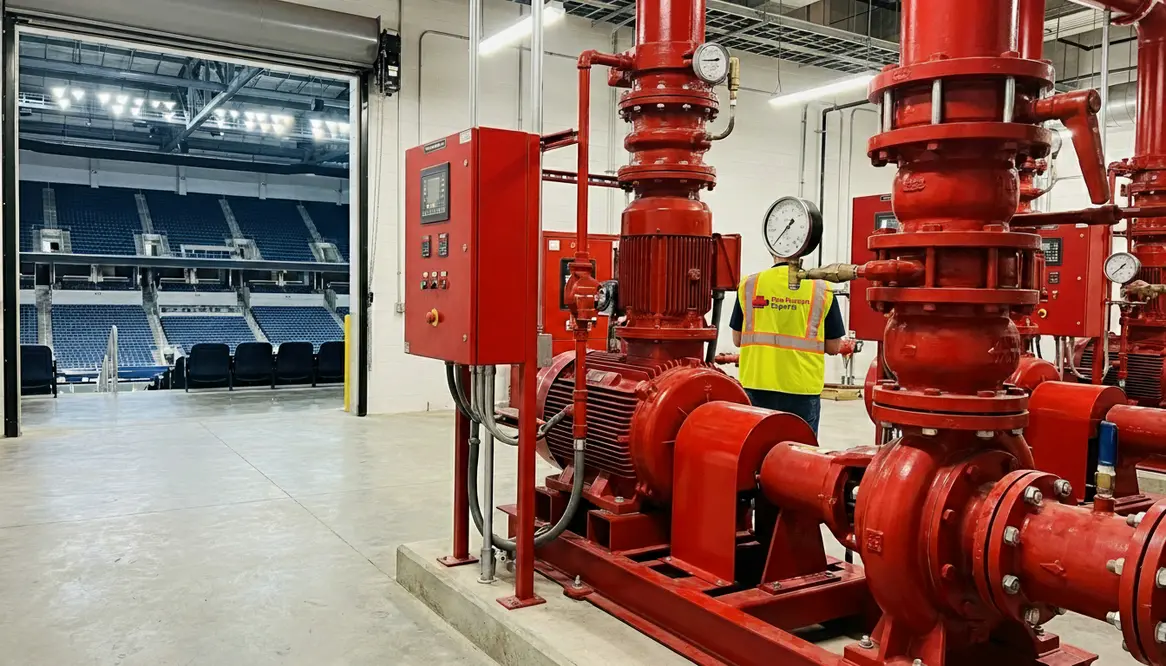
Fire Pump Systems for Arenas and Training Centers
I have spent years around complex buildings, the kind that hum with energy and expectation. Training centers and arenas sit high on that list. They are alive with movement, pressure, and sometimes a bit of chaos. That is exactly why I always bring the conversation back to government office fire pumps. Not because the name sounds impressive, although it does, but because the engineering standard behind them sets a tone. And when you are protecting thousands of people in a single structure, tone matters.
So, let us walk through it together. Slowly. Clearly. Maybe with a few smiles along the way.
Why Fire Pump Systems Matter in High Capacity Venues
Training facilities and arenas are not your average buildings. They are built for peak moments. A sold out game. A high intensity training session. A concert where the bass hits so hard it feels like your heartbeat synced with the speakers. Because of this, fire protection systems must perform under pressure, literally and figuratively.
Fire pumps act as the backbone of these systems. When water supply alone cannot meet demand, the pump steps in. It boosts pressure. It ensures coverage reaches every corner, from locker rooms to upper seating decks. Without it, even the best sprinkler design falls short.
And here is the thing. In large scale properties, failure is not an option. Not even for a second. That is why systems modeled after public sector fire pump standards often become the benchmark. They are designed for reliability, consistency, and zero excuses.
How do fire pump systems perform during peak arena events
Let me answer this like I would if we were standing in the control room, watching gauges and listening to the quiet confidence of machinery.
During peak demand, fire pump systems operate automatically. Sensors detect pressure drops. Within seconds, the pump engages. It delivers high flow rates without hesitation. And just as importantly, it maintains that flow steadily.
However, performance is not just about power. It is about balance. Too much pressure can damage systems. Too little, and you risk ineffective suppression. Therefore, modern systems use controllers that fine tune output in real time.
It is a bit like a seasoned DJ. Not the one who just presses play, but the one who reads the room and adjusts every beat. Smooth. Controlled. Never missing the moment.
Designing Fire Pump Systems for Training Centers and Arenas
Design is where things get interesting. Because no two arenas are exactly alike, even if they all sell overpriced snacks. I have seen layouts that twist, expand, and stack in ways that challenge even experienced engineers.
So we start with demand analysis. We calculate water needs based on occupancy, structure size, and hazard classification. Then we select pumps that can meet those needs under worst case conditions.
Additionally, redundancy plays a key role. Backup pumps ensure continuity if the primary system fails. Power supply options, including diesel driven units, provide resilience during outages.
Systems inspired by government office fire pumps often include layered safeguards. That means multiple triggers, backup controls, and durable components. In short, they are built to keep going when everything else stops.
Key Components That Keep Everything Running Smoothly
Core Elements
- Pump unit that drives water pressure
- Controller that manages operation
- Jockey pump for maintaining baseline pressure
- Reliable water source connection
Support Systems
- Backup power supply
- Pressure sensors and alarms
- Flow meters for monitoring
- Isolation valves for maintenance
Each component plays a role. Remove one, and the system becomes less predictable. And in fire protection, unpredictability is about as welcome as a plot twist in the final minute of a championship game.
Maintenance Strategies That Actually Work
Now, let me be honest. Even the best system will fail if ignored. Maintenance is not glamorous. It does not get applause. But it is the quiet hero of fire protection.
Routine testing ensures pumps start instantly and operate at full capacity. Weekly churn tests, monthly inspections, and annual performance evaluations all contribute to system health.
Furthermore, digital monitoring has changed the game. Facility managers can track performance in real time. They can spot irregularities before they become problems.
And yes, sometimes it feels like overkill. Until the moment it is not. That is when preparation proves its worth.
Choosing the Right Fire Pump System for Large Facilities
Choosing a system is not about picking the biggest or most expensive option. It is about precision. You match the system to the building’s needs.
I always recommend working with specialists who understand large scale commercial and industrial properties. These are not small installations. They require planning, coordination, and expertise.
Also, consider long term operation. Efficiency, durability, and ease of maintenance matter just as much as initial performance. A well chosen system saves time, reduces risk, and keeps operations smooth.
Think of it like assembling a championship team. Talent matters, but so does chemistry and consistency.
Bringing Arena Standards Up To Government-Level Reliability
There is a reason consultants keep circling back to systems built to the expectations behind government office fire pumps. Those installations are expected to protect critical records, essential staff, and public operations that cannot simply shut down for a week because of a bad day in the pump room.
Arenas and training centers share a similar pressure, just with a different flavor. Instead of safeguarding documents and departments, you are protecting crowds, teams, performers, and the reputation of the venue itself. Borrowing the design discipline used for government office fire pumps means building in redundancy, clear monitoring, and no-nonsense emergency procedures that function under stress instead of collapsing the moment something unexpected happens.
Where High Occupancy Meets High Expectations
On paper, office buildings and arenas may look very different. One is cubicles and conference rooms, the other is locker rooms, tunnels, and upper decks that feel suspiciously steep when you look down. Yet from a fire protection standpoint, they share a common truth: when something goes wrong, everyone expects the system to work instantly and without excuses. That is the mindset baked into well engineered government office fire pumps, and it translates beautifully into the world of major venues and elite training facilities.
Design Lessons Arenas Can Steal From Government Buildings
Borrowing the mentality behind government office fire pumps for arenas often leads to smarter zoning, more deliberate pump placement, and tougher standards for backup power. Instead of treating fire protection as a box to check, it becomes an integrated part of how the building works on its busiest days. That shift shows up in the details: better access routes for maintenance crews, cleaner control room layouts, and documentation that does not require a decoder ring to understand during an emergency.
FAQ: Fire Pump Systems for Training Centers and Arenas
Final Thoughts and Next Steps
If you manage or design large facilities, now is the time to take a closer look at your fire protection strategy. The right fire pump system does more than meet code. It protects people, preserves property, and ensures operations continue without disruption. Connect with experts who understand high demand environments and can tailor solutions to your needs. Because when it comes to safety, confidence should never be optional.