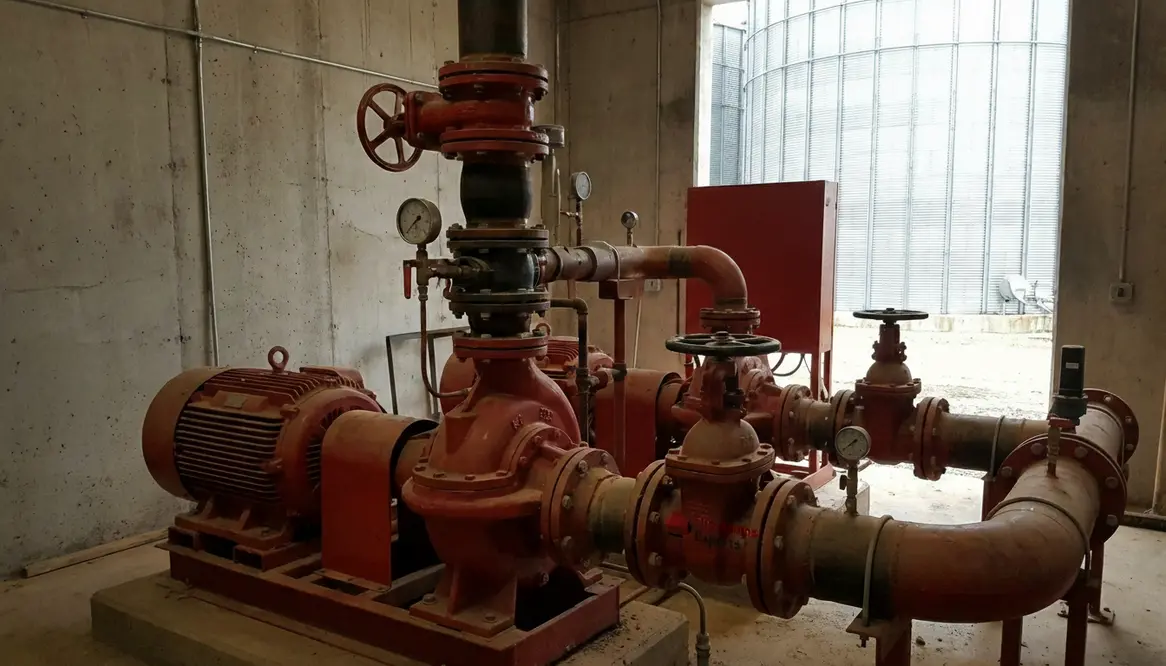
Fire Pump Needs for Combustible Grain Storage
I have spent years walking through grain facilities that hum like quiet giants, and I can tell you this: the moment you ignore Fire pump needs for combustible agricultural storage, you invite trouble to pull up a chair and stay awhile. Grain dust is not just messy, it is explosive. And while that might sound dramatic, I assure you, fire does not do subtle. So today, I am going to walk you through how I approach fire pump systems for these environments, with a steady hand, a clear plan, and just enough humor to keep us both awake.
Understanding Fire pump needs for combustible agricultural storage
When I look at a grain storage facility, I do not just see silos and conveyors. I see fuel. Fine particles in the air can ignite faster than popcorn in a microwave, except far less fun and without the butter. Because of this, fire pump systems must deliver consistent pressure and flow under demanding conditions.
First, I focus on reliability. These systems cannot hesitate. Electric or diesel driven pumps must start immediately and run without interruption. Additionally, I consider water supply. A pump without sufficient water is like a coffee machine with no beans. It exists, but it is not helping anyone.
Then comes system demand. Grain facilities often require high volume discharge to cover conveyor belts, storage bins, and transfer points. Therefore, I size pumps to exceed minimum requirements, not just meet them. Because when fire shows up, it does not negotiate.
What type of fire pump works best for grain facilities
I get this question a lot, and the answer is not one size fits all. However, I lean toward horizontal split case or vertical turbine pumps for large scale operations. They offer durability and strong performance under continuous load.
Electric pumps work well when power is stable. But let me be honest, relying only on electricity in an industrial setting can feel like trusting your phone battery at 2 percent. That is why I often recommend diesel backups. Redundancy is not overkill here, it is common sense.
Additionally, I look at pressure requirements across the facility. Long pipe runs and elevation changes can reduce performance, so I compensate early in the design phase rather than scramble later.
Designing systems that actually keep up with risk
Design is where things either shine or fall apart quietly. I prioritize layout efficiency and hazard coverage from the start. That means placing hydrants, monitors, and sprinkler systems exactly where they will matter most.
Moreover, I integrate detection systems with pump activation. The faster a system responds, the better the outcome. Think of it as reflex versus reaction. One saves time. The other costs it.
And yes, I have seen systems designed like a maze from an old video game. That might be charming in Pac Man, but not in fire protection.
Key Design Priorities
- Consistent water supply access
- Balanced pressure across zones
- Redundant pump systems
- Strategic hydrant placement
Common Pitfalls I Avoid
- Undersized pumps
- Poor pipe routing
- Ignoring dust ignition risks
- Lack of backup power
Fire pump needs for combustible agricultural storage in large scale operations
When I deal with major commercial grain facilities, scale changes everything. Large properties demand higher capacity pumps, more complex zoning, and tighter coordination between systems.
In these environments, I ensure pumps can handle simultaneous demands. For example, multiple sprinkler zones and hydrants may activate at once. If the system cannot keep up, pressure drops, and effectiveness disappears quickly.
Additionally, maintenance planning becomes critical. I always push for accessible pump rooms and clear service schedules. Because a fire pump that has not been tested is like a parachute you have never opened. It might work, but do you really want to find out mid fall?
How I approach compliance and safety standards
Codes and standards are not suggestions. I follow NFPA guidelines closely, especially those related to fire pumps and combustible dust hazards. These standards give me a framework, but I do not stop there.
I also consider site specific risks. Every grain facility has unique layouts and operational patterns. Therefore, I adapt designs to match real world conditions rather than rely on generic templates.
Inspections and testing also play a major role. Weekly churn tests, annual flow tests, and routine system checks ensure everything performs as expected. It is not glamorous work, but neither is explaining why a system failed.
Keeping systems reliable over time
Even the best designed system can fade without proper care. So I emphasize maintenance from day one. Regular testing keeps pumps ready, while monitoring systems provide early warnings for issues.
Moreover, I encourage facility managers to treat fire protection like insurance you can see. You hope you never need it, but you invest in it anyway. Because when the moment comes, it needs to perform flawlessly.
And let us be honest, no one wants their facility trending online for the wrong reasons. Fire videos go viral fast, and not in a good way.
Why Fire pump needs for combustible agricultural storage cannot be ignored
In grain environments, the combination of fuel, oxygen, and ignition sources is relentless. That is why I look at Fire pump needs for combustible agricultural storage as a core operational requirement, not an add on. When pumps are sized, placed, and maintained correctly, they give your facility a fighting chance during the worst possible day.
From silo tops to basement tunnels, the system has to reach every corner that dust and heat can reach. That means aligning pump performance with sprinkler density, hydrant locations, and hose capabilities so firefighters and facility teams are never left short on water or pressure when seconds matter.
Done right, Fire pump needs for combustible agricultural storage are not just about compliance. They are about protecting livelihoods, supply chains, and the people who walk those catwalks and platforms every single day.
FAQ
Conclusion
If you are responsible for a grain storage facility, now is the time to take fire protection seriously. I design systems that do not just meet codes, they stand ready when it matters most. Let us build a solution that keeps your operation safe, compliant, and running without interruption. Reach out today at https://firepumps.org, and together we will make sure your fire pump system is as dependable as the work you do every day.