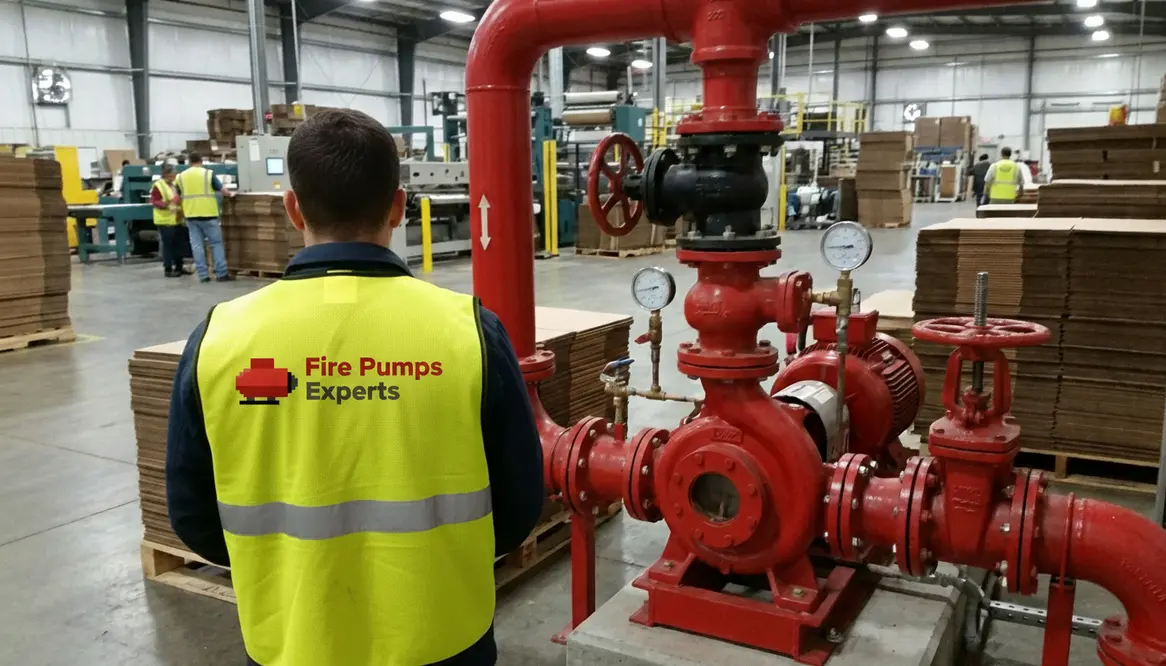
Fire Pump Planning for Corrugated Paper Plants
I have walked through enough corrugated packaging plants to know one thing for certain. Paper may look harmless, but under the right conditions, it behaves like a blockbuster villain waiting for its big scene. That is why Fire pump planning for paper-based production is not just a line item on a checklist. It is the backbone of a serious protection strategy. When I design or evaluate these systems, I am not thinking about theory. I am thinking about heat, airflow, dust, and the very real speed at which fire can spread through stacked corrugated stock.
And yes, if paper had a personality, it would be that quiet coworker who suddenly flips a table in act three.
Why corrugated packaging plants demand serious fire pump systems
Corrugated facilities combine high fuel load with continuous production. Large rolls, dry fibers, and fine dust create an environment where ignition can escalate fast. Because of this, I always approach fire pump design for paper facilities with one priority in mind. Deliver water fast, consistently, and at the right pressure.
Moreover, these plants often operate around the clock. That means downtime is expensive, and system reliability must be non negotiable. A properly planned fire pump system ensures sprinklers and suppression systems perform exactly when needed. No hesitation. No excuses.
And let’s be honest. Fire does not care about your production schedule.
What makes Fire pump planning for paper-based production different?
I get this question a lot, and the answer is simple. Not all hazards behave the same. In corrugated environments, I account for:
Key fire behavior factors in corrugated plants
High storage configurations
Stacked materials increase fire intensity and demand higher water density.
Dust accumulation
Fine paper dust can ignite quickly and spread flames across surfaces.
Process equipment
Corrugators, dryers, and cutters introduce heat sources that raise ignition risk.
Because of these factors, industrial fire pump planning for paper production must align with hazard classifications and real operational conditions. I never rely on generic assumptions. Instead, I match pump capacity and pressure to the actual layout and process flow.
Think of it like casting the right actor for a role. You would not cast a rom com lead as Batman. The same logic applies here.
Core components I prioritize in system design
When I build or review a system, I focus on performance and resilience. Each component has a job, and together they form a system that must work under stress.
Hydraulic backbone decisions
Pump type selection
I choose between electric, diesel, or steam driven pumps based on facility infrastructure and reliability needs.
Water supply reliability
A strong pump means nothing without a dependable water source. I verify flow rates and duration.
Pressure control
Maintaining consistent pressure ensures sprinklers activate effectively across all zones.
Reliability and lifecycle elements
Redundancy planning
I often recommend backup pumps for critical facilities to avoid single points of failure.
System integration
The pump must work seamlessly with alarms, sprinklers, and detection systems.
Testing access
If you cannot test it easily, you cannot trust it. I design with maintenance in mind.
Each of these elements supports a larger goal. Keep the system ready at all times. Because when a fire starts, there is no warm up period.
How I approach risk assessment in corrugated facilities
From walkthrough to Fire pump planning for paper-based production
Before I finalize any Fire pump planning for paper-based production, I spend time understanding the facility itself. I walk the floor. I observe workflows. I look for hidden risks.
For example, I pay close attention to storage density and aisle spacing. Then, I evaluate ventilation patterns, because airflow can either slow or accelerate fire spread. In addition, I consider how quickly personnel can respond and whether suppression systems are properly zoned.
As a result, the fire pump system becomes tailored, not generic. It supports real world conditions rather than theoretical ones.
And yes, sometimes I feel like a detective in a crime drama. Except the suspect is cardboard, and it is surprisingly guilty.
Balancing compliance and performance without overdesign
It is easy to overbuild a system. Bigger pumps, higher capacity, more cost. However, I focus on precision instead. Codes and standards provide a baseline, but I go further by aligning system performance with actual facility risk.
Therefore, I avoid unnecessary oversizing that leads to inefficiency. At the same time, I refuse to cut corners where risk demands more robust protection. This balance ensures that commercial and industrial facilities get systems that are both compliant and practical.
Where performance meets Fire pump planning for paper-based production
In other words, I build systems that work, not just systems that look good on paper. Pun intended. That is the real goal of effective Fire pump planning for paper-based production: enough capacity to control the worst credible fire, without turning the pump room into an overbuilt monument to guesswork.
FAQ about fire pump systems in corrugated packaging plants
Questions around Fire pump planning for paper-based production come up in almost every project: sizing, power source, testing, zoning, and how to keep everything reliable over decades of operation.
Conclusion
When I look at a corrugated packaging plant, I do not just see production lines. I see risk, opportunity, and responsibility. A well executed fire pump system protects people, assets, and operations without hesitation. If you are planning or upgrading your facility, now is the time to take fire protection seriously. Work with experts who understand industrial environments and demand performance, not guesswork. Because in this business, preparation is everything, and the right system makes all the difference.