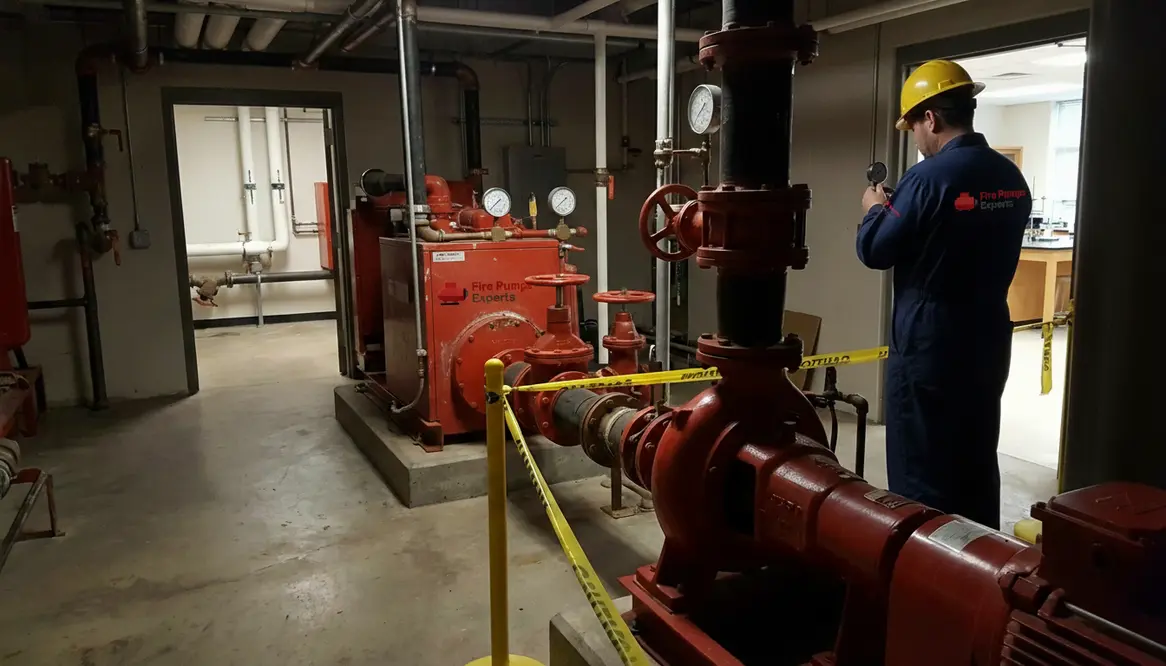
Fire Pump Requirements for Laboratory Schools Guide
I have spent years around complex facilities, and if there is one thing I have learned, it is this: when education spaces and laboratory environments share the same roof, the rules do not just stack, they multiply. That is where Fire Pump Requirements for Laboratory Schools step into the spotlight. Within the first moments of planning, I always emphasize that these systems are not just about compliance, they are about control, safety, and continuity. And yes, they are also about avoiding that one inspector who seems to enjoy surprise visits a little too much.
Understanding Mixed Use Spaces Without Losing Your Mind
When I walk into a facility that blends classrooms with active lab environments, I immediately see two worlds colliding. On one side, you have structured learning spaces. On the other, controlled hazards. Therefore, compliance becomes layered.
Educational occupancy codes tend to focus on safe egress, occupant load, and accessibility. Meanwhile, laboratory standards introduce chemical storage, ventilation, and fire suppression complexity. Because of this overlap, fire protection systems must adapt to both conditions at once.
And here is the kicker. If you treat the building like just a school, you miss critical lab risks. If you treat it like only a lab, you may overbuild and overspend. So, I always aim for balance, like a good jazz band, except with fewer saxophones and more pressure gauges.
Fire Pump Requirements for Laboratory Schools in Real World Design
Now, let us talk about what really matters. Fire Pump Requirements for Laboratory Schools are not simply about installing a pump and calling it a day. Instead, they demand careful coordination between hazard classification, water supply reliability, and system demand.
In mixed use facilities, I often see higher demand placed on sprinkler systems due to lab hazards. Consequently, the fire pump must handle increased flow and pressure. Additionally, redundancy becomes more important because downtime is not an option in active research or teaching environments.
Moreover, placement matters. A fire pump cannot just sit anywhere. It needs protection, accessibility, and proper ventilation. Otherwise, you risk system failure when it is needed most. And trust me, that is not the kind of surprise anyone wants.
Design priorities I always consider
- Reliable water source and backup supply
- Proper hazard classification for labs
- System redundancy for critical operations
- Ease of maintenance and inspection
Common pitfalls I see too often
- Undersized pumps for lab demand
- Poor coordination between codes
- Ignoring future expansion needs
- Limited access for servicing equipment
How do I stay compliant with both education and lab codes?
I keep it simple. First, I identify the highest hazard present. Then, I design systems that meet or exceed that requirement. Because in mixed use environments, the strictest rule usually wins.
However, I also coordinate closely with local authorities and fire protection engineers. That way, I avoid conflicts between codes. In addition, I document everything. Inspectors love documentation almost as much as coffee, and that is saying something.
Finally, I plan for change. Labs evolve. Equipment upgrades. New materials appear. So, I build flexibility into the system from the start. It saves time, money, and a lot of headaches down the road.
Integrating Fire Protection Systems That Actually Work Together
A fire pump does not operate in isolation. Instead, it supports a network of systems including sprinklers, standpipes, and sometimes specialized suppression systems. Therefore, integration is key.
I always ensure that the pump aligns with system demand curves and building layout. Additionally, I coordinate with electrical systems for reliable power. Backup generators often play a role here, especially in large commercial and industrial facilities.
And let us not forget testing. Regular testing ensures performance stays consistent. Think of it like going to the gym, except instead of lifting weights, you are verifying pressure output. Less sweat, more gauges.
Fire Pump Requirements for Laboratory Schools and Long Term Performance
Over time, even the best systems can fall out of sync. That is why Fire Pump Requirements for Laboratory Schools extend beyond installation. Maintenance and monitoring are just as critical.
I recommend scheduled inspections, performance testing, and system updates as standards evolve. Furthermore, digital monitoring tools now allow real time tracking of pump performance. This means issues can be addressed before they become failures.
In large scale facilities, this proactive approach is not just smart, it is necessary. After all, downtime in a lab environment can disrupt research, education, and operations all at once.
FAQ: Quick Answers You Can Actually Use
Final Thoughts and Your Next Move
If you are managing or developing a mixed use education and laboratory facility, do not leave compliance to chance. I encourage you to take a closer look at your fire protection strategy, especially your pump systems. Work with experienced professionals who understand commercial and industrial demands. Because when safety, performance, and compliance align, everything runs smoother. And frankly, that is the kind of quiet success we all appreciate.
Fire Pump Requirements for Laboratory Schools sit at the crossroads of safety, risk management, and operational continuity. Getting them right means fewer unpleasant surprises during inspections, better resilience during emergencies, and a learning and research environment that feels as solid behind the walls as it looks from the hallway.