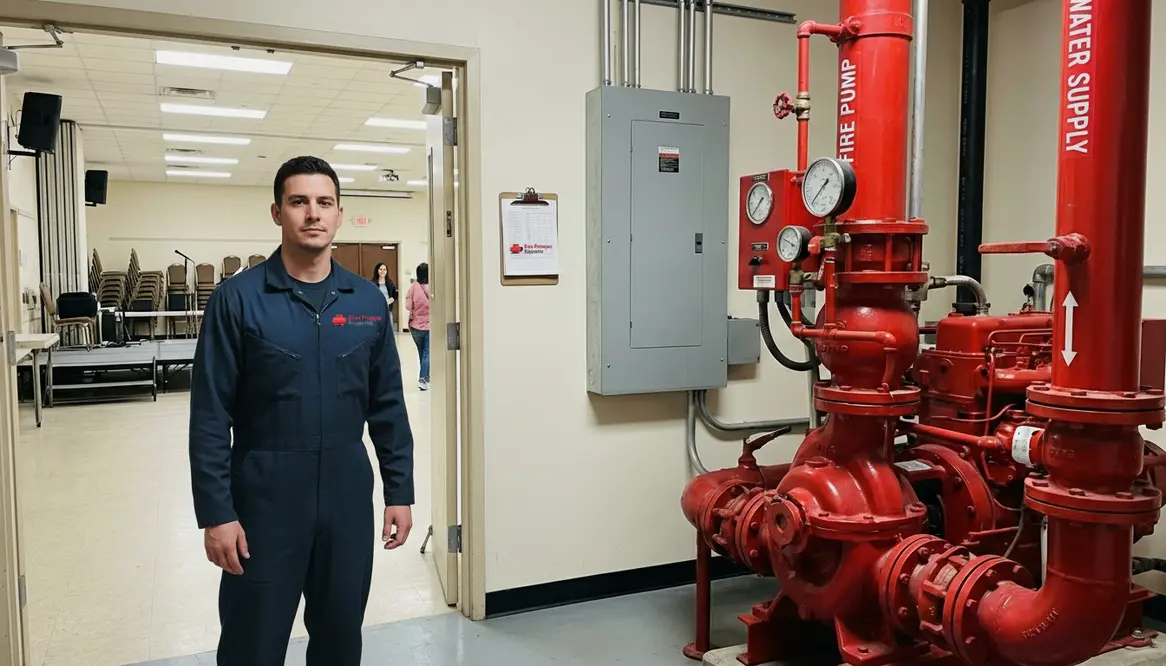
Fire Pump Requirements for Community Centers Guide
I have walked through many buildings in my time, and I can tell you this much. Fire does not care if a space is a gym in the morning and a banquet hall by night. Multi use public buildings demand a higher level of respect, planning, and precision. That is where Fire Pump Requirements for Community Centers quietly step in, not as a luxury, but as a backbone. Within the first moments of an emergency, these systems decide whether a situation becomes a story or a headline. And trust me, nobody wants to be trending for the wrong reasons.
Why multi use buildings demand sharper fire safety planning
Multi use buildings are, by nature, unpredictable. One hour you have a packed conference, the next you host a children’s event with glitter that somehow ends up everywhere except where it belongs. Because of this constant shift, I always approach fire safety with flexibility and structure working hand in hand.
First, occupancy changes mean risk levels shift throughout the day. Therefore, systems must adapt without hesitation. Second, different activities introduce different ignition sources. A kitchen, a stage lighting rig, or even temporary electrical setups all increase complexity.
So I do not rely on static solutions. Instead, I design systems that anticipate change. That includes proper zoning, responsive alarms, and most importantly, water delivery systems that never hesitate.
Fire Pump Requirements for Community Centers in high traffic environments
When I evaluate a property, I look at water supply the way a chef looks at ingredients. If it is not reliable, nothing else matters. Fire Pump Requirements for Community Centers exist to ensure that pressure and flow remain steady even when demand spikes.
In larger facilities, municipal water alone often falls short. That is where fire pumps take over. They boost pressure instantly, feeding sprinkler systems and standpipes without delay. And yes, delay is the villain in every fire scenario.
However, installation is only half the story. I insist on regular testing, load checks, and redundancy planning. Because a fire pump that fails is like a superhero who forgot their cape at home. Technically still useful, but not when it counts.
Key system components I prioritize
- Reliable power supply with backup
- Automatic activation triggers
- Pressure monitoring systems
- Routine inspection schedules
Common mistakes I avoid
- Undersized pumps for peak demand
- Poor maintenance planning
- Ignoring system integration
- Overlooking future building use changes
How do I design fire safety systems that adapt to changing occupancy?
I start by accepting one truth. No two days inside a multi use building look the same. Therefore, I build systems that respond in real time.
For example, I integrate intelligent alarm systems that adjust sensitivity based on occupancy levels. Additionally, I ensure sprinkler coverage accounts for flexible layouts. Movable walls and temporary stages should never create blind spots.
Then, I coordinate evacuation routes that remain clear regardless of setup. Because in an emergency, confusion spreads faster than fire. And nobody wants to reenact a disaster movie without a script.
Finally, I connect everything to a central monitoring system. This allows facility managers to see issues before they escalate. Prevention, after all, is far less dramatic than response. And far cheaper too.
Fire pump system integration with overall building safety
A fire pump does not operate in isolation. It works as part of a larger ecosystem. I make sure it communicates with alarms, sprinklers, and emergency controls seamlessly.
For instance, when a fire alarm triggers, the pump must activate instantly. No hesitation. No second guessing. Just action. In addition, pressure sensors provide real time data, ensuring the system performs as expected under stress.
I also emphasize redundancy. Backup power sources, secondary pumps, and fail safe controls all play a role. Because relying on a single point of failure is a gamble I refuse to take.
And let me say this plainly. When everything works together, the system feels invisible. When it does not, it becomes the only thing anyone talks about. Usually on the evening news.
Maintenance strategies that actually hold up over time
Installing a system is one thing. Keeping it ready is another story entirely. I treat maintenance as a living process, not a checklist.
First, I schedule routine inspections that go beyond surface level checks. I want performance data, not just visual confirmation. Next, I run periodic flow tests to verify output under real conditions.
Then, I train on site staff. Because even the best system can fail if no one knows how to support it. A well trained team can spot early warning signs and act quickly.
And yes, documentation matters. Clear records help identify trends and prevent repeat issues. It may not sound exciting, but neither does explaining preventable failures to stakeholders.
FAQ about fire safety in multi use public buildings
Conclusion
Fire safety in multi use public buildings is not a box to check. It is a commitment that evolves with every event, every crowd, and every square foot of space. When I apply Fire Pump Requirements for Community Centers alongside smart design and steady maintenance, I create systems that stand ready without fanfare. If you manage or design large commercial properties, now is the time to act. Build smarter, plan deeper, and ensure your fire protection works when it matters most.