Outlet Center Fire Pump Requirements Guide
I have walked through enough destination shopping properties to know one thing for certain. When crowds gather, risk follows quietly behind. That is exactly why outlet center fire pump requirements matter from the very first blueprint to the final storefront sign. These properties are not simple retail spaces. They are sprawling, high traffic environments where safety systems must work flawlessly without stealing the spotlight. And while shoppers are focused on deals and food courts, I stay focused on what protects them if things go wrong. It is not glamorous, but it is essential. Think of it as the quiet bodyguard in a well tailored suit. You do not notice it until you need it.
Why fire protection defines the success of destination retail
Destination shopping centers are designed to attract large volumes of people. Therefore, fire protection is not just a compliance checkbox. It is a business continuity strategy. When I evaluate these properties, I look at how systems perform under pressure, not just how they appear on paper.
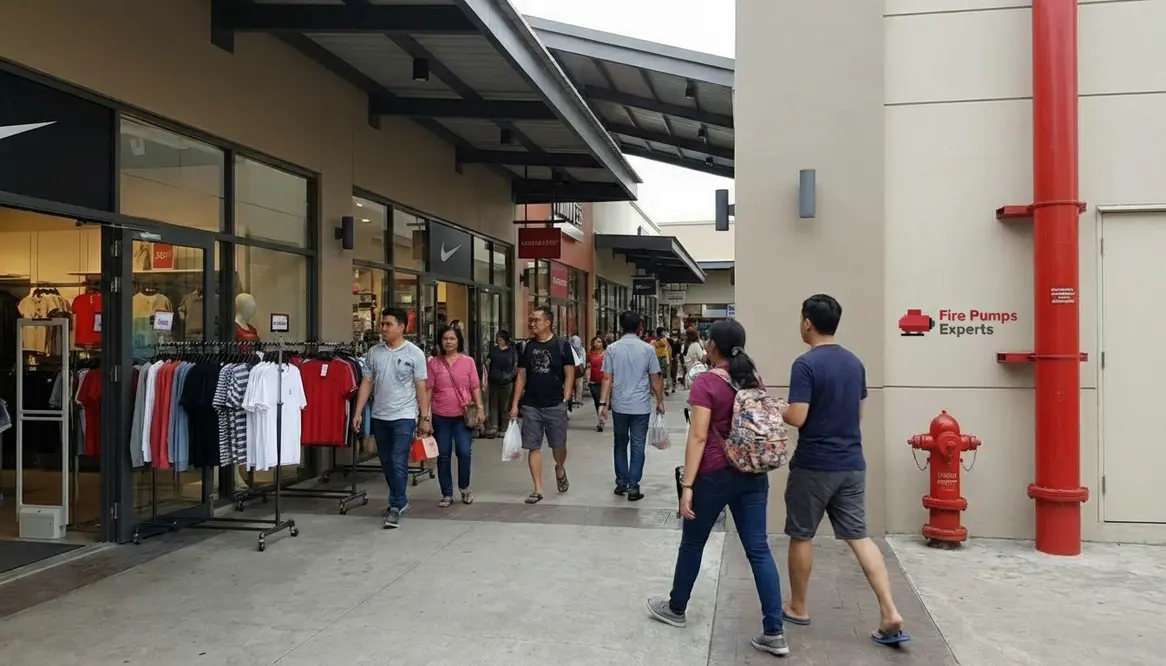
Additionally, the layout of outlet centers often includes open air corridors, mixed use zones, and long walking paths. Because of this, water delivery must remain consistent across wide areas. A properly designed fire pump system ensures that pressure stays reliable even at peak demand.
And let’s be honest. No one wants their shopping trip interrupted by alarms and chaos. Prevention and preparedness keep the experience seamless, even when risks are high.
What do outlet center fire pump requirements actually involve
At their core, outlet center fire pump requirements ensure that water moves where it needs to go, when it needs to get there, with zero hesitation. However, there is more happening behind the scenes than most realize.
I focus on system sizing, redundancy, and power reliability. For example, a fire pump must match the hydraulic demand of the entire property. If it falls short, even slightly, coverage gaps appear. On the other hand, oversizing can create inefficiencies and long term wear.
Moreover, backup power is not optional. If the main supply fails, the system must continue without interruption. That is why diesel driven pumps or reliable generator connections are often part of the design.
It is a bit like casting a superhero. You do not just want strength. You want endurance, reliability, and the ability to show up every single time.
Designing systems that scale with high traffic environments
When I approach large retail properties, I think about flow. Not just people, but water, pressure, and response time. Because outlet centers expand and evolve, fire protection systems must scale without needing a complete overhaul.
Key design priorities I follow
- Maintain consistent pressure across long distances
- Support multiple sprinkler zones operating at once
- Integrate with standpipe systems for fire department use
- Allow for future tenant buildouts without redesign
Operational considerations
- Easy access for maintenance teams
- Clear monitoring and alert systems
- Protection against environmental exposure
- Reliable testing without disrupting business
In other words, I build systems that think ahead. Because in this environment, standing still is not an option.
How I balance compliance with real world performance
Codes and standards provide the foundation. However, I never stop at minimum requirements. I look at how systems behave during real emergencies, not just inspections.
For instance, I evaluate pump start times, pressure fluctuations, and system coordination. While everything may pass on paper, performance under stress tells the real story.
Also, I consider human behavior. Large crowds do not move like neatly organized lines. They react unpredictably. Therefore, systems must compensate for delays, congestion, and access challenges.
It is a bit like directing a blockbuster film. You can have the best script, but if the execution falls apart, the audience notices immediately.
Maintaining reliability without disrupting the shopping experience
Maintenance is where many properties stumble. Yet, I see it as an opportunity to reinforce reliability without affecting daily operations.
Routine testing must be scheduled strategically. Early mornings or off peak hours work best. Additionally, remote monitoring allows teams to catch issues before they become visible problems.
Because let’s face it, no one wants to explain to a crowd why the fountains suddenly stopped while alarms started. Smooth operation is the goal, always.
I also recommend clear documentation and trained staff. When everyone understands the system, response times improve, and risks decrease.
Future ready fire protection strategies for large retail properties
The future of fire protection in destination shopping spaces is evolving. As properties integrate smart technologies, fire systems must keep pace.
I see increased use of data driven monitoring, predictive maintenance, and automated diagnostics. These tools help identify issues before they escalate.
Furthermore, sustainability is becoming part of the conversation. Efficient pump systems and water usage strategies are gaining attention without compromising safety.
It is not about replacing proven systems. It is about enhancing them. Think of it as upgrading from a flip phone to a smartphone. The purpose stays the same, but the capabilities expand dramatically.
Understanding outlet center fire pump requirements in practice
When I walk a new development, I mentally map out how outlet center fire pump requirements translate into riser rooms, control valves, and long pipe runs feeding distant tenant spaces. It is one thing to read a specification; it is another to see how that specification will perform in a real emergency with thousands of people onsite.
I pay attention to elevation changes, long courtyard stretches, anchors at each end of the property, and those tucked away kiosks that are easy to overlook. All of these influence how water moves and how much pressure the fire pump needs to deliver. That is why working with reliable references, such as resources available at https://firepumps.org, can support better decisions when interpreting outlet center fire pump requirements for complex retail environments.
FAQ: Fire protection for destination shopping properties
Questions about outlet center fire pump requirements come up every time I talk with developers, facility managers, or insurers. The themes are surprisingly consistent: reliability, scalability, and what actually happens when the system is needed in real time.
Closing thoughts and next steps
When I look at destination shopping properties, I see more than storefronts. I see complex systems working quietly to protect every visitor and tenant. Strong fire protection, guided by well planned outlet center fire pump requirements, keeps everything running safely behind the scenes. If you are managing or developing a large scale retail property, now is the time to evaluate your systems, strengthen your strategy, and ensure nothing is left to chance. The right approach today prevents costly problems tomorrow.