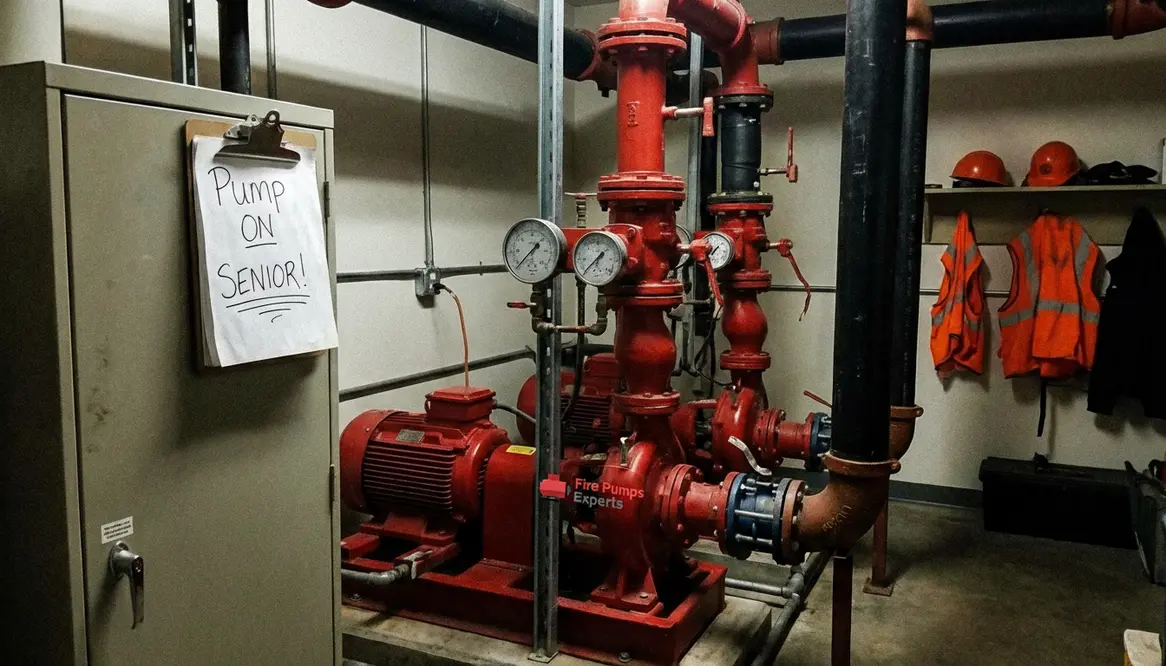
Senior Apartment Fire Pump Systems for Fire Safety
I have walked through many age restricted housing communities, and one truth always settles in quietly but firmly. Fire safety is not just a checklist. It is a promise. And in these environments, where timing and mobility matter more than ever, that promise depends heavily on reliable infrastructure like our senior apartment fire pump systems. Within the first moments of an emergency, these systems do not hesitate, and frankly, neither should we.
So today, I will walk you through how to think about fire safety in age restricted housing. Not as a chore, but as a system of protection that works quietly in the background. Like a good bass line in a song, you do not always notice it until it disappears. And trust me, that is not a moment you want to experience.
Why Fire Safety in Age Restricted Housing Demands More Attention
First, let me be clear. Fire safety in these communities is not just about code compliance. It is about human reality. Residents often have limited mobility, slower response times, and sometimes medical dependencies. Therefore, systems must compensate where speed cannot.
Because of this, layered protection becomes essential. Sprinklers, alarms, and well maintained fire pump infrastructure must work together seamlessly. Moreover, staff training and evacuation planning need to reflect real world conditions, not ideal scenarios.
And yes, I have seen plans that assume everyone moves like an action movie hero. Spoiler alert. They do not. So we design for reality, not fantasy.
How Do Senior Apartment Fire Pump Systems Improve Emergency Response?
Here is the short answer. They make water move fast and with purpose.
However, the deeper truth is this. In large residential buildings, especially multi story senior housing, municipal water pressure alone often falls short. That is where senior apartment fire pump systems step in. They boost pressure, ensuring sprinklers and standpipes deliver water exactly where it is needed, without delay.
Additionally, these systems support firefighting teams when they arrive. Fire crews rely on consistent pressure. Without it, even the best equipment loses effectiveness.
Think of it like trying to shower with a trickle of water. Now imagine fighting a fire with that same pressure. Not exactly reassuring, right?
Designing Fire Safety Systems That Actually Work
I always say that a system is only as good as its weakest point. Therefore, proper design is everything.
In age restricted housing, design must account for building size, layout, and resident needs. For example, longer hallways and larger floor plans require stronger water delivery systems. At the same time, alarm systems must be both audible and visible.
Furthermore, redundancy matters. Backup power ensures systems remain active during outages. Because let us face it, emergencies rarely wait for convenient timing.
Key Design Priorities
- Consistent water pressure across all floors
- Clear alarm signaling systems
- Integration with emergency power
- Accessibility for maintenance teams
Common Oversights
- Undersized pump capacity
- Poor system testing schedules
- Ignoring building expansion needs
- Lack of coordination with fire departments
As you can see, small oversights can create large vulnerabilities. And in this context, small is not harmless.
Maintenance Is Where Safety Either Holds or Fails
Now here is where things often drift off course. Maintenance is not glamorous. It does not make headlines. Yet it determines whether a system performs when it matters most.
Routine inspections, pressure testing, and component checks must happen consistently. Moreover, documentation should be clear and accessible. When systems sit idle for too long without testing, reliability becomes a guess rather than a guarantee.
I like to think of it this way. You would not trust a car that has not been started in years to take you across the country. So why trust a fire system that has not been properly exercised?
Additionally, working with experienced commercial service providers ensures compliance and performance. This is not a DIY situation. Leave that to assembling furniture and regretting it halfway through.
Training Staff for Real World Fire Events
Even the best systems need human support. Therefore, staff training plays a critical role in overall safety.
Teams should understand evacuation procedures, alarm responses, and communication protocols. More importantly, they must practice these actions regularly. Because in an emergency, people fall back on training, not theory.
Furthermore, coordination with local fire departments builds familiarity. When responders know the building layout and systems in advance, response time improves significantly.
And yes, drills can feel repetitive. But repetition builds confidence. Think of it like rehearsing a scene. When the curtain rises, you do not want improvisation. You want precision.
Technology Is Changing the Game Quietly
Modern fire safety systems are becoming smarter. Sensors now provide real time data. Monitoring systems can alert teams before issues escalate. And integration allows multiple systems to communicate seamlessly.
Because of these advancements, property managers gain better visibility into system health. That means fewer surprises and faster response to potential problems.
However, technology is only as good as its implementation. Installing advanced systems without proper oversight is like buying a spaceship and forgetting to learn how to fly it. Impressive, but not particularly helpful.
How Senior Apartment Fire Pump Systems Fit Into the Bigger Picture
All of this comes back to one core idea: senior apartment fire pump systems are not stand-alone heroes. They are part of a network that includes sprinklers, alarms, emergency lighting, and trained staff. When each piece pulls its weight, the whole environment becomes safer, calmer, and more predictable in a crisis.
If you think of your building as a living organism, these pumps are the heart of the water-based fire protection system. Without strong, reliable pressure, sprinklers and standpipes become little more than decoration. That is why designing, maintaining, and upgrading senior apartment fire pump systems is one of the most strategic safety investments a property manager can make.
Pair that with thoughtful evacuation planning, accessible stairways, and clear communication tools, and you get a safety program that respects how residents actually move, react, and rely on staff during an emergency. It is not about flashy technology for its own sake; it is about consistent performance when people have the least margin for error.
FAQ: Fire Safety for Age Restricted Housing
Final Thoughts and Next Steps
Fire safety in age restricted housing is not something I take lightly, and neither should you. Every system, every inspection, and every decision adds up to a safer environment. If you manage or operate a large residential facility, now is the time to evaluate your infrastructure. Work with experienced commercial specialists, invest in reliable systems, and make safety a constant priority. Because when everything works as it should, nothing happens. And that is exactly the outcome we want.