Class A Office Fire Pump Requirements Guide
I have walked through enough premium office towers to know one thing for certain. Glass shines, marble echoes, and beneath it all, safety either exists quietly or not at all. When I talk about class A office fire pump requirements, I am not talking about paperwork gathering dust. I am talking about the quiet heartbeat of a building that protects every person inside it. In high value properties, expectations rise, and so must fire protection standards. So today, I will take you through what really matters, with a steady hand and just enough humor to keep us both awake.
Why premium office buildings demand a higher fire safety standard
Now, premium offices are not your average cubicle farms. They are dense with technology, expensive finishes, and people who expect everything to work perfectly, including safety systems. Because of this, fire risks evolve. Electrical loads are higher, layouts are more complex, and response time becomes critical.
Therefore, I always treat these properties as ecosystems. One weak link, and the whole chain feels it. Fire safety here is not about minimum compliance. It is about performance under pressure. Think of it like a blockbuster movie. Nobody remembers the extra who did fine. They remember the lead who delivered when things exploded.
How do fire pump systems actually protect high rise offices
I get this question often, and I like it. Because once you understand the role of a fire pump, everything else starts to make sense.
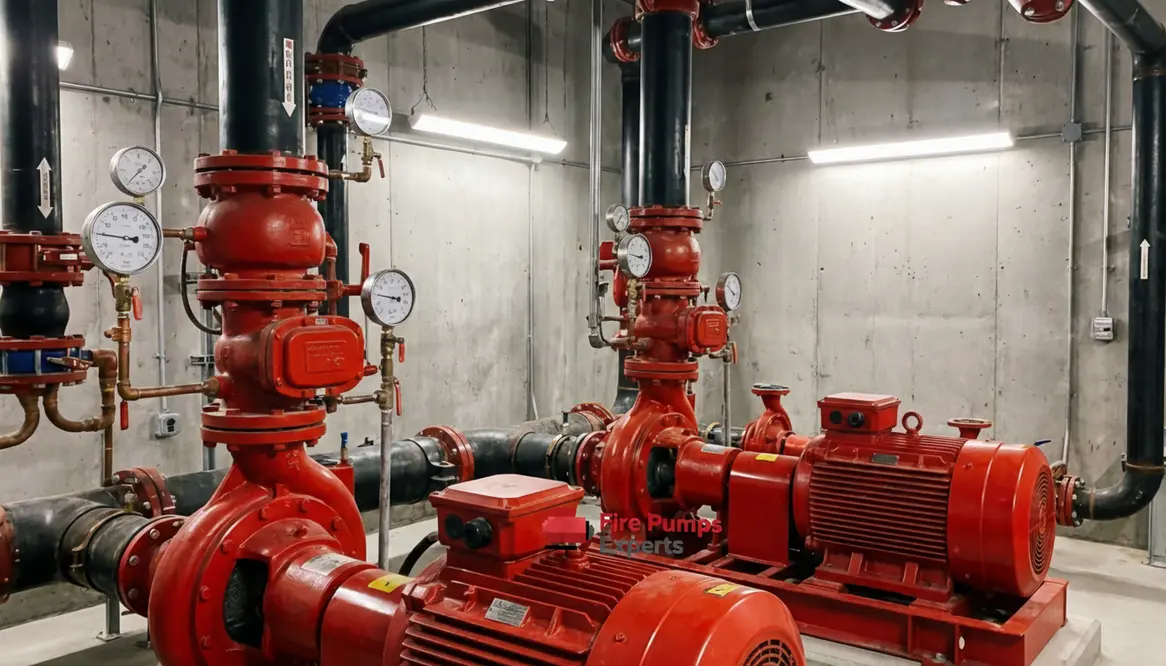
A fire pump ensures water moves with force when gravity alone cannot do the job. In tall buildings, that is not a luxury. It is essential. Without it, upper floors might as well bring their own buckets.
Moreover, these systems maintain pressure across sprinkler networks and standpipes. When a fire starts, seconds matter. So the pump activates, boosts water flow, and turns a potential disaster into a controlled event.
And yes, it is not flashy. It will not trend online. But like a good bass line in a song, you notice when it is missing.
Meeting class A office fire pump requirements in modern developments
When I approach class A office fire pump requirements, I focus on precision. Not guesswork. Not shortcuts.
First, capacity must align with building height and hazard classification. Then, redundancy comes into play. Premium properties often require backup pumps or secondary power sources. Because when the lights go out, safety should not.
In addition, installation quality matters just as much as design. I have seen perfect plans fail because execution cut corners. Alignment, testing, and integration with alarm systems all play a role.
Consequently, ongoing inspections keep everything honest. A fire pump that worked last year but fails today is not a system. It is a liability.
What I prioritize when designing fire safety for large commercial properties
System integration
I ensure fire alarms, sprinklers, and pumps communicate seamlessly. Because confusion during an emergency is not an option.
Redundancy
I build in backups where failure would be catastrophic. One system fails, another takes over. Simple.
Accessibility
I make sure maintenance teams can reach critical components easily. If you cannot service it, you cannot trust it.
Scalability
I design systems that can grow with the building. Because tenants change, and demands rise.
At the end of the day, I design for reality. Not theory. Fires do not follow scripts, no matter how much we wish they did.
Common mistakes I see in high end office fire protection
Now, let me be honest for a moment. Premium does not always mean perfect.
First, I often see overconfidence in aesthetics. Beautiful spaces sometimes hide poorly planned mechanical rooms. It is like putting designer shoes on and forgetting how to walk.
Next, maintenance gets overlooked. Systems are installed, inspected once, and then quietly ignored. However, fire protection is not a set it and forget it deal.
Finally, coordination failures between contractors create gaps. One team assumes another handled something. Spoiler alert. They did not.
Because of this, I always push for accountability at every stage. Design, installation, and long term operation must align.
class A office fire pump requirements and long term reliability
Meeting class A office fire pump requirements is not a one time achievement. It is an ongoing commitment.
Testing schedules must be consistent. Weekly, monthly, and annual checks all serve a purpose. Additionally, performance data should be tracked over time. Small changes can signal larger issues ahead.
Furthermore, staff training plays a role. A well designed system still depends on people who know how to respond. Technology helps, but humans close the loop.
And let me say this plainly. Reliability is built slowly, through discipline. Not through last minute panic when an inspector shows up.
FAQ
If you manage or develop class A space, you already know instincts are not enough. The details of class A office fire pump requirements decide whether a response is controlled or chaotic. With that in mind, here are clear answers to the questions that come up most.
Conclusion
Fire safety in premium office properties is not just a requirement. It is a responsibility that protects people, assets, and reputation. When you invest in the right systems, maintain them well, and follow proven standards, you create a building that stands ready for the unexpected. If you manage or develop large commercial properties, now is the time to review your systems, refine your strategy, and ensure everything performs exactly as it should when it matters most. Keeping class A office fire pump requirements front and center is one of the most reliable ways to make sure that when the alarms sound, your building is ready to respond with calm, controlled pressure instead of guesswork.