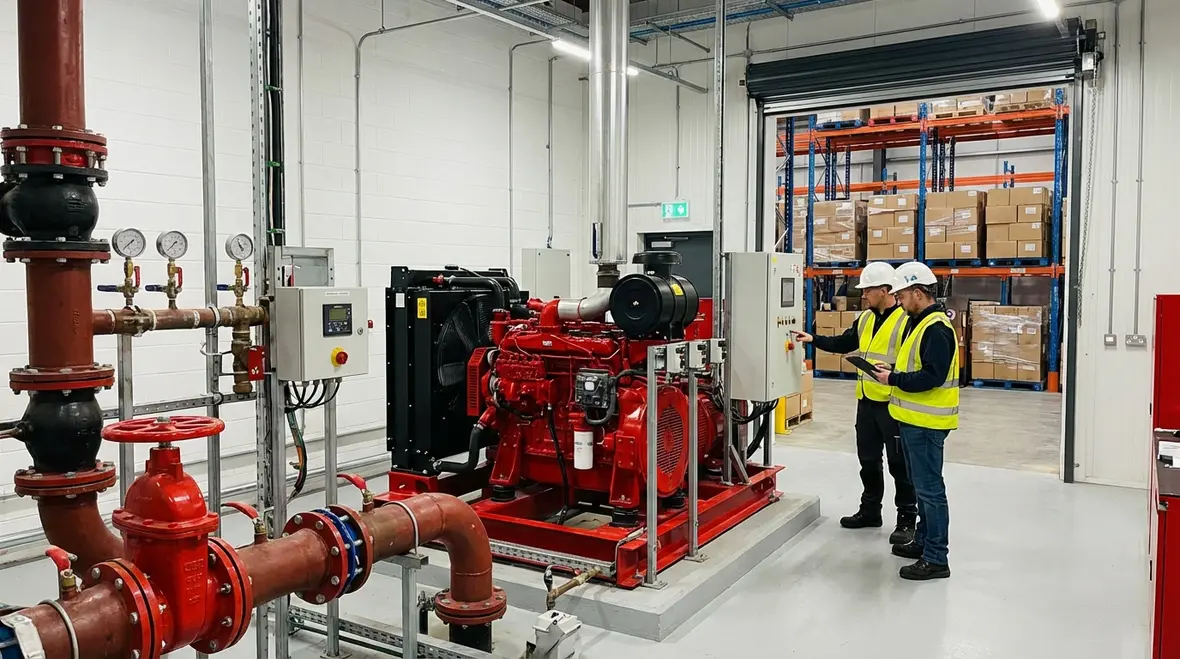
Warehouse Fire Pump System Requirements for Compliance
Warehouse Fire Pump System Requirements: That’s the phrase that often starts as a line on a compliance checklist and ends as a full-blown saga when that checklist turns into an urgent operation. Now, don’t worry—I won’t turn this into an episode of “Survivor: NFPA Code Edition.” Instead, let’s go deep into what these fire pump systems are really about and why, if you’re running a warehouse, they should be as important to you as air is to Iron Man’s suit. (Yes, Tony Stark needed oxygen. So does your fire protection plan.)
Why Fire Pump Systems are Non-Negotiable for Warehouses
Let’s get one thing straight: you can’t shortcut fire safety in a warehouse. Now, I’m no firefighter—but I know enough to say if you try to beat fire with a weak water stream from a trickling hydrant, you’re not just playing with fire… you’re losing to it.
Here’s the deal. Warehouses often stretch out over massive square footage, stocked with combustible materials—and not just the usual suspects like cardboard or wooden pallets. Think aerosols, packing foam, lithium-ion batteries. Fire risk? Try fire buffet.
This is why fire pumps play the hero role in your fire protection system—they boost water pressure when the municipal supply just can’t keep up. And trust me, the local hydrant usually can’t handle your 52,000-square-foot warehouse.
In a nutshell, these pumps make sure that those glorious sprinkler heads up top don’t just wheeze at the fire like it’s an awkward first date—they drench it, consistently and with force. When you look at warehouse fire pump system requirements, this consistent and reliable water delivery is right at the top of the must-have list.
Where Compliance Meets Reality
Most warehouse fire pump system requirements come from a mix of NFPA standards, local codes, and insurance carrier guidelines. On paper, it looks like a neat set of bullet points. In real life, it decides whether your sprinklers trickle or turn into a controlled waterfall when you actually need them.
Ignoring those requirements because “we’ve never had a fire” is like skipping seatbelts because you “haven’t crashed yet.” The system isn’t there for today; it’s there for the worst five minutes your warehouse will ever see.
Understanding What Triggers a Fire Pump in a Warehouse
So how does a fire pump know when it’s showtime? It’s not telepathy… or enchanted by Hogwarts (although that’d make inspection reports more fun).
Here’s how it actually works. The fire pump activates when the pressure in the system drops below a set point. This usually happens when the sprinklers detect heat and burst open—more water flows out… pressure dips… and boom, the fire pump roars to life. Think of it like a superhero suit—dormant until danger shows up.
This automatic response is why you want these systems tested and maintained like your life depends on it. Because, well… it might.
Pressure, Sprinklers, and Smart Activation
Modern warehouse fire pump system requirements assume your pump isn’t just a giant motor in a dark room; it’s part of a responsive network. Pressure sensors, controllers, and jockey pumps are constantly watching your system. When that pressure drop crosses a threshold, the main pump doesn’t “think about it” — it starts.
Get this setup wrong, and the pump might not start when it should, or worse, short-cycle and wear itself out. Get it right, and your system reacts faster than the panic in the control room.
Breaking Down Fire Pump Components (Like a Boss)
You don’t need to be an engineer to understand the moving parts of a fire pump. But let’s at least break the system down into core components so you can flex next time someone’s throwing jargon around.
The Essentials
- Pump – The muscle. Can be diesel, electric, or even steam (if your warehouse is older than Yoda).
- Controller – The brain. Starts the pump when pressure drops.
- Power Source – Diesel engine, electric motor… or a backup generator if you’re savvy.
Support Crew
- Jockey Pump – Maintains normal pressure. Kind of like the Robin to Batman.
- Test Header – Used during regular inspection and testing.
- Relief Valves – Prevent over-pressurization. Because exploding pipes = instant bad day.
Understanding these parts isn’t just about repair readiness. It’s about empowerment. Also, it really helps when contractors start explaining costs—they’ll know you know what a test header is. (Pro tip: act like it’s no big deal. Works every time.) And yes, detailed knowledge of these components is baked into warehouse fire pump system requirements across most major codes and standards.
What Happens If You Ignore Fire Pump Requirements?
Aside from fire roaring through your warehouse like it’s auditioning for a Michael Bay film?
- Insurance non-compliance: Yeah, they read the small print. If your warehouse skips on fire pump system upgrades, they might skip on your claims, too.
- Regulatory fines: Inspectors are like the IRS of fire safety—you won’t see them coming, but you’ll definitely feel the aftermath if you’re not up to code.
- Massive downtime: A fire event—even contained—shuts down business. Every second offline is money you’re losing (and competitors are gaining).
So don’t gamble with the odds. No one wants their warehouse trending on Twitter for the wrong reasons. (“Warehouse Fire Devours 6 Million Boxes of Fidget Spinners – Again.”)
Risk, Reputation, and Real Consequences
Here’s the unfun part of warehouse fire pump system requirements: when you ignore them, the fallout isn’t just financial. Investigations, denied claims, potentially even negligence claims can come into play. A fire event exposes every shortcut you took over the last decade in about 15 minutes.
On the flip side, when you can show that your system was sized, installed, inspected, and maintained to recognized standards, you’re not just safer—you’re defensible.
NFPA 20 Fire Pump Requirements for Warehouses
Yes, I promised code wouldn’t be boring. So let’s tackle the big boss of warehouse fire pump system requirements: NFPA 20.
This standard focuses on the installation of stationary fire pumps for fire protection. In it, you’ll find gold nuggets like:
- Minimum pump flow rates — based on hazard classification and building size
- Redundancy configurations — in case one pump decides it’s done for the day
- Guidelines for diesel fuel supply — surprise, you need enough for at least 8 hours of continuous operation
- Controller and automatic start-up requirements — no sleepy pumps allowed
If you’re running a commercial or industrial facility, these benchmarks aren’t suggestions. They’re the floor—not the ceiling—of safety compliance. Being “NFPA compliant” is like flossing your teeth. Doesn’t feel urgent… until it’s very, very urgent.
Bringing NFPA 20 into Your Warehouse
In practice, NFPA 20-driven warehouse fire pump system requirements translate into real design choices: pump size, driver type, placement of the fire pump room, separation from flood and freeze risk, and even how your suction and discharge piping is laid out.
This is exactly where working with specialists pays off. If you want a deeper breakdown of how NFPA 20 shapes pump design and installation, a resource like this NFPA 20 overview from Kord Fire Protection can help connect the dots between the standard and your real-world warehouse layout.
Do I Need More Than One Fire Pump?
If you’re asking that, chances are… yes.
Larger warehouses or those housing high-pile storage often require redundant pumps. That means if one fails or is down for maintenance, the second steps up. It’s not paranoia, it’s planning. Unless you’re Liam Neeson. Then, it’s instinct.
The dual setup doesn’t just meet regulations—it keeps insurability in check and tests much higher in real-world fire scenarios. Think of it like wearing a belt and suspenders. Yeah, it’s a bit much… until the pants come down.
Redundancy and Risk Profile
Your exact warehouse fire pump system requirements depend on storage height, commodity type, racking configuration, and water supply reliability. But generally, as your risk profile climbs—hazardous materials, tall racks, narrow aisles—the argument for backup pumps gets louder.
Redundancy is what keeps a single mechanical failure from turning into a multi-million-dollar headline.
Testing & Maintenance: Your Invisible Lifesaver
Here’s the part most facilities overlook: you don’t just install a fire pump, toss confetti, and call it a day. If your system isn’t tested regularly, you’re playing a risky game of “Will It Start?”
Per NFPA 25, regular weekly, monthly, and annual inspections are required. Each has specific checks, from verifying pressure gauge readings to simulating emergency starts.
And please—don’t wait for actual smoke to learn that your battery backup is about as useful as a chocolate fire extinguisher. Get a professional team to run full-flow churn tests and service logs. Trust the pros. You wouldn’t cut your own hair before investor meetings.
Making Maintenance a Habit, Not a Panic Button
Here’s a solid way to think about maintenance: warehouse fire pump system requirements are not a one-time project; they’re an ongoing relationship. Schedules for testing, documentation, and repair should live in your facility calendar right alongside production targets and shipping deadlines.
If your first serious conversation about the fire pump happens standing in front of firefighters, you’re already late.
FAQ Section
Final Thoughts: Don’t Sleep on Your Fire Pump
Look, installing and maintaining robust warehouse fire pump system requirements isn’t just about boxes checked. It’s about lives protected, assets secured, and downtime avoided. As someone who’s worked with countless facility teams across commercial and industrial properties, I can’t stress this enough: get proactive.
The cost of preparation is pennies next to the price of regret. And unlike a Marvel reboot, you can’t restart from scratch after a serious warehouse fire. So go on—contact certified specialists, schedule that inspection, and let your fire pump system become the quiet guardian your warehouse deserves.
Let firepumps.org help you stay compliant, efficient, and protected. Reach out today for commercial and industrial fire pump solutions tailored to your facility.