Fire Pump Requirements for Mixed Use Buildings
There’s something majestic about a building serving many roles: ground-level retail pulsing with life, office spaces buzzing with caffeine and ambition one floor up, and luxury condos perched at the top like a crown jewel. Welcome to the world of mixed use buildings—a true feat of urban design. But behind all that beauty and bustle lies a silent hero: the fire pump. Understanding fire pump requirements for mixed use buildings isn’t just another box on a compliance checklist. For commercial and industrial property owners, it can mean the difference between resilience and a catastrophic city-block-wide fiasco.
Now, whether you’re a property developer, a facilities manager, or just someone who’s graduated from binge-watching HGTV to real-world infrastructure (congrats!), sit back. I’ll walk you through the gritty, fire-code-laced labyrinth with the humor of a ‘dad joke aficionado’—but cooler.
Why Fire Pumps Are the Beyoncé of Fire Protection Systems
Let’s not overcomplicate it: fire pumps do one thing incredibly well—they boost water pressure. In buildings that rise higher or stretch wider than your local Target, water from municipal sources just doesn’t cut the mustard. That’s where fire pumps strut in, wearing sunglasses at night, increasing PSI levels and making sure every sprinkler, hose cabinet, and hydrant on the property is ready to drop the mic on a rogue flame.
In a mixed use building—a combination often including commercial, residential, and amenity spaces—the water demand isn’t just high, it’s complex. Certain zones need faster suppression response than others. Think of the lobby retail space filled with flammable products or that 10th-floor coworking space filled with electronics. Fire pumps ensure every floor gets the juice it needs, right when it needs it.
Yes, your tenants may never see it. But if your building was The Avengers, the fire pump would be Tony Stark: brilliant, silent, and saving the world without asking for a thank-you card.
How mixed use building fire pump requirements shape your system
Because mixed use properties layer residential, commercial, and amenity occupancies, mixed use building fire pump requirements usually demand higher reliability, smarter zoning, and closer coordination with sprinklers and standpipes than a simple single-use structure. That means tailored pump sizing, redundancy where needed, and careful review of each floor’s risk profile instead of a blanket, generic design.
Codes and Compliance: Reading Between the Lines (So You Don’t Get Burned)
If puns were crimes, I’d be a repeat offender—but code violations? Those are the ones that’ll really cost you. Local authorities enforce building codes with varying degrees of strictness based on occupancy type, size, and existing infrastructure. For mixed use buildings, things get trickier.
You’re not just dealing with one set of occupancy hazards. You’ve got assembly use, storage risks, kitchens, electronics—and in one corner, a yoga studio. Each of these components pulls on the requirements in unique ways. That’s why a one-size-fits-all approach doesn’t work here. Compliance lies in deeply understanding:
- NFPA 20: Fire Pumps for Use in Fire Protection Systems
- International Building Code (IBC): Varies state to state
- Local AHJ (Authority Having Jurisdiction): They’re like the Gandalf of your permitting process. You shall not pass—without their approval.
- FM Global and Insurance Requirements: Because sometimes it’s not the city you’re reporting to… it’s your insurer.
Here’s a hint from the cheap seats: Hire a fire protection consultant who knows these codes like Marvel knows alternate universes. The fire pump is not where you “wing it.”
Tale of Two Systems: Sprinklers vs. Standpipes in Mixed Use Buildings
Time for a duel—but no need to cue the spaghetti western music. I’m talking about sprinkler vs. standpipe systems, both of which are absolutely dependent on your building’s fire pump system.
Sprinkler Systems
- Automatic water release
- Activated by heat
- Primarily inside individual units and corridors
Standpipe Systems
- Manual use by firefighters
- Installed in stairwells
- Used with hoses for targeted suppression
The fire pump ensures both systems receive adequate water pressure. It might be tempting to prioritize one system over the other, but if you’re managing a multi-zone property with different fire loads, you’ll likely need both. And trust me, combining them improperly is like mixing Coke and Mentos—you’ll definitely make a splash, just not the kind you want.
Where mixed use building fire pump requirements get tricky
Because standpipes support firefighter operations while sprinklers protect occupants and contents, mixed use building fire pump requirements often force you to size pumps for the worst credible combined demand. That might mean simultaneous standpipe use and sprinkler operation in different occupancies, so shortcut assumptions are not your friend here.
How High Is Too High? Vertical Challenges for Mixed Use Fire Pumps
Remember when skyscrapers first became a thing and someone asked, “Can we really build that tall?” Well, yes—but at a cost. Water pressure reduces the higher you pump, and in high-rise mixed use buildings, this becomes more than a trivia question—it becomes law.
The key term here is pressure zoning. Fire protection systems are split into pressure zones to ensure even flow and limited strain on pipes. Fire pumps are then designed to serve specific zones, often in tandem with pressure reducing valves or even additional booster pumps.
Ever heard of “over-pressurization?” Sounds like a bad diagnosis. It kind of is. Burst pipes, damaged sprinklers, and failed systems—these aren’t hypotheticals, they’re consequences of not properly addressing elevation in the pump design phase.
Bottom line? Height matters. So does tactically placing your fire pump rooms. Nothing says “I’m a pro” like a fire pump layout that reads like a conductor’s symphony instead of an afterthought crayon sketch.
Space, Redundancy, and Your New Favorite Room: The Fire Pump Room
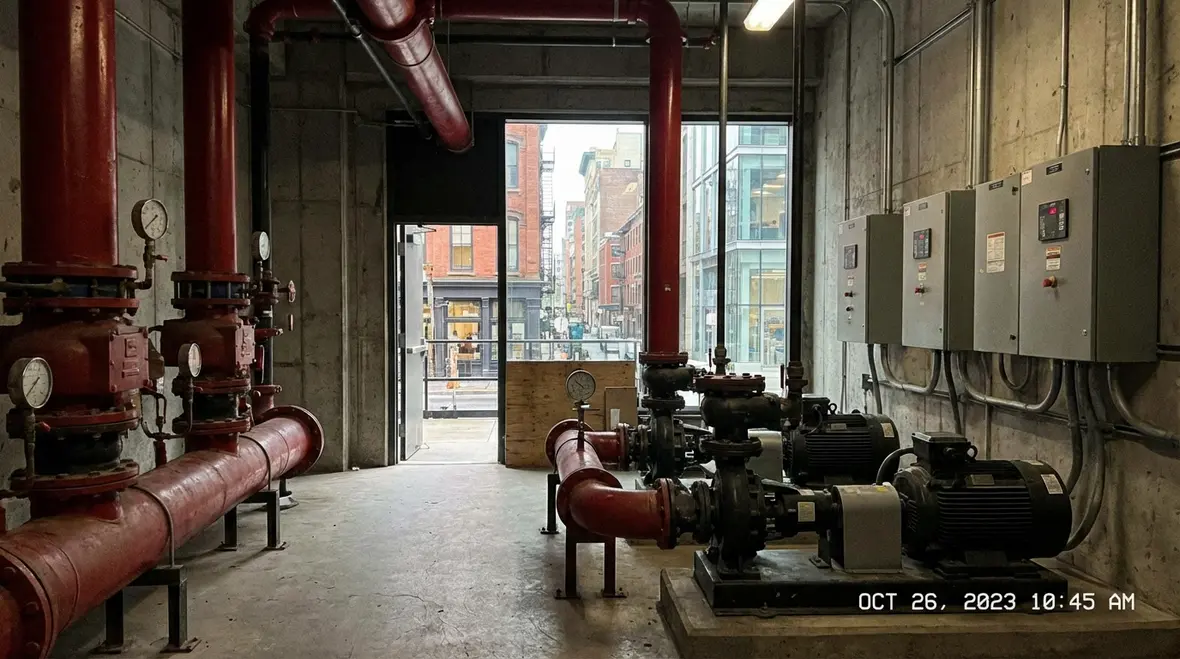
Before you turn that empty basement nook into a mini golf course, consider this: the fire pump room needs to be readily accessible, well-ventilated, and secure. And, yes, it also needs to be big enough to house the system, its backup, and maintenance space. This isn’t just about having “somewhere to put it.”
Redundancy and reliability in mixed use building fire pump requirements
In commercial and industrial developments, redundancy isn’t a luxury—it’s table stakes. Dual fire pumps, diesel backup versus electric drivers, and systems with failovers are becoming standard, especially where mixed occupancies increase risk and downtime is unacceptable.
Also? No, you can’t store your janitor supplies in there. I see you.
Think of the fire pump room like the Batcave—and you’re Alfred, keeping it clean, hidden, and fully armed.
What Are the Red Flags When Auditing Fire Pump Designs?
If you’ve made it here, you probably care about not cutting corners. Good. Because the following are major fire pump sins that’ll make inspectors raise their eyebrows… and possibly their clipboards.
- Undersized pumps that can’t meet combined system demands
- No jockey pump (which handles small leaks so the big guy isn’t overworked)
- Incorrectly sized piping (context matters, it’s not a one-size-fits-all situation)
- Improper room sealing or drainage systems—one flood and your pump says “I quit”
- Lack of alarms and remote monitoring connections
If you’re asking, “Well isn’t the fire department going to do that when they show up?” First—ouch. And second, no. That’s your job by design. Or your designer’s job. Either way, you don’t want a firefighter asking why your pump room looks like a college dorm circa 2003.
Linking design quality to ongoing maintenance
Even the best design falls flat without consistent testing and upkeep. Routine inspections, flow tests, and adjustments keep your system aligned with mixed use building fire pump requirements as tenants change, spaces get renovated, and loads evolve over time. A well-documented inspection program is your future self’s favorite gift.
FAQ: Quick Answers on Fire Pump Requirements
Sometimes, the fastest way to sanity is a clear answer to a specific question. Consider this your speed round on mixed use building fire pump requirements and system expectations.
Final Thought: Don’t Gamble on Fire Protection
When it comes to fire pump requirements for mixed use buildings, you’re not just checking off a regulatory box—you’re protecting scorecards full of human lives, million-dollar investments, and decades of community planning. Don’t DIY your way toward catastrophe. Partner with professionals who live and breathe sprinkler pressure, NFPA compliance, and fail-safe design.
If you want to understand how standards shape pump selection, layout, and maintenance, resources like the NFPA 20 overview on fire pump design and installation requirements can be a strong starting point alongside your engineering team’s input.
Looking to evaluate your fire pump system or design a code-first fire protection solution for your commercial property? Reach out to someone who knows the terrain. Contact FirePumps.org for a consultation that doesn’t just meet the code—it exceeds expectations.