Building Fire Pump Safety Escondido Guide for Owners
A practical, experience-based guide to building fire pump safety Escondido for commercial and industrial property owners who want predictable performance when it matters.
Introduction to building fire pump safety Escondido
I speak from experience when I say that building fire pump safety Escondido is not a brochure topic for light reading. I work with commercial and industrial facilities and major property buildings, and I have seen how a properly performing fire pump can make the difference between a contained incident and a catastrophe. In this piece I will walk you through performance, inspection, and practical steps to keep large properties safe. I promise to keep it clear, steady, and occasionally witty, like a calm narrator explaining how not to set off the sprinklers during a staff meeting.
Why building fire pump safety Escondido matters for commercial and industrial buildings
I deal with owners and facility managers who run everything from multi story office towers to heavy manufacturing plants. For these properties, fire pumps protect assets, protect people, and protect continuous operations. If pumps underperform, water pressure drops, and sprinkler systems fail to reach design coverage. Consequently fires spread faster and insurance claims grow worse. Therefore I always emphasize that compliance is just the start. You need performance, documentation, and predictable outcomes.
Moreover, major properties operate under strict codes and local authority having jurisdiction rules. I help clients navigate those rules, so they do not end up with surprise shutouts or failed inspections when they least expect them. Also remember that inspectors do not accept good intentions. They want proof that pumps do what they say they will do.
How do I test fire pump performance in Escondido facilities?
Step-by-step performance testing that owners can actually understand
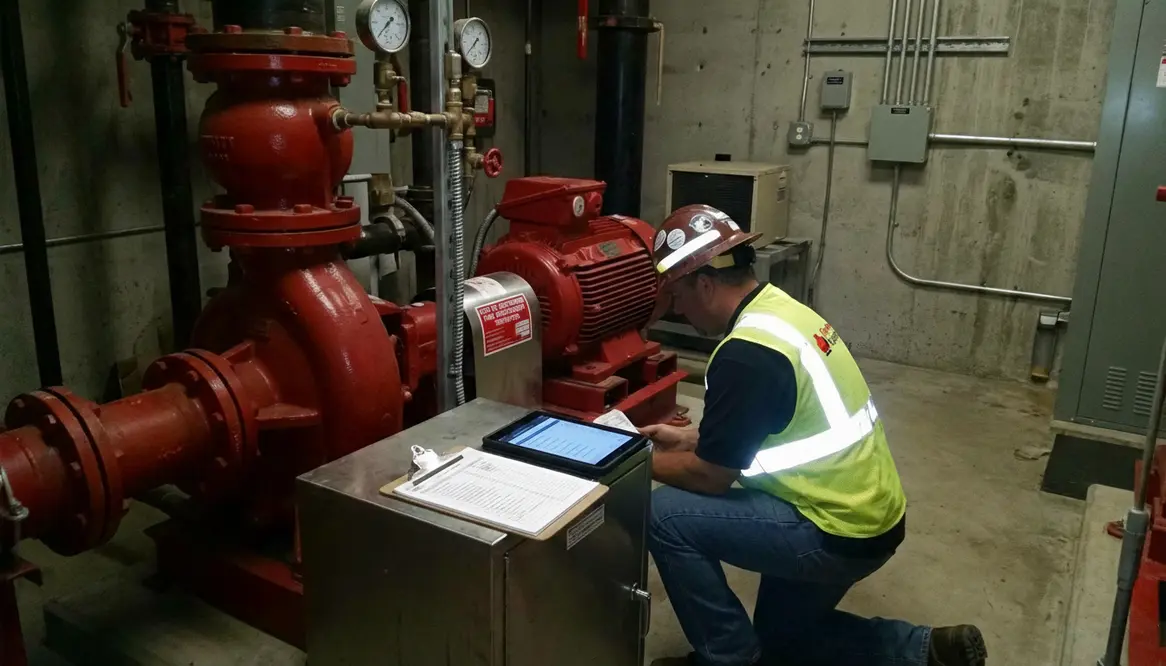
I begin with a plan and a checklist. First I verify nameplate information and system design curves. Next I run a performance test at rated speed. I record flow and pressure readings at multiple points. Then I compare actual performance to the design curve and the factory acceptance criteria. If a pump only talks a good game but does not deliver required pressure, I find the reason. It could be worn impellers, packing leaks, blocked suction strainers, or a control issue. I keep it simple, and I keep detailed notes so the facility has a record for compliance and future troubleshooting.
Why automatic starting systems get just as much attention
Additionally, I always test the automatic starting system. Pumps can be mechanically sound but fail to start in automatic mode, and that is the kind of surprise nobody wants. Meanwhile I check alarms, transfer switches, and jockey pump settings. All of these affect the system outcome when a fire occurs.
Common performance problems and what I do about them
I have seen a short list of recurring problems. Below I present them in a compact layout so you can scan and act. Think of it as a quick field guide where the left column shows what is wrong and the right column shows what I do to fix it. This is the only place I will format content in two columns here for easier comparison.
Typical fire pump issues
- Low discharge pressure
- Cavitation noise and vibration
- Slow or failed automatic starts
- Loss of prime or suction restriction
- Electrical faults at full load
How I respond and resolve
- Trim impeller, test at design point, verify relief valves
- Inspect suction conditions, replace worn parts, align coupling
- Test controllers, replace failed sensors, verify UPS or auto start wiring
- Clean strainers, verify water source elevation and valves
- Perform motor tests, check starters, ensure correct rotation
As you look at these items, keep in mind that I always prioritize safety over shortcuts. A quick fix that bypasses a safety device is a bad joke that nobody laughs at later. I repair, test, and document so that owners and local officials see the facts.
Maintenance plans, compliance, and record keeping
Testing frequencies that work in the real world
I write maintenance plans that are realistic and code oriented. For commercial and industrial clients I recommend monthly visual inspections, quarterly pump weekly churn or flow tests where applicable, and at least an annual full flow service test. Additionally I provide written procedures for two important areas. First are emergency response steps so onsite teams know how to react if a pump shows abnormal behavior. Second are documentation templates for inspectors that include pump curves, test reports, and repair invoices. These documents make audits straightforward and reduce days spent closing compliance items. Also I include clear schedules and reminders so maintenance does not fall through the cracks.
Spare parts, stress reduction, and 3 a.m. phone calls
Furthermore I advise on spare parts management for large properties. Having an extra packing kit, a spare controller module, and common bearings on site reduces downtime. It is not glamorous, but it prevents panic at three in the morning when a pump needs service.
Design, upgrades, and when to consider replacement
Reading the signs that a pump is past its useful life
Sometimes repairs are not enough. I evaluate life cycle cost, operational risk, and redundancy requirements. If a pump faces repeated failures or fails to meet current design demands, I recommend an upgrade. I work with engineers to size a new pump that meets current codes and future proofs the asset. Also I consider variable speed drives where they make sense. These drives can improve system control and save energy, but they must be applied carefully to maintain reliable start characteristics. In short, replacement is a strategic decision. I provide the data so owners can make it with confidence.
For owners looking for deeper technical support beyond this guide, partnering with a specialized team like Kord Fire’s fire pump services can help align building fire pump safety Escondido goals with expert inspection, testing, and long-term maintenance.
Regulatory coordination and the role I take
Keeping officials, insurers, and owners on the same page
I act as the liaison with the local authority having jurisdiction, and with insurance loss control teams when required. I prepare the reports they expect, and I attend inspections if needed. This reduces friction, and it gets facilities back to normal faster. Also, when a major property needs a witnessed acceptance test I can coordinate schedules, arrange for qualified witnesses, and produce the formal acceptance report. I do not like surprises in safety work, and neither should you.
When building fire pump safety Escondido is treated as an ongoing coordination effort instead of a once-a-year checkbox, inspectors see consistent performance and owners see fewer unpleasant letters pinned to their doors.
FAQ
These are the questions I hear most often from commercial and industrial owners who are trying to make building fire pump safety Escondido a routine part of their operations instead of a scramble before inspections.
Final recommendations and next steps
I recommend starting with a full performance baseline test. From there I build a maintenance plan tailored to your property size and risk profile. I will help you document everything and coordinate with inspectors. Also, if you want slightly less stress and fewer after hours calls, consider a service contract with clear response times. In my experience, that is the most practical way to keep major properties safe and compliant while preserving peace of mind.
Conclusion
If you manage a commercial or industrial property in Escondido and you care about reliable outcomes, contact me for a comprehensive fire pump performance evaluation. I will provide a clear test report, a realistic maintenance plan, and help you meet local code requirements. Schedule a consultation and let us make building fire pump safety Escondido a reliable part of your risk plan. Your people and your assets deserve nothing less.