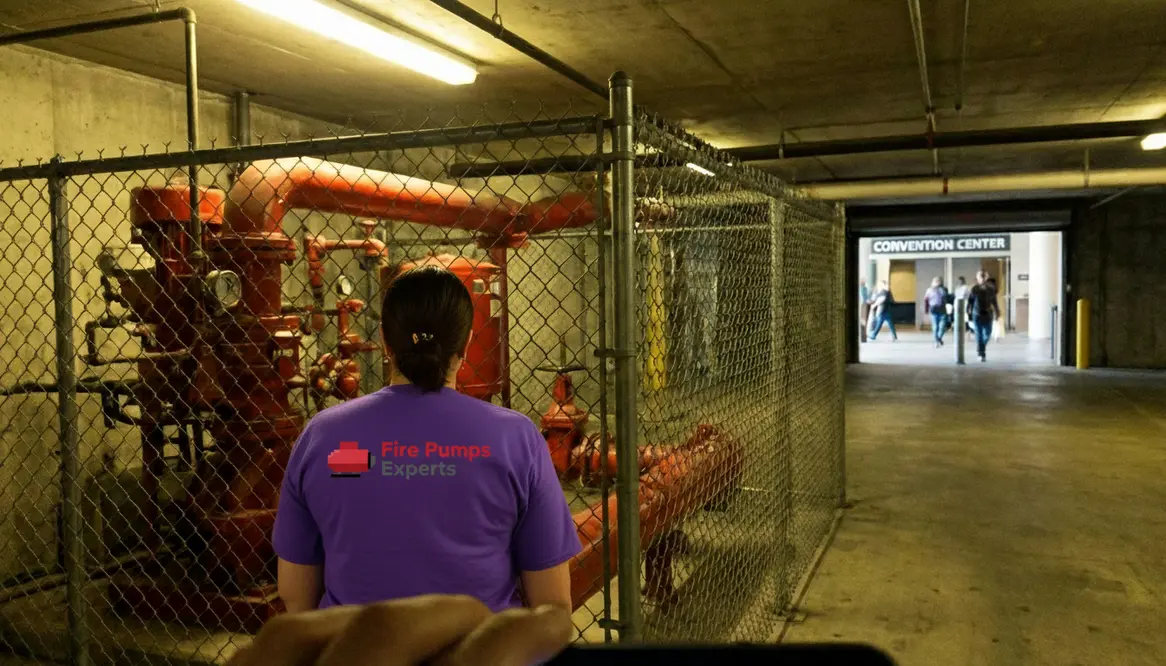
Commercial Garage Fire Pumps for Public Buildings
I have walked through enough large buildings to know one thing for certain. When people gather in numbers, safety cannot whisper. It must speak clearly, calmly, and with authority. That is exactly where commercial garage fire pumps and their broader system family step in. While they may sound like something tucked away in a parking level, they are in fact the quiet guardians of public assembly buildings. The kind of systems that do not ask for applause, but absolutely deserve a standing ovation when things go wrong.
So let’s take a closer look. Not the dry manual version. The real story behind how these systems protect lives in theaters, arenas, convention centers, and every place where crowds gather and the stakes run high.
What makes fire pump systems essential in public assembly buildings
When I step into a packed concert hall or a bustling convention center, I know the fire protection system must handle more than just a small incident. It needs to respond fast, push water hard, and reach every corner without hesitation. That is where fire pump systems earn their keep.
Unlike smaller setups, public assembly buildings demand high pressure and consistent flow. Sprinklers alone cannot do the job if the water supply lacks force. So, the pump becomes the muscle behind the system, ensuring water reaches upper levels, long corridors, and dense gathering spaces.
Moreover, these systems are designed with redundancy. Because when thousands of people are present, failure is not an option. It is a bit like having a backup singer who can suddenly take the lead without missing a beat. Think less garage band, more world tour reliability.
How commercial garage fire pumps support large scale safety systems
I know the phrase might sound oddly specific, but commercial garage fire pumps often anchor larger fire protection strategies. Why? Because parking structures in major properties serve as central utility zones. They house equipment that feeds water upward into the rest of the building.
In many facilities, these pumps are not isolated units. Instead, they connect to a network of standpipes, sprinkler systems, and emergency water storage. Consequently, they help maintain pressure across wide footprints and multiple floors.
And here is the interesting part. These pumps must perform under extreme conditions. Heat, smoke, power interruptions. Yet they continue working. It is the kind of reliability you would expect from a superhero, except without the cape and dramatic entrance music.
Core Functions
- They boost water pressure instantly
- They stabilize system flow during peak demand
- They support sprinkler and standpipe operations
- They activate automatically when pressure drops
Strategic Advantages
- They cover large building footprints efficiently
- They integrate with emergency power systems
- They reduce response time during fire events
- They meet strict commercial safety codes
Why system design matters more than you think
I have seen systems that look impressive on paper but fall short in real conditions. Design is not just about meeting code. It is about understanding how people move, how fire spreads, and how water behaves under pressure.
For example, in an arena, crowd density shifts constantly. Therefore, coverage must adapt to changing risk zones. Meanwhile, in a convention center, temporary structures and booths create new obstacles. So, the system must remain flexible and powerful enough to overcome these variables.
Additionally, pump sizing plays a critical role. Too small, and you risk insufficient pressure. Too large, and you introduce inefficiencies that can strain the system. It is a balancing act. Kind of like cooking pasta. Too little water and things stick. Too much and you are just wasting resources.
Designing around real-world risk
Public assembly buildings are not static diagrams. Stages move, seating layouts shift, exhibit halls get reconfigured overnight, and parking demand rises and falls with events. Fire protection design has to anticipate all of that motion.
That is why the best designs pair hydraulically sound calculations with a blunt question: “What happens here on the busiest night of the year?” In many properties, the answer leads straight back to the parking structure, the standpipe network, and the commercial garage fire pumps that push water through the entire complex.
How do fire pumps perform during an emergency?
When a fire starts, time moves differently. Seconds stretch, decisions matter, and systems must act without hesitation. Fire pumps respond automatically when the system detects a drop in pressure. No manual switch. No dramatic pause.
As a result, water begins flowing immediately through sprinklers or hoses. The pump maintains pressure even as multiple outlets activate. This is critical in large assembly spaces where several zones may require water at once.
Furthermore, these systems often connect to backup power sources. So even if the building loses electricity, the pump keeps running. It is the kind of reliability that does not make headlines, but absolutely saves lives.
From alarm to action in seconds
In a real event, the sequence is simple: a sprinkler head opens or a valve is used, system pressure drops, controllers sense that drop, and the fire pump starts. Meanwhile, alarms notify occupants and emergency responders. In a well-designed building, that choreography is smooth enough that people never notice the complexity behind it.
Compliance, testing, and long term reliability
I like to think of fire pump systems as living infrastructure. They require attention, testing, and occasional upgrades to stay ready. Codes and standards for public assembly buildings are strict for a reason. High occupancy means high responsibility.
Routine testing ensures pumps start correctly and maintain pressure. Inspections verify that valves, controllers, and connections remain in top condition. In addition, performance testing simulates real demand scenarios to confirm the system can handle stress.
Skipping these steps is not just risky. It is like owning a car and never checking the brakes. Eventually, something will fail. And in this case, the consequences are far more serious.
Keeping commercial garage fire pumps ready
Parking structures in large public buildings often operate almost continuously. Vehicles arrive coated in rain, snow, and road debris. Exhaust, heat, vibration, and moisture all work against mechanical equipment. If there is a place in the building that demands disciplined maintenance habits, it is the room that holds the commercial garage fire pumps and their controllers.
Weekly churn tests, periodic full-flow tests, and annual reviews are what keep “quiet guardians” from becoming quiet liabilities. Documentation is not just paperwork; it is the record that the systems protecting thousands of people have actually been proven under load, not just assumed ready.
FAQ about fire pump systems in public assembly buildings
A lot of questions come up once people realize how much of a role these systems play in keeping crowds safe. Here are some of the most common, especially around commercial garage fire pumps and their place in the bigger picture.
Closing thoughts and next steps
When I look at a public assembly building, I do not just see architecture. I see layers of protection working quietly behind the scenes. Fire pump systems stand at the center of that effort, delivering strength, speed, and reliability when it matters most. If you manage or design large commercial properties, now is the time to evaluate your system, refine its performance, and ensure it meets modern demands. Because in this line of work, preparation is not optional. It is everything.
Whether your focus is a stadium, a convention center, a performing arts venue, or a complex with multiple parking levels, it is worth asking hard questions about capacity, redundancy, and testing. If you want a deeper technical reference point, you can start with resources at https://firepumps.org and then compare those best practices to what is actually installed in your building.
In the end, the goal is simple: when the lights flicker, alarms sound, and the room fills with urgency, the commercial garage fire pumps, controllers, valves, and sprinklers do exactly what they were built to do. No drama. No guesswork. Just a clear, powerful response that lets everyone walk out the door and go home.