Diesel Fire Pump Cold Weather Checklist Boston
Diesel Fire Pump Readiness in Boston: Cold Weather Reliability Checklist
I have worked around fire protection systems long enough to know one simple truth. When winter rolls into Boston, the cold does not politely knock on the door. It kicks it open like it owns the building. And when temperatures drop, diesel fire pumps in commercial and industrial facilities must be ready to start without hesitation.
That is exactly why I rely on a diesel fire pump cold weather reliability checklist boston teams can trust. A diesel engine that refuses to start during an emergency is about as useful as a flashlight with dead batteries during a blackout. Sure, it looks good on the shelf. But when you need it most, it lets you down.
So today I am walking through how I approach cold weather readiness for diesel fire pumps protecting large commercial buildings, manufacturing plants, hospitals, campuses, and other major facilities across Boston. Think of this less like a technical manual and more like a calm conversation in the pump room while the snow piles up outside.
Why Boston Winters Test Every Diesel Fire Pump
Boston winters are famous for two things. Historic snowfall and the kind of cold that makes metal groan like an old floorboard in a haunted house. Consequently, diesel driven fire pumps face unique stress when temperatures plunge.
First, cold thickens engine oil. When oil thickens, engines resist turning over. Second, diesel fuel can gel in low temperatures. When that happens, fuel simply refuses to flow. Third, batteries lose strength in the cold. And without strong batteries, starting a diesel engine becomes a gamble.
However, the real risk appears when facility teams assume the system will start just because it worked last month. A fire pump is not like your office printer. You cannot give it a polite tap and hope it behaves.
Therefore, I always recommend a structured cold weather preparation routine. When properly maintained, diesel pumps start confidently even when the thermometer looks like it gave up on life.
What Should Be on a Diesel Fire Pump Cold Weather Reliability Checklist Boston Facilities Can Follow
When facility managers ask me what really matters during winter prep, I focus on the parts that directly affect starting reliability. Not the paperwork. Not the busywork. The components that actually determine whether the pump starts.
Here are the items I always prioritize.
- Battery health and voltage stability
Cold weather drains battery strength fast. I check battery chargers, connections, and load test the batteries. If the batteries struggle even slightly, replacement is cheaper than explaining a failed start to the fire marshal. - Engine block heaters
Block heaters keep engine coolant warm so the engine starts easily. I confirm heaters operate continuously and that electrical circuits feeding them are reliable. - Fuel quality and winter grade diesel
Diesel fuel can gel in extreme cold. I confirm winter rated fuel is present and inspect the tank for contamination or water. - Coolant mixture
Proper antifreeze concentration prevents freezing and supports proper engine temperature during startup. - Room temperature stability
Fire pump rooms should remain warm enough to protect mechanical components. I inspect heaters and insulation to confirm temperatures stay stable. - Control panel alarms
Cold weather faults often trigger warning alarms first. I verify alarms report correctly and that facility staff know what they mean.
Each of these steps strengthens reliability. More importantly, they eliminate the small failures that quietly stack up during winter.
How I Verify Cold Weather Readiness in Large Commercial Pump Rooms
Now let me paint a familiar picture.
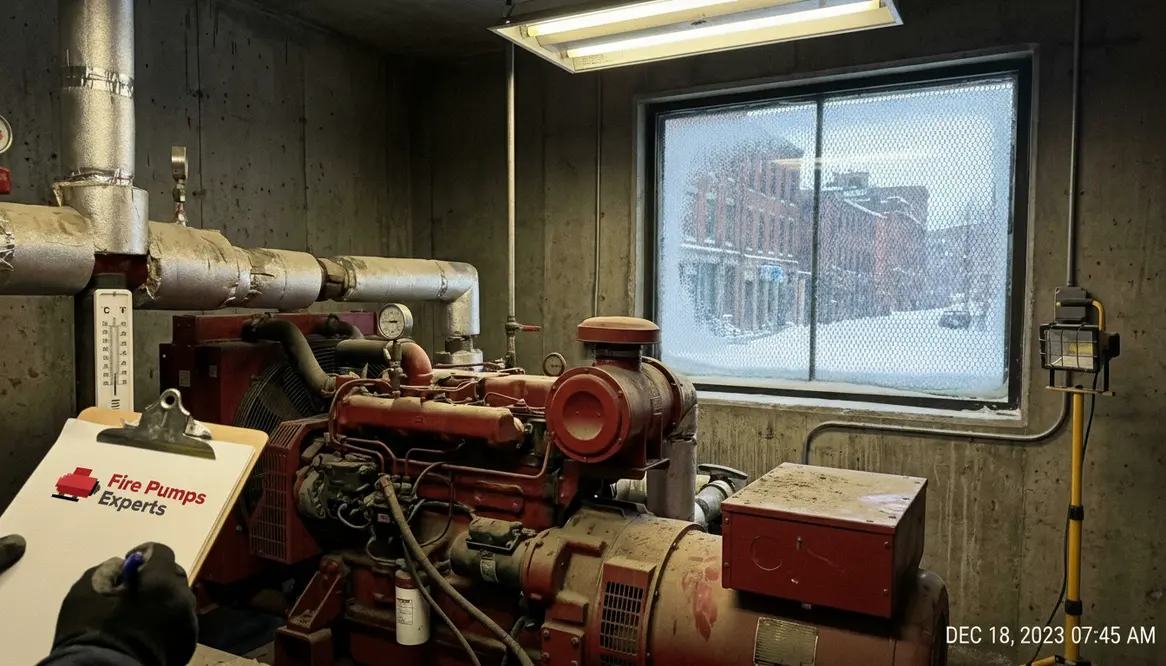
I walk into a mechanical room in January. Outside, the wind coming off the harbor could freeze a cup of coffee before you finish pouring it. Inside, the diesel fire pump waits patiently.
This is where experience matters.
Visual inspection
- Check block heater warmth
- Inspect battery terminals
- Look for fuel leaks
- Confirm room heat is stable
Operational confirmation
- Review controller event logs
- Verify charger output
- Test alarm reporting
- Confirm automatic start readiness
While that might sound routine, these checks tell a deeper story about the system. A warm block heater means the engine will crank faster. A clean battery terminal means voltage flows smoothly. Small details quietly decide whether the pump springs to life when sprinklers demand water.
And frankly, I have seen enough winter failures to know that ignoring the basics is how expensive emergencies begin.
Is My Diesel Fire Pump Actually Ready for Freezing Temperatures?
This is the question I hear most from facility engineers.
The short answer is simple. If you have not verified the system recently, assume it needs attention.
A proper diesel fire pump cold weather reliability checklist boston properties rely on should confirm three key conditions.
- The engine starts instantly
- The pump room remains warm and dry
- Fuel and coolant systems support winter operation
However, readiness is not just mechanical. It is procedural. Staff must understand what normal operation looks like. They should recognize alarm signals and know when to call experienced fire pump technicians.
Think of it like maintaining a classic car. Anyone can polish the exterior. But only someone who knows engines understands what that subtle rattle really means.
Hidden Cold Weather Risks Most Facility Managers Miss
Over the years I have noticed a few cold weather problems that slip past even careful maintenance teams.
First is ventilation balance. Pump rooms need proper airflow, yet excessive cold air infiltration can drop room temperature quickly. When outside air pours in, heaters struggle to keep up.
Second is neglected battery chargers. A charger may appear operational while quietly delivering insufficient current. Eventually the batteries weaken just enough to fail during a cold start.
Third is long idle periods. Diesel engines benefit from regular testing under load. Without it, small issues hide until the worst possible moment.
Finally, I often see temperature sensors installed but never monitored. Sensors only help if someone actually reads the data.
So whenever I walk through a facility, I approach the pump room like a detective examining a quiet crime scene. Every gauge, cable, and heater tells a story.
Building a Reliable Winter Program for Major Boston Facilities
The most resilient facilities treat winter preparation as a system rather than a checklist scribbled on a clipboard.
First, scheduled inspections should begin well before the first frost. Early preparation allows time for repairs, parts replacement, and fuel conditioning.
Next, documentation matters. When teams track temperatures, battery health, and engine performance, trends appear. Patterns reveal weaknesses long before failures occur.
Additionally, coordination with fire protection professionals ensures systems meet NFPA standards and remain compliant with local inspection authorities.
Finally, leadership must treat fire pump reliability as a critical life safety function. Because that is exactly what it is.
At the end of the day, a diesel fire pump is not just a machine. It is the last line of defense protecting people, property, and operations inside Boston’s largest buildings.
Putting Your Diesel Fire Pump Cold Weather Reliability Checklist Boston Teams Can Trust to Work
A practical diesel fire pump cold weather reliability checklist boston facilities can put into action starts with clear ownership. Someone on the team must be responsible for verifying heaters, fuel, batteries, and alarms on a recurring schedule, not just before an inspection.
From there, weekly pump runs, monthly deep visual inspections, and at least annual coordination with certified fire pump specialists create a rhythm. That rhythm keeps “surprises” from showing up on the coldest night of the year when the building is full and the stakes are highest.
For facilities that want a deeper technical partner, working with a dedicated fire pump service provider can turn that checklist into a full winter program. Teams like Kord Fire Protection bring structured testing, documentation, and repair capability that align with NFPA 20 and NFPA 25 requirements. If you’re looking for a broader overview of how professional servicing supports long-term reliability, their guide to fire pump servicing is a strong reference point.
The bottom line: your diesel fire pump cold weather reliability checklist boston operations rely on is only as strong as the habits behind it. When inspections are consistent, documentation is tight, and specialists are involved before there is smoke in the air, winter becomes just another season instead of a liability.
FAQ: Diesel Fire Pump Cold Weather Readiness
These are the questions I hear most often when building a diesel fire pump cold weather reliability checklist boston facilities can rely on all season.
Conclusion
Winter in Boston does not forgive shortcuts. A reliable fire pump protects lives, property, and operations when seconds matter most. If your facility needs expert evaluation, testing, or maintenance, our team helps ensure every diesel pump starts without hesitation.
Let us review your system, walk through a proven cold weather readiness strategy built around a diesel fire pump cold weather reliability checklist boston facilities can execute, and keep your fire protection strong all winter long.