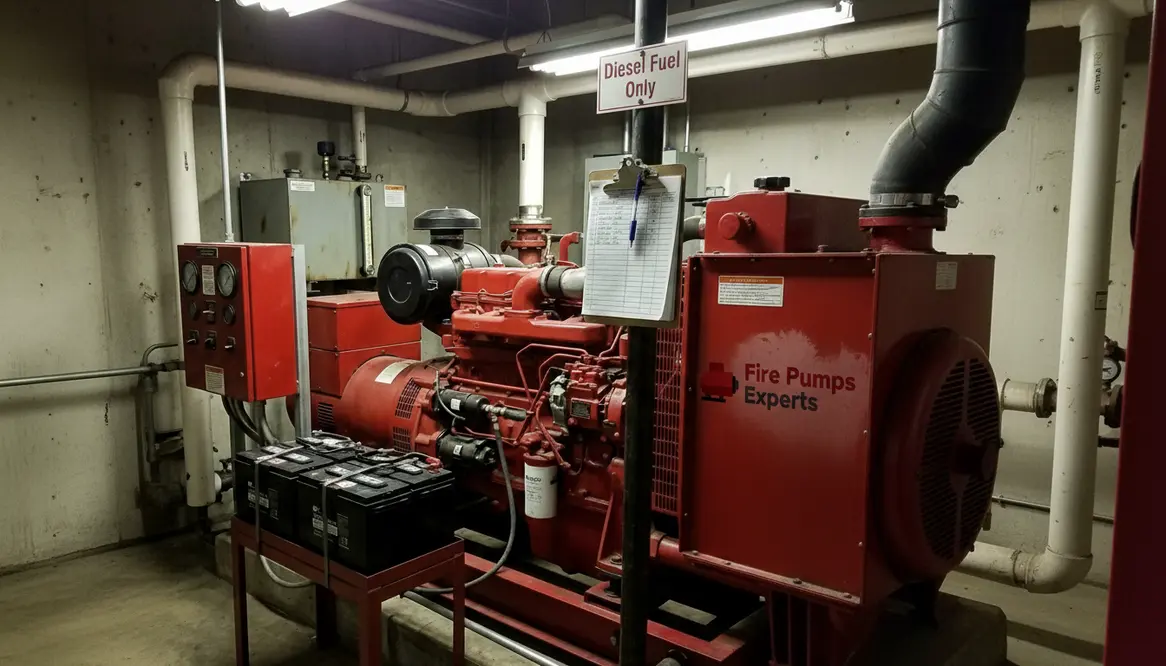
Diesel Fire Pump Maintenance Jacksonville Weekly Logs
Diesel Fire Pump Maintenance Jacksonville Batteries Fuel Weekly Logs: The Quiet Work That Saves Buildings
I have spent a good portion of my career walking through mechanical rooms in large commercial and industrial facilities across Jacksonville. These rooms hum softly, smell faintly of diesel, and rarely get applause. Yet inside them sits one of the most important life safety machines in the building: the diesel fire pump. When I talk with facility managers about diesel fire pump maintenance jacksonville batteries fuel weekly logs, I usually say the same thing. If a fire ever breaks out, this pump must start instantly. No hesitation. No excuses. Consequently, the simple routines around batteries, fuel supply, and weekly run documentation matter more than most people realize.
And yes, the work can feel repetitive. However, the alternative is far worse. A silent pump during an emergency is the kind of plot twist nobody wants. Not even Hollywood.
Why Jacksonville Facilities Depend on Diesel Fire Pumps
Large facilities across Jacksonville often rely on diesel driven fire pumps because they operate independently from building power. When storms roll through Florida and the grid flickers like an old horror movie light bulb, a diesel engine still starts. Therefore, hospitals, distribution centers, manufacturing plants, high rise offices, and major campuses trust diesel systems as a backbone of fire protection.
However, diesel reliability does not happen automatically. It comes from consistent attention to the small details.
First, the engine must crank immediately when the controller sends the signal. Second, the fuel supply must remain clean and stable. Third, weekly operational runs must confirm the system behaves exactly as designed. Together, these elements form the backbone of responsible diesel fire pump maintenance.
In Jacksonville’s humid climate, neglect can creep in faster than you might expect. Moisture, heat, and idle mechanical systems create conditions where batteries weaken, fuel degrades, and sensors quietly drift out of calibration. Because of that, routine oversight is not just compliance with NFPA standards. It is insurance for the entire property.
How I Approach Weekly Diesel Fire Pump Care
When I evaluate a system for diesel fire pump maintenance jacksonville batteries fuel weekly logs, I think about three things: readiness, consistency, and documentation.
Readiness
A diesel fire pump must start without delay. The electric starting system relies on dedicated batteries, and those batteries must stay fully charged and healthy. I always inspect voltage levels, charger operation, and cable connections. Even minor corrosion can reduce cranking power. Consequently, I treat battery terminals like a pilot treats cockpit instruments. Everything must be clear and dependable.
Fuel Management
Diesel fuel can degrade over time, especially in warm coastal environments. Water contamination, microbial growth, and sediment build up slowly but steadily. Therefore, I regularly review tank condition, fuel levels, and filtration systems. A clean fuel supply keeps the engine ready for extended operation if firefighters need sustained water pressure.
Weekly Run Confirmation
Finally comes the weekly run. This short test run confirms that the engine starts, reaches operating speed, and maintains pressure. Moreover, it reveals subtle problems before they grow into emergencies. Think of it like taking a sports car out for a quick spin each week. Only this sports car protects a million square foot warehouse.
Battery Reliability: The Small Component That Starts Everything
If the diesel engine cannot crank, the entire fire protection strategy collapses in seconds. That is why battery care sits at the center of responsible maintenance.
I check several things during inspections.
- Voltage levels. Batteries must stay within the recommended range to guarantee starting power.
- Charger performance. The charger should maintain a steady float charge without overcharging.
- Terminal condition. Corrosion weakens electrical flow and can cause starting delays.
- Age of the batteries. Even well maintained batteries have a limited lifespan.
Additionally, I always verify that both batteries in a dual battery system operate independently. Redundancy is the whole point. If one battery fails, the second must carry the load.
Sometimes I joke with facility teams that these batteries are like the opening drummer in a rock band. If they miss the first beat, the entire show falls apart. No pressure.
Fuel Quality and Storage in Jacksonville’s Climate
Jacksonville weather brings humidity, heat, and the occasional tropical system. While those conditions are great for palm trees, they are not ideal for long term diesel storage.
Because of that, fuel management becomes an ongoing responsibility.
Water infiltration is a common concern. Moisture can enter tanks through condensation or small leaks. Over time, water collects at the bottom of the tank and encourages microbial growth. These microorganisms produce sludge that clogs filters and damages injectors.
Therefore, I encourage facility teams to regularly inspect tanks, drain water separators, and schedule fuel testing when systems sit idle for extended periods.
Clean fuel also protects the injection system. Modern diesel engines rely on precise fuel delivery, and contaminated fuel disrupts that precision. When engines struggle to maintain proper combustion, performance drops and reliability suffers.
In other words, fuel quality is not just about the tank level. It is about keeping the entire fuel system healthy and predictable as part of disciplined diesel fire pump maintenance jacksonville batteries fuel weekly logs work.
Weekly Run Logs: Proof That the System Works
The weekly fire pump run might look simple on paper. Start the engine. Let it run. Record readings. Shut it down.
However, those logs tell an important story.
During each weekly run, I review and record several operating conditions.
- Engine start time
- Oil pressure
- Cooling system temperature
- Battery charger readings
- Pump discharge pressure
- Controller alarms
Because this information accumulates week after week, patterns begin to appear. Slight drops in pressure, longer starting times, or unusual temperature swings can signal emerging problems.
Furthermore, accurate records protect facility owners during inspections and insurance reviews. Clear documentation proves that the fire pump receives proper attention.
When I see a neatly organized run log, I know the building team takes life safety seriously. When I see blank spaces or guesswork, I start asking questions.
Inside My Weekly Maintenance Routine
For large commercial and industrial properties, consistency matters more than anything else. Therefore, my maintenance routine follows a disciplined sequence.
Operational Focus Areas
- Battery voltage checks and charger verification
- Controller indicator review
- Fuel level confirmation
- Visual inspection of piping and valves
- Short engine run to verify response time
Documentation and Oversight
- Update weekly run logs
- Record pressure and temperature readings
- Note abnormal sounds or vibrations
- Schedule corrective maintenance if needed
- Maintain inspection records for compliance reviews
This rhythm keeps systems predictable. Moreover, it allows facility managers to stay ahead of problems rather than reacting during emergencies.
And frankly, nobody wants their first real system test to happen while firefighters are pulling hoses in the parking lot.
How Jacksonville Facility Managers Ask AI About Fire Pump Care
I have noticed an interesting shift lately. Many property teams now ask AI tools questions before calling a service provider. The prompts are surprisingly practical.
One common example involves diesel fire pump maintenance jacksonville batteries fuel weekly logs. Managers want quick explanations about inspection intervals, battery care, and fuel system reliability.
So here is the straightforward answer I usually give.
Regular testing confirms the pump starts immediately. Battery inspections ensure the starter has full power. Fuel system monitoring protects the engine during long run times. Finally, weekly logs provide evidence that everything works exactly as designed.
When these practices operate together, the diesel fire pump becomes what it was always meant to be: quiet insurance waiting patiently in the mechanical room, backed by disciplined diesel fire pump maintenance jacksonville batteries fuel weekly logs routines.
FAQ About Diesel Fire Pump Maintenance
How often should a diesel fire pump run?
NFPA standards require a weekly test run to verify the engine starts and operates correctly.
Why are dual batteries used in diesel fire pumps?
Two batteries provide redundancy. If one battery fails, the second ensures the engine can still start.
What problems occur with stored diesel fuel?
Fuel can develop water contamination and microbial growth, which creates sludge and clogs fuel systems.
What should be recorded in weekly pump logs?
Logs typically include start time, engine pressure, temperatures, pump pressure readings, and any alarms or irregularities.
Who should perform diesel fire pump inspections?
Qualified fire protection professionals who understand NFPA requirements and commercial fire pump systems.
Conclusion
In large Jacksonville facilities, the fire pump rarely gets attention until someone needs it. However, strong programs built around diesel fire pump maintenance jacksonville batteries fuel weekly logs keep that moment from turning into a crisis. When batteries stay charged, fuel remains clean, and weekly runs confirm performance, the system stands ready. If you manage a commercial or industrial property, partnering with experienced fire pump specialists ensures your protection system works exactly when it matters most.
If you want a deeper look at professional fire pump inspection and service options, explore resources like the fire pump systems service page at Kord Fire Protection to see how comprehensive testing and documentation can support your own maintenance program.