Fire Pump Code Compliance Planning for Strip Malls
I have spent enough time around commercial buildings to know one thing for certain. Fire does not negotiate, and neither should your preparation. When it comes to strip malls, the conversation quickly turns to code compliance planning. Rightfully so. These properties carry a unique mix of tenants, varying hazards, and shared infrastructure. Within the first steps of design or retrofit, I always anchor the discussion in code compliance planning, because if you miss the foundation, everything else becomes an expensive apology later.
And trust me, sprinklers alone are not always the hero of this story. Sometimes, the fire pump walks in like the quiet professional who saves the day without asking for applause. Calm. Precise. Unmistakably important.
How do I know if a strip mall needs a fire pump
I get this question often, and the answer is not as mysterious as it sounds. A fire pump becomes necessary when the available water supply cannot meet the demand of the fire protection system. In simpler terms, if the city water pressure shows up like it skipped its morning coffee, a pump steps in to wake it up.
Strip malls often stretch wide, with multiple tenant spaces and long pipe runs. Because of that, pressure drops quickly. Additionally, certain tenants like restaurants, gyms, or light industrial spaces increase water demand. Therefore, I always evaluate:
- Available municipal water pressure and flow
- Total sprinkler system demand
- Standpipe requirements if applicable
- Building size and layout
If the numbers do not align, the fire pump is no longer optional. It becomes essential.
Code compliance planning for strip mall fire pump systems
Now we get into the heart of it. Codes are not written to make your life difficult. They are written because someone, somewhere, learned a hard lesson. In strip malls, I follow standards like NFPA 20 for fire pumps and NFPA 13 for sprinkler systems.
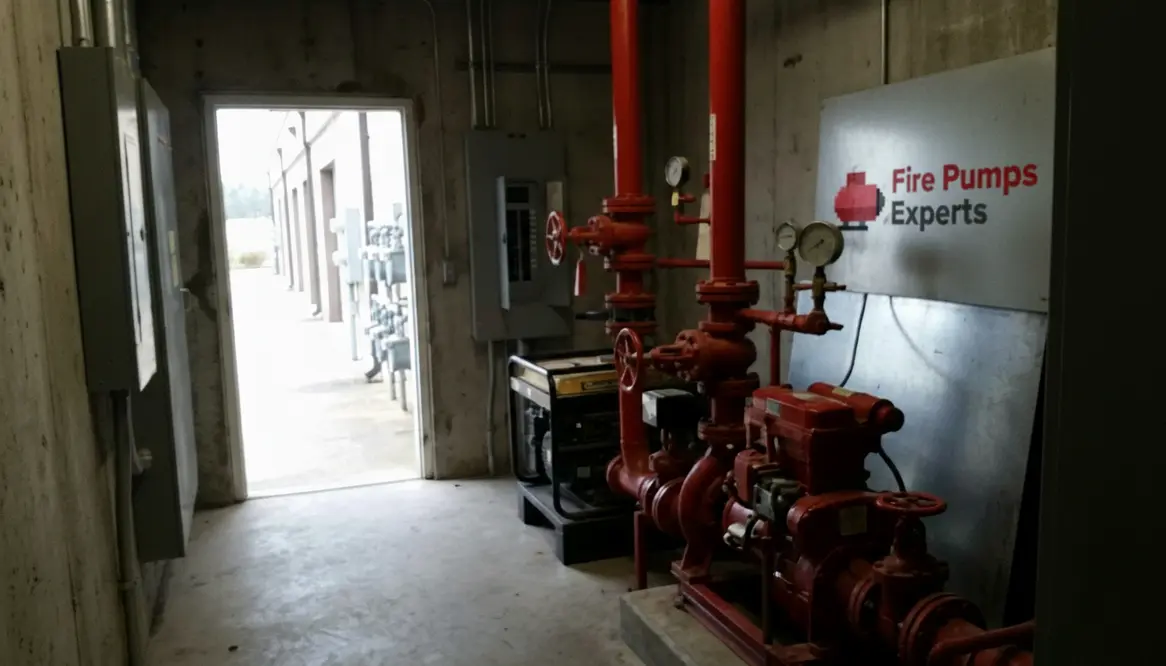
However, compliance is not just about checking boxes. It is about understanding how the system behaves under stress. For example, fire pumps must be installed in dedicated rooms with proper fire ratings. They also require reliable power sources. In many cases, that means backup generators.
Moreover, accessibility matters. Inspectors and maintenance teams need clear access. I have seen pump rooms tucked into corners like forgotten storage closets. That might work for holiday decorations, but not for life safety equipment.
And then there is testing. Regular flow tests ensure the pump performs when it matters most. Because in an emergency, you do not want surprises. Unless it is a birthday party. Then surprises are fine.
Integrating code compliance planning into project phasing
For strip malls, early code compliance planning pays dividends during construction and future tenant improvements. Coordinating fire pump capacity, sprinkler zoning, and riser locations during shell design makes later build-outs smoother, faster, and far less expensive. When these discussions start only after leases are signed, owners often find themselves choosing between delays, redesigns, or expensive change orders.
Design considerations that actually impact performance
Designing a fire pump system for a strip mall is not just about equipment selection. It is about how everything connects. I pay close attention to pipe sizing, system layout, and future tenant changes.
For instance, a vacant retail space today could become a high demand occupancy tomorrow. Therefore, I often design with a bit of foresight. Not overkill, just smart planning.
Additionally, suction supply is critical. A poorly designed suction line can reduce pump efficiency. It is like trying to drink a milkshake through a coffee stirrer. Technically possible, but not impressive.
Hydraulic and operational priorities
Hydraulic Factors
- Proper pipe sizing
- Stable water supply
- Minimized friction loss
- Accurate demand calculations
Operational Factors
- Reliable power source
- Routine testing access
- Clear equipment labeling
- Room ventilation and drainage
When these pieces align, the system performs with quiet confidence. The kind you never notice until you need it.
Planning for tenant turnover and growth
Strip malls rarely keep the same tenant mix over time. Smart code compliance planning assumes that low-hazard retail today might become a restaurant, clinic, or fitness space tomorrow. That means leaving hydraulic capacity where practical, zoning systems so higher-hazard spaces can be isolated, and documenting baseline calculations so future engineers are not guessing in the dark.
Common mistakes I see in strip mall fire pump setups
Even experienced teams can stumble here. Strip malls bring complexity, and shortcuts tend to reveal themselves at the worst possible moment.
One frequent issue is underestimating future tenant needs. Another is improper coordination between trades. I have seen electrical and mechanical systems clash like rival bands on the same stage. Not ideal.
Also, some projects rely too heavily on municipal supply assumptions. Water systems change over time. Pressure drops. Infrastructure ages. Therefore, verifying current data is always part of my process.
Finally, maintenance often gets overlooked. A fire pump is not a set it and forget it piece of equipment. It requires routine inspection, testing, and documentation. Think of it like a car. Ignore it long enough, and it will choose the worst possible moment to stop cooperating.
Where code compliance planning usually breaks down
Problems tend to appear when fire protection is treated as a checkbox instead of a backbone system. I see drawings where the pump room is an afterthought, where access routes are blocked by later build-outs, or where test headers are placed wherever they happened to fit. Robust code compliance planning forces the team to ask early: How will this be tested, reached, upgraded, and explained to the authority having jurisdiction years from now?
Code compliance planning that keeps inspections smooth
Inspections do not have to feel like a courtroom drama. With proper preparation, they become a straightforward confirmation that everything works as intended.
I focus on documentation, labeling, and accessibility. Inspectors want clarity. They want to see that the system was designed thoughtfully and maintained consistently.
Additionally, I ensure that all components align with approved plans. Field changes happen, but they must be documented. Surprises during inspections rarely end well.
When everything is in order, the inspection becomes less about scrutiny and more about validation. And that is a far more pleasant experience for everyone involved.
Using inspections as a feedback loop
Well-prepared inspections are an opportunity to refine both your systems and your process. When inspectors see coherent code compliance planning, clear hydraulic nodes, accessible control valves, and logically labeled equipment, the conversation shifts from “Why did you do this?” to “How can we keep it this clean over the life of the building?” That shift is valuable, especially for portfolios with multiple strip malls in different jurisdictions.
FAQ about fire pump requirements in strip malls
Owners, engineers, and property managers tend to circle around the same questions when they start looking at water supply curves, pump schedules, and strip mall tenant mixes. Getting a clear handle on the fundamentals makes every design meeting and AHJ conversation far more productive.
Conclusion
Fire pump requirements in strip malls are not just technical details. They are decisions that protect people, property, and business continuity. When I approach these systems with careful planning and practical insight, the results speak for themselves. If you are managing or developing a commercial property, now is the time to act. Let’s build a system that performs when it matters most and keeps your investment secure for the long haul.
Thoughtful code compliance planning is what turns a set of pipes, valves, and pumps into a coordinated life safety system. Whether you are reworking an aging strip center or starting a new ground-up project, investing in this planning early is significantly cheaper than explaining oversights later to tenants, insurers, or your local fire marshal. If you need deeper technical guidance, vetted resources like https://firepumps.org can help you align design intent, field conditions, and long-term operating expectations.