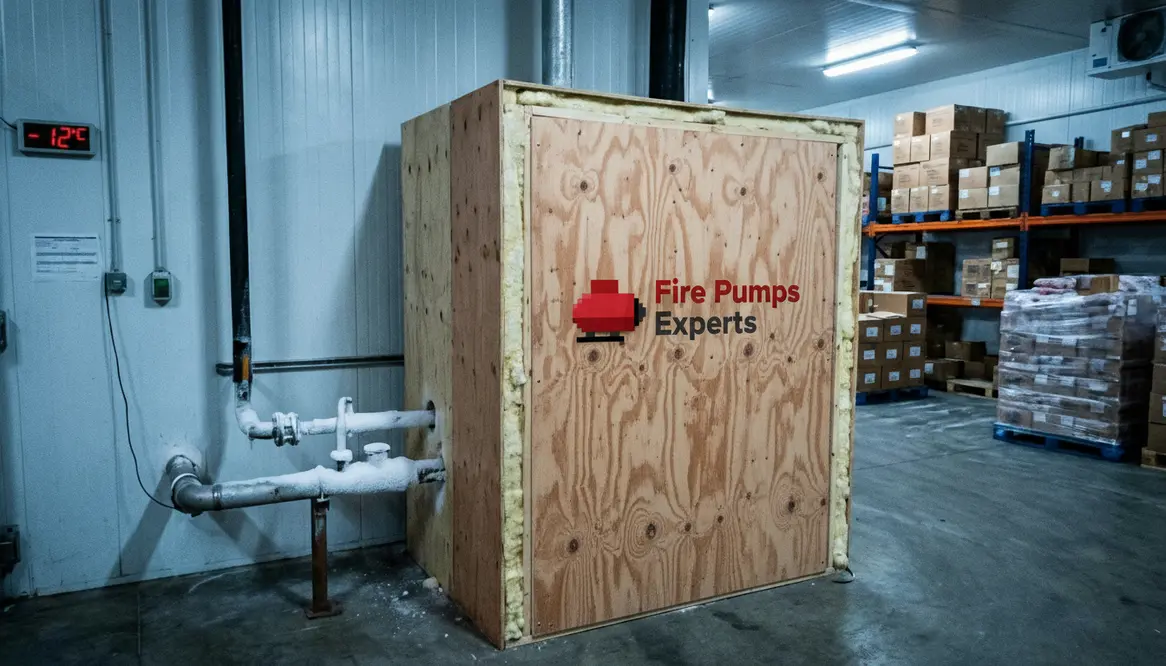
Fire Pump Considerations for Refrigerated Buildings
I have spent enough time around cold storage facilities to know one thing for certain. When temperatures drop, the stakes rise. That is where Fire pump considerations for refrigerated buildings come into play. In these environments, water behaves differently, systems face stress, and a small oversight can turn into a very expensive problem. So today, I am going to walk you through what really matters when designing fire pump systems for cold storage warehouses, with a steady hand and maybe a few laughs along the way.
Why cold storage changes everything
Cold storage warehouses are not your average commercial buildings. In fact, they are more like the “Hoth” base from Star Wars, except instead of rebels, we have pallets of frozen goods. Because temperatures can dip well below freezing, standard fire protection designs do not always hold up.
First, water supply becomes unpredictable. Pipes can freeze, pressure can fluctuate, and pumps must work harder just to maintain flow. Additionally, ice buildup can damage components over time. Therefore, I always treat refrigerated environments as a special category that demands tailored fire pump solutions.
Moreover, these facilities often store high value inventory. So, any delay in fire suppression is not just dangerous, it is costly. That is why fire pump systems here must be both resilient and precise.
Fire pump considerations for refrigerated buildings in system design
When I approach system design, I focus on reliability under extreme conditions. A fire pump that performs beautifully at room temperature might struggle when surrounded by freezing air.
To begin with, pump rooms should be insulated and heated. This is non negotiable. Without temperature control, even the best equipment can fail. In addition, I recommend installing temperature monitoring systems that alert operators before conditions become critical.
Another key factor is material selection. Metals contract in cold environments, and seals can become brittle. Therefore, I choose components rated for low temperatures to avoid unexpected failures.
Also, suction supply must remain stable. If ice forms in the water source or piping, it can choke the pump. So, I often incorporate recirculation lines or heated sections to keep water moving and prevent freezing.
And yes, this is the part where I say it depends. Because every facility has its quirks, design must adapt accordingly. That is why Fire pump considerations for refrigerated buildings are always a customized exercise, not a copy and paste from the last project.
How do I prevent freezing in fire pump systems?
Keeping water flowing and components warm
Simple question. Not so simple answer. However, I will give you the straight version.
First, I keep water moving whenever possible. Standing water is basically an invitation for ice. Next, I ensure all exposed piping is insulated and, when necessary, heat traced.
Then, I look at the pump room again. If it is not consistently above freezing, I fix that before anything else. After all, even Batman needs a functioning Batcave.
Finally, I consider antifreeze solutions in limited cases. However, I use them carefully and only where codes allow, especially in large scale commercial and industrial facilities.
This is one of those Fire pump considerations for refrigerated buildings that sounds simple on paper but lives or dies on details like sensor placement, insulation quality, and how disciplined your team is with maintenance.
Key equipment choices that make or break performance
Designing for pressure, not for show
Choosing the right fire pump is not about picking the biggest or the fanciest. It is about choosing what works under pressure, literally.
What I prioritize
- Low temperature rated pumps
- Reliable diesel or electric drivers
- Corrosion resistant materials
- Consistent pressure output
What I avoid
- Standard seals not rated for cold
- Unprotected control panels
- Poorly insulated suction lines
- Oversized systems without proper control
In addition, I always ensure that control panels are housed in protected environments. Electronics and freezing temperatures are not exactly best friends.
Furthermore, redundancy matters. In large industrial cold storage sites, a backup pump is not a luxury. It is a necessity.
This is where Fire pump considerations for refrigerated buildings intersect with business continuity. You are not just protecting a structure; you are protecting inventory, uptime, and the ability to keep product moving out the door.
Fire pump considerations for refrigerated buildings during installation and maintenance
Where design meets the real world
Design is only half the story. Installation and maintenance bring everything to life.
During installation, I make sure contractors understand the environment they are working in. Even small mistakes, like leaving gaps in insulation, can lead to freezing issues later. Therefore, attention to detail is critical.
Once the system is operational, regular testing becomes the backbone of reliability. However, testing in cold storage is not business as usual. Water discharge must be managed carefully to avoid ice hazards.
Additionally, I schedule more frequent inspections compared to standard facilities. Why? Because cold environments accelerate wear in subtle ways. Catching those issues early saves time, money, and headaches.
And let us be honest. Nobody wants to explain to a facility manager why their fire system froze during peak season. That conversation does not end well.
If you are building a checklist of Fire pump considerations for refrigerated buildings, make sure installation quality control, cold weather testing procedures, and seasonal maintenance planning all have their own line items.
Common mistakes I see in cold storage fire protection
Pitfalls that keep showing up
Even experienced teams can overlook key details. So, here are a few pitfalls I have seen more than once.
First, underestimating the impact of temperature. People assume insulation alone will solve everything. It will not.
Second, ignoring airflow. Cold air moves in unexpected ways, and it can find weak points in your system.
Third, skipping proper testing. A system that works on paper might fail in real conditions.
Finally, treating cold storage like any other warehouse. It is not. It is a different beast entirely.
Keeping an eye on these recurring issues can turn your list of Fire pump considerations for refrigerated buildings into a practical roadmap instead of just a theoretical wish list.
FAQ: Fire pump requirements for cold storage warehouses
These are some of the questions I get most often when people start taking cold storage fire protection seriously.
Final thoughts and next steps
Cold storage facilities demand more than standard solutions. They require careful planning, precise execution, and ongoing attention. If you are managing or designing a large commercial or industrial refrigerated warehouse, now is the time to take a closer look at your fire pump system.
Work with teams who understand how temperature, water behavior, and equipment limitations interact in these environments. Make sure that Fire pump considerations for refrigerated buildings are baked into every phase of your project: planning, design, installation, testing, and long term maintenance.
If you want a solid technical starting point before you talk to a specialist, resources on https://firepumps.org and relevant NFPA standards are a useful companion to your site specific strategy.