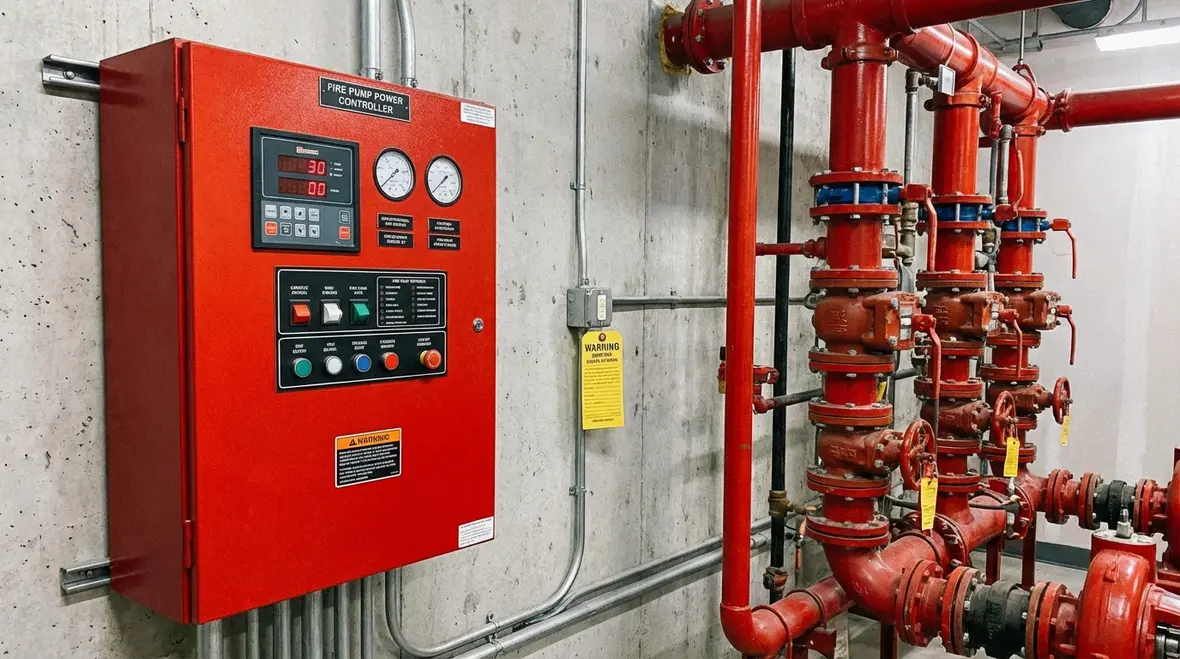
Fire Pump Controller Types for Commercial Buildings
From glass-clad high-rises to sprawling industrial campuses, understanding the right types of fire pump controllers can be the difference between a close call and a catastrophe.
Fire Pump Controller Types Explained: A Deep Dive for Commercial and Industrial Facilities
Picture this: You’re managing a 30-story commercial building, all glass and steel, a real marvel of modern infrastructure. Now picture the fire alarms going off. The elevators stop. You smell smoke. In that moment, you don’t want guesses. You want reliability. That’s where fire pump controllers come in. They quietly wait in the shadows, ready to spring into action like Batman after a triple shot of espresso.
There are several types of fire pump controllers out there, each designed for specific operational needs. The common ones you’ll run into are:
- Electric Motor Controllers
- Diesel Engine Controllers
- Jockey Pump Controllers
- Combination Controllers
- Variable Speed Controllers
Now, before your brain checks out thinking, “This sounds like the boring part of a building spec sheet,” hold on. I’m here to take you by the hand—figuratively—and walk you through the nitty gritty. With a little levity, a splash of humor, and just enough technical know-how to keep your facilities team nodding in agreement, we’re going to make this topic sing.
Why Fire Pump Controllers Matter More Than You Think
Let’s start by answering the unspoken question: What do fire pump controllers actually do? These unsung heroes are the nerve center of your fire protection system. When a fire breaks out, these devices signal the pump to start supplying water. Simple, right? But here’s the twist: they must work without fail. No second chances, no CTRL-Z. That’s why their design, power source, and failover capabilities matter a whole lot more than you’d imagine.
Fire pump controllers are not just glorified on-off switches—they evaluate input from pressure sensors, remote alarms, and manual overrides. They regulate startup sequences to prevent damaging power surges. In large and dense buildings like hospitals, airports, and high-rise offices, they are literally life-and-death devices.
Now that we’ve established their importance, let’s slide into the real meat: the types and why you, as a commercial or industrial facility manager, should care. Across all the types of fire pump controllers, your job is to match functionality with risk, code, and your building’s quirks.
Electric Motor Fire Pump Controllers: The Plug-and-Pump Option
Imagine the dependable friend who always shows up—rain or shine, no drama, just quietly effective. That’s your electric motor controller. It’s straightforward, runs on grid power, and can switch on faster than your office Wi-Fi after a router reboot.
These are typically used when an emergency generator backs up your property’s critical systems. They’re relatively low maintenance, easy to integrate, and ideal for urban facilities with reliable power grids. Fun fact: They also like to show off their smooth startup routines with soft starters or auto-transfer switches to manage current inrush. Fancy, right?
But—and here’s the important bit—if your facility tends to lose power during storms or is in a less stable grid area, you might want to look at our next charismatic player in the lineup of types of fire pump controllers.
Diesel Engine Fire Pump Controllers: The Apocalypse-Proof Solution
Diesel engine controllers? Oh, these guys are rugged. Think of them as the Dwayne Johnson of fire protection equipment: tough, reliable, and not afraid of a little (or a lot of) chaos.
They’re mandatory when electrical service isn’t deemed reliable—think remote industrial sites or facilities with complex backup requirements. These controllers are built to start a diesel engine, which, in turn, drives the pump. They monitor battery voltage, engine parameters, fuel levels, and are required to perform weekly testing under NFPA 20 standards—so, basically, they’re part fire protection system, part performance athlete.
Sure, they eat more space and need ventilation, but for mission-critical systems in places like data centers and manufacturing hubs, they’re a no-brainer in the world of types of fire pump controllers.
Jockey Pump Controllers: The Unsung MVPs
Ever notice someone quietly fixing things before anyone notices they’re broken? That’s the jockey pump—and its controller. No, it doesn’t actually ride anything, although imagining that makes things more entertaining.
This type of controller maintains system pressure so the main fire pump doesn’t activate for minor fluctuations. It’s like your fire system’s chill friend calmly saying, “Relax, it’s just a smidge below threshold.” They even help reduce wear and tear by preventing needless main pump cycles.
They’re especially useful in tall buildings where gravity plays pressure games. And yes, they’re essential. If your facility experiences minor leaks or pressure drops due to thermal expansion, the jockey pump controller keeps the ship steady and rounds out the pressure maintenance side of the types of fire pump controllers.
Combination Fire Pump Controllers: When One Size Actually Fits
Welcome to the marriage of functionality—combination controllers. Picture a superhero duo, like Iron Man and War Machine, all control and firepower. These systems integrate both electric and diesel options into a single panel that can respond based on primary or backup needs.
These are often found in data centers, critical infrastructure, or government buildings, where you need both more redundancy and dynamic failover solutions. You may even see them stacked into multiplex buildings with mission-critical spaces, like hospitals with a server room the size of a Tesla showroom.
They cost more (because why wouldn’t the Swiss Army knife of controllers?), but their ability to automatically switch between sources in seconds can protect assets worth millions. Give or take a few Teslas.
Understanding Variable Speed Fire Pump Controllers
Ah yes, variable speed drives. These are the smooth operators of this mechanical family. They adjust the pump output to maintain a precise pressure—even if you’ve got 30 floors of sprinkler zones doing the cha-cha with your flow systems.
Ever been on an escalator that adjusted its speed based on the crowd? That’s the concept here. These controllers optimize energy usage while reducing wear on pipes due to water hammer or over-pressurization. It’s a balance of finesse and control, and especially valuable for large office towers or campuses with fluctuating pressure demands.
They’re also typically more energy-efficient, and for a large-scale property watching utility costs like a hawk? That’s big money saved over the system’s lifetime. Among all the types of fire pump controllers, these are often the go-to for owners who care as much about operating cost as they do about code compliance.
Choosing the Right Fire Pump Controller for Commercial and Industrial Buildings
Here’s the kicker—you can’t just pick one of these like you’re ordering off a secret menu. Your building’s needs, code requirements (I’m looking at you, NFPA 20 and UL 218), and your power supply reliability will guide the choice.
Electric motor controllers will appeal to facilities riding high on stable grid power. Diesel engine controllers stand guard in places where outages are frequent. Jockey pump controllers reduce system wear and overrun. Combination units offer versatile solutions, and variable speed controllers blend economy with elegance.
If this all sounds like assembling a superhero team, that’s because it is. And like Nick Fury recruiting the Avengers, your fire safety system should have the right blend of strength, tech, and backup across different types of fire pump controllers.
Dual Column Feature: Quick Controller Match-Up
| Controller Type | Best Usage Scenario |
| Electric Motor | Urban towers with stable power and diesel restrictions |
| Diesel Engine | Industrial facilities, regions with grid instability |
| Jockey Pump | Pressure maintenance & longevity savings |
| Combination | Redundancy-critical applications (healthcare, data centers) |
| Variable Speed | Dynamic flow needs, high-rise pressure optimization |
What People Are Asking About Fire Pump Controllers
What is the purpose of a fire pump controller?
It starts and monitors the fire pump system during emergencies, ensuring water is delivered efficiently and reliably.
Can a fire pump controller be used with both electric and diesel pumps?
Yes, combination controllers are designed for that precise function.
How often should fire pump controllers be tested?
Weekly, in line with NFPA 25 requirements for system readiness and performance.
Do variable speed controllers save energy?
Absolutely. They optimize motor performance and reduce stress on plumbing by balancing pressure in real-time.
Are jockey pump controllers necessary in every system?
Not always, but they’re essential in systems where pressure fluctuation is a concern.
What standards must fire pump controllers meet?
UL 218 and NFPA 20 are the primary governing standards for design and performance.
How do I know which controller is right for my facility?
Call a licensed fire protection professional. Site-specific details like water pressure, building height, and risk exposure inform the best option.
Wrap-Up: Ready to Take the Next Step?
Building owners, facilities managers, superhero recruiters—whoever you may be—it’s time to level up. Choosing the right fire pump controller expands beyond code compliance. It’s about protecting assets, saving lives, and reducing system fatigue over time. Whether you need a diesel, electric, jockey, or variable speed controller, or a carefully mixed set of different types of fire pump controllers, the decision you make today shows up in tomorrow’s emergency.
Whether you’re upgrading aging equipment or planning a new high-rise, partnering with specialists who live and breathe fire pump systems matters. For commercial-grade inspection, testing, and optimization of your fire pumps, including controller performance and reliability, teams like Kord Fire Protection’s fire pump service experts can help keep your system ready when you need it most.
So the next time you walk past that quiet pump room, remember: inside those panels lives the brain of your fire protection system. Treat it like mission-critical infrastructure, pick from the right types of fire pump controllers with intention, and your building will be far better prepared for the moment the alarms sound.
Controller Role at a Glance
Think of your controller as the brain, your pump as the muscle, and your sprinklers as the limbs doing the actual firefighting. No controller, no coordinated response.
- Receives signals from pressure switches and alarms
- Starts/stops the fire pump
- Logs events and alarms
- Provides manual and automatic start options
Fast Checklist: Before You Choose
- How reliable is your electrical grid?
- Do local codes require diesel backup?
- Is pressure fluctuation a daily headache?
- Are lifecycle energy costs a key concern?
- Do you need maximum redundancy for critical operations?
Controller Types Snapshot
Use this as your mental cheat sheet when talking with designers, contractors, or inspectors about different types of fire pump controllers for your next project.