Fire Pump Controller Upgrade Philadelphia Guide
Fire Pump Modernization in Philadelphia: When a Controller Upgrade Makes Sense
I have spent enough time around mechanical rooms in Philadelphia to know one thing. The fire pump is the quiet hero of a commercial building. It sits there patiently, often ignored, until the one day it is needed more than anything else. And when that moment comes, there is no room for hesitation, glitches, or outdated controls that behave like a flip phone in the age of smartphones.
That is where fire pump controller upgrade philadelphia modernization enters the conversation. In large commercial and industrial facilities across the city, I see property teams wrestling with aging controllers that were installed decades ago. They still run, sure. But so did cassette tapes. Eventually progress taps you on the shoulder and politely says, “Hey, maybe it is time.”
Today I want to walk through when upgrading a controller actually makes sense, what signs to watch for, and why modernization can turn a stressed out system into a reliable guardian for your building.
Why Modern Fire Pump Controllers Matter in Large Buildings
In high rise offices, hospitals, distribution centers, and industrial complexes, fire protection systems must operate with absolute reliability. I always remind facility managers that a fire pump is only as dependable as the controller guiding it.
Older controllers rely on technology that predates modern monitoring, diagnostics, and integration. As a result, they can struggle with voltage irregularities, communication limitations, and slower response times. In a city like Philadelphia where many commercial buildings carry decades of infrastructure history, this issue appears more often than people expect.
However, modern controllers bring several advantages.
- Real time system monitoring
- Improved electrical protection
- Clear digital diagnostics
- Integration with building management systems
- More stable pump starting performance
Because of these improvements, many property managers pursue fire pump controller upgrade philadelphia modernization not because the old controller failed, but because reliability matters more than nostalgia.
After all, nobody wants their life safety equipment operating like a Windows 95 computer trying to open a modern spreadsheet.
A Quick Reality Check From the Pump Room
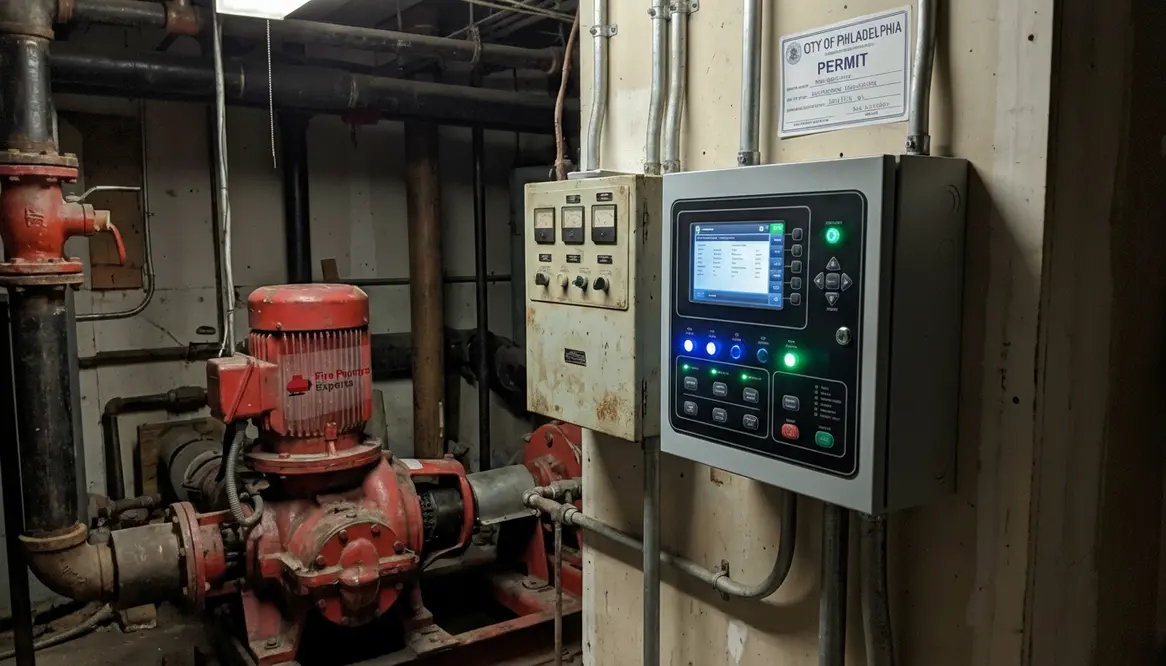
In buildings where every other system has been upgraded, the fire pump controller sometimes looks like it came from another decade entirely. The irony is hard to miss. There might be a gleaming lobby, new elevators, and state of the art access control, while the controller that starts the fire pump still uses faded indicator lights and cryptic labels.
Bringing that controller up to modern standards is not a vanity move. It is one of the most practical steps a facility team can take to reduce risk and keep the building’s fire protection strategy aligned with how the rest of the infrastructure operates day to day.
Signs Your Fire Pump Controller Is Ready for Modernization
Sometimes the signals are obvious. Other times they whisper quietly from the corner of the pump room. I have learned to pay attention to both.
1. Age and Obsolete Components
First, age is a major factor. If the controller has been running for twenty or thirty years, replacement parts may already be difficult to find. In fact, many manufacturers discontinue components long before the pump itself reaches the end of its life.
2. Nuisance Alarms and Mysterious Faults
Second, maintenance teams often notice inconsistent alarms or unexplained faults. While the pump may still run, the controller might struggle to interpret system conditions correctly. After a while, staff starts ignoring alarms because “the controller acts up sometimes,” which is not the confidence level anyone wants with life safety equipment.
3. Code Compliance and Reporting Gaps
Third, compliance updates play a role. Fire protection standards evolve. Therefore, controllers built decades ago may not align with current code expectations or reporting capabilities required by inspectors. Pulling data from an outdated controller can feel like trying to stream a movie over dial up.
4. Electrical Stress and Operating Efficiency
Finally, energy and electrical efficiency deserve attention. Newer controllers handle motor starting conditions far more smoothly, which reduces stress on electrical systems and pump motors. That smoother performance does not just protect the controller; it helps the broader infrastructure stay healthier over the long term.
In other words, if your controller feels like it belongs in a museum next to the first Game Boy, it might be time to think seriously about modernization.
Linking Modernization With Routine Fire Pump Care
Modern controllers work best when paired with consistent inspection and testing. Resources like Kord Fire’s overview of routine fire pump inspections and their importance help building teams connect day to day maintenance with long term reliability and compliance. When inspections and modernization go hand in hand, the fire pump moves from “out of sight, out of mind” to a well documented, clearly understood asset.
What Happens During a Fire Pump Controller Upgrade Philadelphia Modernization
Whenever I explain this process to facility owners, the first question usually sounds like this. “Are we about to tear apart the entire fire protection system?”
The answer is almost always no.
Controller upgrades focus on replacing the brain of the system while keeping the pump and mechanical components intact when they remain in good condition. Because of that, the modernization process often involves several precise steps.
- Evaluation of the existing fire pump and electrical setup
- Verification of power supply and motor compatibility
- Installation of a modern listed fire pump controller
- Integration with alarm and monitoring systems
- Testing under real operating conditions
Throughout the process, the goal is simple. Improve reliability without disrupting the building’s operations.
For large facilities in Philadelphia, that matters a lot. Hospitals, data centers, and manufacturing plants cannot simply pause life safety systems for long stretches. Therefore experienced specialists plan upgrades carefully and perform full commissioning tests to confirm everything performs exactly as designed.
When the process finishes, the difference is immediately noticeable. Clear digital displays replace mystery lights. Diagnostics become readable. And suddenly the pump system feels less like guesswork and more like a well trained professional.
When Should Philadelphia Facilities Plan the Upgrade?
Timing can make all the difference. I often suggest that building owners consider modernization before a failure forces their hand.
Plan Around Other Capital Projects
For example, many properties schedule upgrades during major infrastructure improvements or electrical renovations. Since contractors are already working in mechanical spaces, it becomes an efficient time to update the controller. Bundling projects also makes it easier to coordinate shutdowns, temporary protections, and inspections.
Align With Budget Cycles and Risk Planning
Additionally, some organizations align upgrades with capital planning cycles. Large commercial properties rarely enjoy surprise expenses. However, planning a fire pump controller upgrade philadelphia modernization several years in advance allows teams to budget properly while strengthening life safety systems.
Move From Reactive to Proactive Maintenance
There is also a strategic benefit. Modern controllers improve visibility into system health. Consequently, maintenance teams can spot issues early instead of discovering them during an emergency test. That kind of insight turns reactive maintenance into proactive management.
And honestly, proactive management tends to make facility directors sleep better at night. I have yet to meet one who enjoys midnight alarm calls.
Practical Advantages Property Managers Notice After Modernization
Before modernization
- Limited alarm information
- Manual troubleshooting
- Hard to locate replacement parts
- Minimal system integration
- Higher risk of unexpected shutdowns
After modernization
- Clear digital diagnostics
- Faster issue identification
- Improved electrical protection
- Integration with monitoring systems
- More dependable pump starts
Once the upgrade is complete, facility teams often tell me the same thing. The system finally feels transparent. Instead of wondering what the controller is thinking, they can see it clearly.
Furthermore, inspectors appreciate modern equipment because testing and reporting become easier. And while no one installs life safety equipment for compliments, it certainly helps when compliance inspections move smoothly.
That is one quiet advantage of fire pump controller upgrade philadelphia modernization that rarely appears on spec sheets. It reduces stress for everyone responsible for the building.
FAQ: Fire Pump Controller Upgrades in Philadelphia
A controller upgrade raises a lot of practical questions, especially in occupied buildings with tight operating schedules. The most common concerns tend to focus on timing, disruption, and whether the entire system needs to be replaced or just the controller.
Conclusion
If you manage a large commercial or industrial property in Philadelphia, the reliability of your fire pump system is not something to gamble with. A thoughtful controller upgrade can strengthen performance, simplify maintenance, and bring decades old infrastructure into the modern era. If your equipment shows its age, it may be time to explore fire pump controller upgrade philadelphia modernization with experienced specialists who understand complex facilities and the demands of critical life safety systems.
Whether your building is preparing for major capital work or you are simply tired of unexplained faults in the pump room, treating the controller as a strategic asset is a smart move. When the day comes that the fire pump is called into action, you want a modern, steady, and predictable controller standing between your building and a very bad outcome.