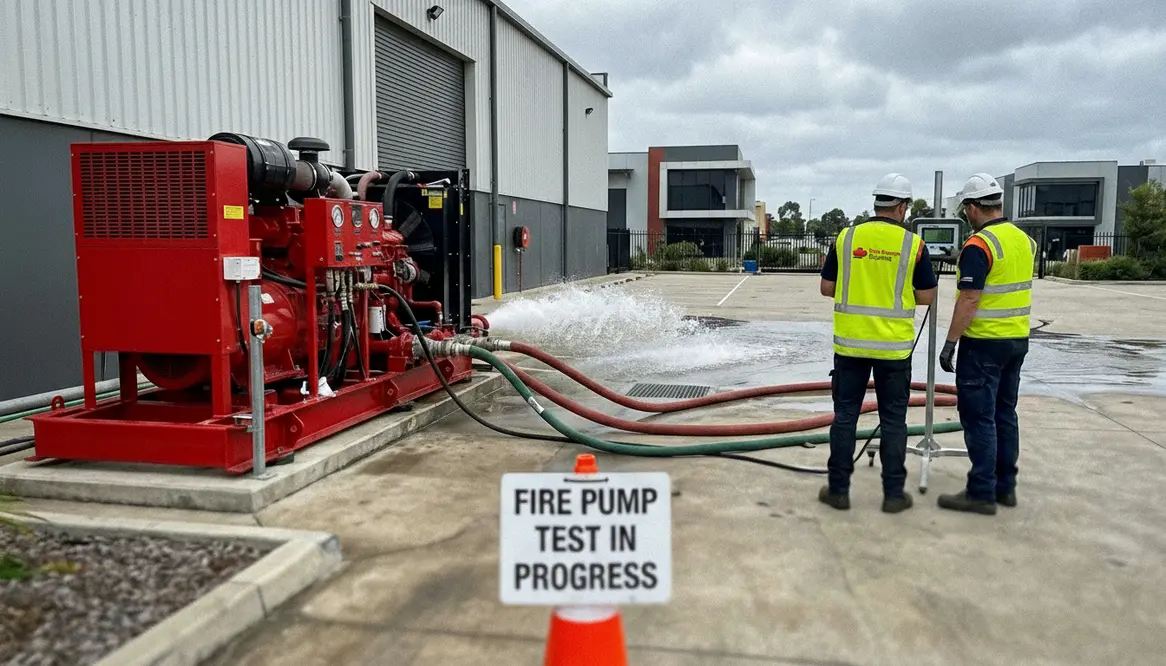
Fire Pump Flow Test Jacksonville Measuring Flow Safely
I have spent a lot of time around pumps, gauges, valves, and the kind of equipment that most people only notice when something goes very wrong. In Jacksonville, that attention often centers around one critical procedure: fire pump flow test jacksonville measuring flow safely. It might not sound thrilling at first glance. After all, it involves water pressure, calibrated meters, and some serious documentation. However, when you manage fire protection systems in a hospital tower, distribution facility, high rise office complex, or manufacturing plant, that test becomes the quiet hero behind your safety plan.
More importantly, a proper pump flow test confirms that the system will actually perform when an emergency strikes. And yes, it is a little like a fitness test for your fire pump. If the pump cannot hit its target performance curve, then the entire fire protection system becomes a very expensive decoration. Consequently, facility managers across Jacksonville rely on precise testing methods that measure water flow accurately while protecting equipment and personnel.
So today, I am going to walk you through how this works, why it matters for large commercial and industrial properties, and how professionals ensure the numbers we record truly reflect real world performance. And along the way, I might even make a few jokes. Because if we cannot laugh while standing next to a roaring diesel pump pushing thousands of gallons per minute, when can we?
Why Large Commercial Facilities in Jacksonville Depend on Accurate Pump Testing
First, let me paint a picture. Imagine a logistics warehouse the size of several football fields. Pallets stacked high. Conveyor systems humming. Hundreds of workers moving through the building. Now imagine a sprinkler system trying to protect all of that without enough pressure.
That is exactly why flow testing exists.
Fire pumps serve as the muscle behind a fire protection system. While municipal water systems provide base pressure, large commercial buildings often require additional force to move water through long pipe networks and multiple floors. Therefore, regular performance testing verifies that the pump can deliver the required flow and pressure during an emergency.
In Jacksonville’s expanding commercial landscape, this matters more every year. Distribution hubs, port facilities, healthcare campuses, and large manufacturing operations all rely on fire pumps that must perform under extreme demand.
Additionally, standards such as NFPA 25 require periodic pump flow tests. These tests confirm that pumps can reach rated capacity, typically measured at several points along the pump curve. If performance drifts, maintenance teams catch the issue before it becomes a crisis.
Think of it like taking your car in for an oil change. Except instead of protecting your engine, you are protecting a multi million dollar facility and the people inside it. No pressure. Well actually, a lot of pressure. Thousands of gallons per minute worth.
How Professionals Perform a Fire Pump Flow Test Jacksonville Measuring Flow Safely
Now let us get into the mechanics.
When I conduct a professional pump flow test, I focus on two goals. Measure the pump’s real performance and protect the facility while doing it. Those goals might sound obvious. However, anyone who has watched a poorly planned test flood a parking lot knows the importance of careful setup.
The process usually begins with preparation.
First, I review the pump’s rated capacity and system design. Every pump has a performance curve that outlines expected pressure levels at different flow rates. During the test, I will measure results at key points along that curve.
Next, we connect calibrated flow meters or use hose monster devices attached to test headers. These tools allow controlled water discharge while measuring the exact volume moving through the system.
Then the pump starts.
At this stage, technicians gradually open discharge valves to simulate different demand levels. Pressure gauges record suction and discharge readings. Meanwhile, flow meters capture the actual water movement.
Finally, the numbers come together. Flow rate, pressure levels, and pump speed all combine to confirm whether the pump performs within acceptable limits.
And yes, there is usually a moment when water blasts from the test header like something out of a disaster movie. Fortunately, professionals direct that water safely into drainage areas. Because the only thing worse than a failing fire pump is accidentally creating your own urban waterfall.
How Do You Measure Fire Pump Flow Accurately Without Damaging Equipment?
This is a question I hear from facility engineers all the time, especially when managing large properties.
The answer comes down to precision tools, controlled discharge, and careful monitoring.
Accurate flow measurement typically uses one of two methods. Inline flow meters installed in the system or external testing devices connected to discharge headers. Each approach has advantages depending on the building’s infrastructure.
However, accuracy alone is not enough. Protecting the system matters just as much.
During testing, technicians must monitor suction pressure closely. If suction pressure drops too low, the pump can experience cavitation. That is a fancy word for tiny vapor bubbles forming inside the pump. And those bubbles behave like microscopic jackhammers on the impeller.
Not ideal.
Therefore, experienced professionals gradually increase flow levels instead of opening valves all at once. Controlled adjustments protect the pump while still reaching the required test points.
At the same time, calibrated gauges ensure the data remains trustworthy. Because if you are measuring thousands of gallons per minute, guessing is not a great strategy. This is engineering, not a game show.
Key Equipment Used During Pump Flow Testing
Every accurate test relies on the right equipment. While the pump itself does the heavy lifting, several specialized tools make the measurement process possible.
Measurement Tools
- Calibrated flow meters
- Hose monster flow devices
- Digital pressure gauges
- Data logging instruments
- Pitot tubes for velocity measurement
Operational Components
- Test headers connected to pump discharge
- Control valves for flow adjustment
- Drainage routing systems
- Pressure relief valves
- Monitoring panels and alarms
Together, this equipment transforms a simple water discharge into a precise engineering test. Additionally, when technicians document each reading carefully, facility managers gain a clear picture of pump performance year after year.
In other words, the test becomes more than a regulatory checkbox. It becomes a performance history for one of the most important life safety systems in the building.
Fire Pump Flow Test Jacksonville Measuring Flow Safely in Large Industrial Systems
Now let us talk about scale.
Testing a pump in a small building is one thing. Testing a system in a massive industrial facility is another story entirely.
For example, distribution centers often require pumps capable of moving thousands of gallons per minute. Meanwhile, large manufacturing facilities may operate multiple pumps connected to complex sprinkler zones.
Therefore, testing these systems requires careful coordination.
First, technicians evaluate water supply capacity. Municipal infrastructure must support the flow required during testing. If not, temporary solutions or scheduled coordination with utilities may be necessary.
Next comes discharge planning. When a high capacity pump releases water during a flow test, that water must go somewhere. Proper drainage prevents flooding, erosion, or damage to nearby infrastructure.
Finally, teams monitor system stability throughout the test. Large pumps create powerful hydraulic forces. However, experienced technicians keep everything controlled and predictable.
When done correctly, the result is clear verification that the building’s fire protection system can perform under maximum demand.
And honestly, hearing a properly tuned fire pump reach full capacity is a little like hearing a well tuned V8 engine roar to life. It is mechanical music for safety engineers.
Common Problems a Pump Flow Test Can Reveal
Even well maintained systems can develop hidden issues over time. That is why performance testing remains so valuable.
During a pump flow evaluation, I often discover problems that routine inspections might miss.
- Impeller wear reducing pump output
- Blocked suction lines limiting water supply
- Pressure gauge calibration errors
- Diesel engine speed issues
- Controller configuration problems
- Valve restrictions in discharge lines
When these problems appear, the data tells the story. If the pump fails to reach rated flow or pressure, technicians can trace the cause before a real emergency exposes the weakness.
And believe me, discovering a problem during a controlled test beats discovering it while a fire alarm blares across a 30 story building.
FAQ About Fire Pump Flow Testing
Before scheduling your next fire pump flow test jacksonville measuring flow safely visit, it helps to clear up a few common questions about how these tests protect your building and equipment.
Facility teams in Jacksonville, from port terminals to healthcare campuses, often build internal checklists around their annual fire pump flow test jacksonville measuring flow safely so that maintenance, operations, and safety staff all understand what to expect long before the pump ever starts.
That shared understanding keeps everyone aligned on the ultimate goal: using every fire pump flow test jacksonville measuring flow safely to verify that your equipment, documentation, and emergency plans all match the real performance of your system.
When you combine disciplined planning, experienced technicians, and a repeatable process, each fire pump flow test jacksonville measuring flow safely becomes a powerful snapshot of how ready your property is for the moment you hope never arrives.
Protecting Jacksonville’s Largest Buildings Starts With Reliable Testing
When you manage a large commercial or industrial property, confidence in your fire protection system matters. A professional fire pump flow test verifies that your equipment performs exactly as designed when it matters most. If your Jacksonville facility needs expert testing, partner with specialists who understand high capacity systems, accurate measurement, and safe procedures. Schedule your evaluation today and make sure your fire pump stands ready when your building depends on it.