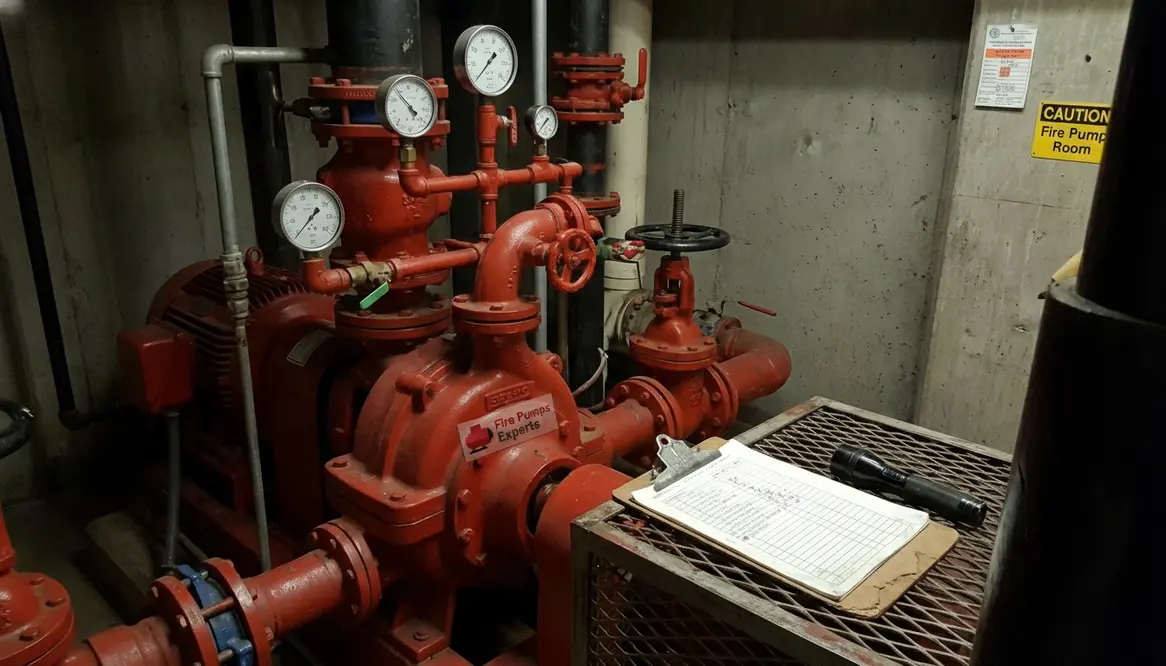
Fire Pump Inspection Prep for New Jersey Codes
How New Jersey code-driven fire pump inspection prep turns a quiet mechanical room into the most important room in your building.
I have spent years walking through mechanical rooms that hum like quiet engines of safety, and if there is one thing I never take lightly, it is fire pump inspection prep. In New Jersey, that preparation is not just a checklist. It is a direct response to strict fire codes that shape how commercial and industrial systems are built, tested, and maintained. And yes, while fire pumps are not exactly the Avengers of building systems, when things go wrong, they are the heroes you definitely want on duty. So let me walk you through how these codes quietly but powerfully influence every turn of the wrench.
New Jersey’s adoption of NFPA 20 and NFPA 25 means your fire pump is judged on design, reliability, and documentation. The better your fire pump inspection prep, the calmer your next fire marshal visit will be—and the more likely your system will deliver when it matters most.
How New Jersey Fire Codes Shape Commercial Fire Pump Systems
New Jersey does not play around with fire safety. The state adopts and enforces codes rooted in NFPA standards, particularly NFPA 20 and NFPA 25. As a result, every commercial fire pump system must meet strict design, installation, and maintenance rules.
Because of this, I always approach systems with a mindset of compliance first, convenience second. These codes dictate pump sizing, water supply reliability, and even room conditions. For example, temperature control in pump rooms is not optional. If your pump freezes, it is about as useful as a screen door on a submarine.
Code-Driven Design Priorities
- Pump capacity and pressure tailored to hazard classification
- Reliable water supply with adequate duration
- Protected, conditioned environments for pumps and controllers
- Clear access and working space in pump rooms
Why This Matters During Inspections
If your original design is sloppy, your ongoing fire pump inspection prep becomes a never-ending game of catch-up. Good design aligned with New Jersey codes makes inspections predictable instead of painful.
Moreover, inspections are not casual walkthroughs. They are structured, documented, and repeatable. Therefore, facilities that ignore the details often find themselves facing violations, or worse, system failures during emergencies.
What Do Inspectors Actually Look For During Fire Pump Inspection Prep
I get this question a lot, and the answer is both simple and layered. Inspectors focus on performance, reliability, and documentation. However, the real story is in the details.
First, they check churn tests and flow performance. Then, they verify that controllers, alarms, and valves operate correctly. Meanwhile, they review maintenance logs to confirm consistency.
Here is where fire pump inspection prep becomes critical. If your records are incomplete or your weekly checks are skipped, it shows immediately. Inspectors can spot gaps faster than a seasoned detective in a crime drama.
What I Always Prepare
- Accurate test records
- Controller functionality checks
- Valve position verification
- Clear access to equipment
What Gets Facilities in Trouble
- Missing documentation
- Blocked pump rooms
- Ignored minor leaks
- Outdated system components
Why Compliance Impacts System Design and Upgrades
New Jersey codes do not just affect inspections. They shape how systems are designed from the start. Consequently, when I work with large commercial properties, I often see design choices driven entirely by compliance requirements.
For instance, redundancy in water supply is often necessary. Additionally, electrical reliability becomes a major factor, especially for diesel versus electric pumps. These are not aesthetic decisions. They are survival decisions.
However, older buildings face a unique challenge. Retrofitting systems to meet current codes can feel like trying to upgrade a flip phone into a smartphone. It can be done, but it takes planning, investment, and a clear understanding of code expectations.
Design, Inspection, And Prep Go Hand In Hand
When codes guide layout, pump selection, and power arrangements from day one, your future fire pump inspection prep becomes more about fine-tuning than scrambling. Good design is the quiet partner of every smooth inspection.
Common Compliance Pitfalls I See in Large Facilities
Even well managed properties slip up. In fact, the larger the facility, the easier it is for small issues to hide in plain sight.
One major issue is inconsistent testing. While weekly and monthly checks sound simple, they often get delayed or rushed. As a result, small performance issues grow into larger risks.
Another problem is poor documentation. If it is not recorded, it did not happen in the eyes of an inspector. And trust me, “we usually do that” is not a winning argument.
Finally, system modifications without proper review can create compliance gaps. A new tenant layout or equipment change can unknowingly affect fire protection performance.
A Quick Gut-Check For Your Facility
- Are weekly and monthly fire pump checks documented every time?
- Can you pull the last year of pump test results in under five minutes?
- Did anyone review fire protection impact after your last renovation?
- Is your pump room still a pump room, or has it turned into overflow storage?
How I Approach Fire Pump Inspection Prep for NJ Code Compliance
Preparation is not a one day event. It is a continuous process. Therefore, I focus on building habits that align with code requirements.
I start with routine checks that are actually done on schedule. Then, I ensure that logs are detailed and easy to follow. After that, I review system performance trends, because patterns often reveal hidden problems.
Daily And Weekly Habits
- Walk the pump room and look for leaks, obstructions, and odd noises
- Confirm power status, controller position, and alarm indications
- Verify valves are in the correct, supervised positions
- Record readings the same way, every time, so trends are obvious
Documentation That Works For You
Good fire pump inspection prep is as much about paper as it is about pressure. I use consistent forms, clear dates, and legible notes so anyone walking in—inspector, insurance rep, or new facility manager—can understand the story your system is telling.
Additionally, I make sure pump rooms remain clean and accessible. It sounds basic, but you would be surprised how often storage creeps into these spaces. A fire pump room is not a storage closet, no matter how tempting it may be.
Ultimately, solid fire pump inspection prep creates confidence. Not just for inspections, but for real emergencies where performance matters most.
FAQ Quick Answers for Building Owners and Facility Managers
How often are fire pumps inspected in New Jersey
Weekly, monthly, and annual inspections are required based on NFPA standards.
What codes apply to commercial fire pump systems
NFPA 20 for installation and NFPA 25 for inspection and maintenance, adopted by New Jersey.
What happens if my system fails inspection
You may face violations, fines, and required corrective actions within a set timeframe.
Do I need detailed records for inspections
Yes, inspectors require complete and accurate documentation of all tests and maintenance.
Can older systems remain as they are
Only if they meet current safety expectations. Otherwise, upgrades may be required.
Stay Ready So Your System Never Has to Apologize
I always say this. A fire pump should never have to say “I was not ready.” With New Jersey fire codes guiding every detail, your system has a clear path to reliability. If you take fire pump inspection prep seriously and stay consistent, you will not just pass inspections. You will protect your property, your people, and your peace of mind. And that, my friend, is worth every bit of effort.
If you want a deeper look at routine inspection best practices, a solid place to start is reviewing how a dedicated fire protection company structures its own services. For example, Kord Fire Protection breaks down weekly, monthly, and annual inspections, testing, and documentation for fire pumps at https://kordfire.com/fire-pump/. Comparing your internal routine against a structured program like that can quickly show you where your own prep needs to tighten up.