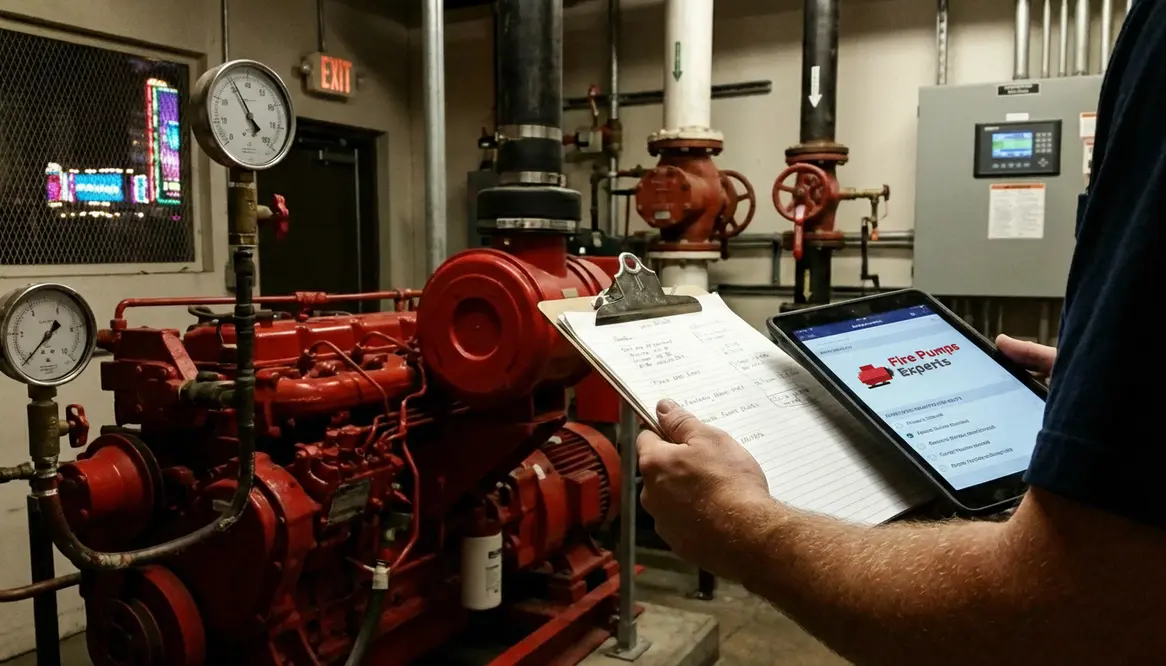
Fire Pump Inspection Prep Insurers Actually Expect
I have spent years walking through mechanical rooms in Las Vegas where the air hums with pressure, heat, and expectation. In those moments, one truth stands tall. Insurers do not gamble when it comes to fire protection. They expect precision. That is why fire pump inspection prep matters right from the start. When I prepare a system for review, I am not just checking boxes. I am telling a story of reliability, one that insurers can trust. And in a city built on risk and reward, trust is everything.
What insurers actually evaluate in fire pump systems
When I meet with insurers, they are not impressed by shiny equipment alone. Instead, they look for consistency, documentation, and performance under pressure. Literally. They want proof that the system will work when everything else fails.
First, they examine flow test results. Then, they look at pressure readings over time. After that, they dig into maintenance logs. If those records are incomplete, it raises eyebrows faster than a bad poker hand on the Strip.
Moreover, they pay close attention to compliance with NFPA standards. If your system drifts even slightly outside those lines, it signals risk. And risk, in their world, translates to higher premiums or worse, denied coverage.
Why your prep makes or breaks insurer confidence
Insurers think in probabilities, but what they really respond to is proof. Thorough fire pump inspection prep is your chance to show that every component, from the pump curve to the controller, has been thought through, tested, and documented. It is the difference between hoping your system passes and knowing it will.
If you want a deeper technical breakdown of how routine pump checks support that reliability, a solid reference is Kord Fire Protection’s overview of routine fire pump inspections and their importance. It aligns closely with what I see insurers expecting on the ground.
Fire pump inspection prep that insurers expect before audits
I always say this plainly. If you wait until the inspector arrives, you are already behind. Strong fire pump inspection prep begins weeks in advance.
For example, I verify controller functionality, check for voltage stability, and confirm that backup power engages without hesitation. Meanwhile, I review historical data to catch patterns others might miss.
Additionally, I make sure every valve is in its correct position. It sounds simple, yet I have seen million dollar properties fail inspections over a single closed valve. Not exactly the kind of plot twist anyone wants.
Because of this, preparation becomes less about reacting and more about predicting. Insurers appreciate that mindset because it reduces uncertainty.
How I align system performance with insurer risk models
Insurers think in probabilities. I think in outcomes. So I bridge the gap.
I start by analyzing system demand against actual building requirements. A high rise in Las Vegas does not forgive underperformance. Therefore, I ensure the pump curve matches real world needs, not just theoretical ones.
Then, I evaluate redundancy. If one component fails, what happens next? Insurers love layered protection. It reassures them that a single fault will not lead to catastrophic loss.
At the same time, I consider environmental factors. Heat, dust, and power fluctuations all play a role here. Las Vegas is not exactly known for gentle conditions. So I account for that reality in every inspection and adjustment.
Common red flags that make insurers nervous
I have seen patterns, and insurers notice them too.
Operational issues
- Inconsistent pressure readings
- Delayed pump start times
- Unusual vibration or noise
- Fuel supply concerns in diesel systems
Documentation gaps
- Missing inspection reports
- Outdated test certifications
- Incomplete maintenance logs
- Lack of compliance records
On top of that, neglected equipment stands out immediately. Dust buildup, corrosion, or leaks tell a story. And it is not a good one. Think of it like showing up to a job interview in wrinkled clothes. The impression sticks.
Can fire pump inspection prep lower insurance premiums?
Yes, and I have seen it happen more than once.
When I present a well documented system with strong fire pump inspection prep, insurers respond differently. They see reduced risk, which often leads to better rates or more favorable terms.
However, it is not just about saving money. It is about control. A prepared system gives property managers leverage in negotiations. Without it, they are simply reacting to whatever terms come their way.
And let’s be honest. In Las Vegas, the house usually wins. This is one way to even the odds.
Maintaining long term confidence with insurers
Consistency wins the game over time. So I focus on building a track record.
I schedule routine testing, update records immediately, and address minor issues before they grow. Furthermore, I keep communication open with all stakeholders. When insurers see that level of discipline, it builds confidence.
In addition, I treat every inspection as if it matters. Because it does. One overlooked detail today can become tomorrow’s headline. And nobody wants their building starring in that kind of story.
FAQ
Take control before the inspector walks in
If you manage a commercial or industrial property in Las Vegas, now is the time to act. I approach every system with precision, foresight, and a clear goal. Make insurers confident before they even ask questions. Strong preparation changes outcomes, plain and simple. Partner with professionals who understand the stakes, and turn your fire protection system into an asset instead of a liability. Because when the pressure hits, you want certainty, not surprises.