Fire Pump Monitoring System Requirements Guide
How modern monitoring turns quiet mechanical rooms into reliable guardians for commercial and industrial buildings.
I have spent enough time in mechanical rooms to know one simple truth. Fire protection works best when nobody notices it. However, that calm silence depends on systems quietly watching every valve, pressure change, and motor. That is where fire pump monitoring system requirements step in. In large commercial and industrial buildings, these systems keep watch long before smoke appears in the hallway. They track pump status, electrical signals, and alarms so facility teams know immediately when something drifts out of line.
In other words, a fire pump is not just a big red machine waiting for its Hollywood moment. It is part of a network that needs constant supervision. Without proper monitoring and alarms, even the best pump can become a very expensive paperweight. Therefore, understanding how monitoring works is not just helpful. It is essential for protecting major properties, data centers, warehouses, hospitals, and manufacturing facilities.
Quick Snapshot: Why Monitoring Matters
- Confirms the fire pump is actually ready when the sprinkler system needs it.
- Spots silent electrical and mechanical failures before an emergency does.
- Feeds critical status to fire alarm, building management, and remote systems.
- Supports compliance with modern fire pump monitoring system requirements.
Why Fire Pump Monitoring Matters in Commercial and Industrial Facilities
I like to think of a fire pump monitoring system as the building’s early warning narrator. Calmly observing everything and speaking up the moment something feels off.
Large commercial buildings rely on fire pumps to maintain water pressure for sprinkler systems. Yet the pump itself is only one part of the story. Monitoring systems watch the electrical supply, controller signals, pressure levels, and operational status.
Because of this, facility teams gain immediate awareness of problems such as:
- Power loss to the fire pump controller
- Pump running unexpectedly
- Low suction pressure
- Controller trouble signals
- Phase reversal or electrical faults
Consequently, maintenance teams can react before a small issue turns into a very awkward conversation with the fire marshal. And trust me, that conversation is rarely fun.
Moreover, large properties often spread across multiple floors and mechanical zones. A monitoring system connects the pump room to building management systems, fire alarm panels, and remote supervision centers. That connection turns a single piece of equipment into part of a coordinated safety network.
Fire Pump Monitoring System Requirements for Modern Buildings
Reading the Story on the Pump Room Wall
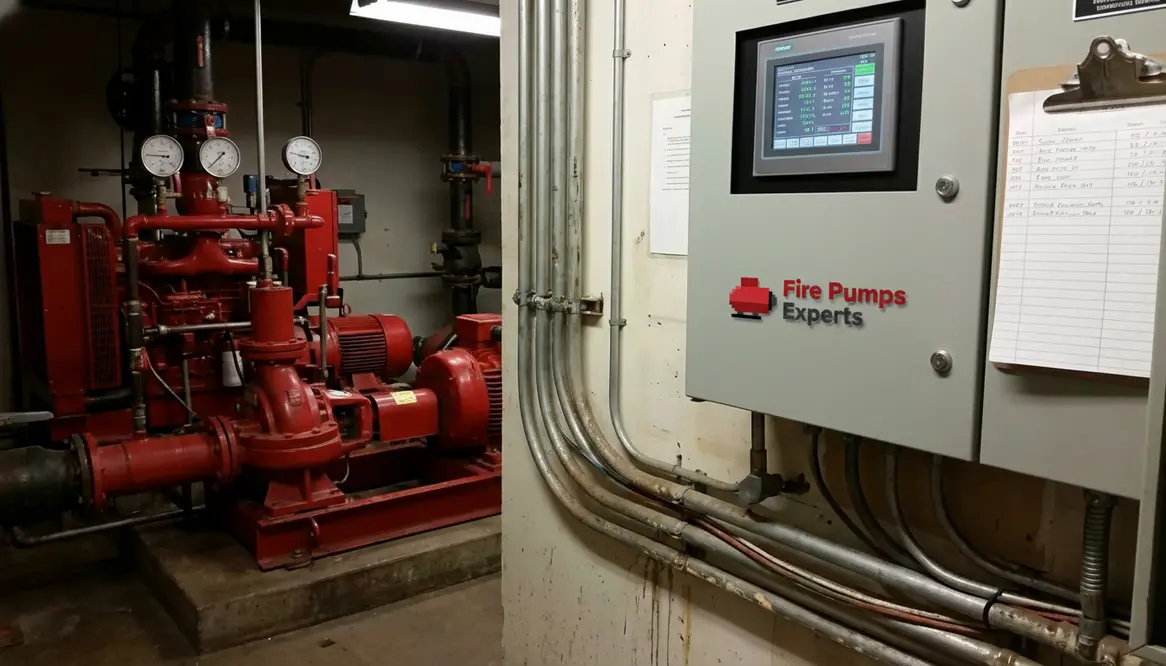
When I walk through a pump room in a large facility, I always look beyond the pump itself. The real story often sits on the wall beside it. Control panels, signal wiring, and supervisory equipment quietly meeting the fire pump monitoring system requirements that codes and insurers expect.
Signals You Should Expect to See
- Pump running status
- Controller power failure
- Phase reversal
- Pump trouble condition
Most commercial and industrial properties must monitor several key signals from the pump controller. These signals confirm that the pump is ready when the sprinkler system demands water.
Additionally, many properties monitor valve positions, tank levels, and pressure switches. While the pump handles the heavy lifting, these signals provide the context that tells operators whether the system can truly perform.
Furthermore, alarm transmission matters just as much as detection. Signals often travel to a fire alarm control panel or directly to a supervising station. If something goes wrong at 2:17 a.m., someone will know about it before the coffee machine finishes brewing.
That level of oversight may sound excessive. Yet in large commercial environments, redundancy and visibility keep small issues from becoming major downtime events. And as fire pump monitoring system requirements continue to evolve, that visibility only grows more valuable.
How Alarm Systems Turn Silent Failures Into Immediate Alerts
A fire pump rarely fails with dramatic flair. There is no orchestral music or slow motion scene like in a blockbuster movie. Instead, problems usually appear quietly. A breaker trips. A phase reverses. A controller loses power.
Without alarms, those failures can sit unnoticed for days.
From Quiet Problems to Actionable Alerts
Monitoring systems change that dynamic entirely. They translate mechanical and electrical signals into alerts that facility teams can act on immediately. As a result, what used to be a silent failure becomes a very loud notification.
For large commercial properties, alarm signals typically feed into:
- Fire alarm control panels
- Building management systems
- Remote monitoring services
- Security control rooms
Because these systems communicate with each other, teams can see pump status alongside other building conditions. That visibility helps engineers understand whether a signal represents a real emergency or simply a maintenance issue.
Meanwhile, alarm prioritization keeps things manageable. Critical signals rise to the top, while less urgent alerts still get logged for review.
Think of it like air traffic control for your fire protection system. Every signal gets tracked. Nothing slips through unnoticed.
What Should a Fire Pump Monitoring Setup Include?
I often get this question from facility managers overseeing large campuses or high rise properties. They already have pumps installed. However, they want to know what a complete monitoring strategy actually looks like.
The answer involves both hardware and communication pathways.
Core Monitoring Components
- Fire pump controller signal outputs
- Pressure sensors and switches
- Alarm relay connections
- Supervisory valve monitoring
- Dedicated monitoring panels
Communication and Integration
- Fire alarm panel integration
- Remote supervisory station connection
- Building management system interface
- Event logging and diagnostics
- Maintenance notification alerts
Together, these elements create a layered view of system health. The pump still performs the physical work of moving water. However, the monitoring system provides the intelligence that keeps everything reliable.
And frankly, in large industrial facilities where equipment runs nonstop, that intelligence saves both time and headaches.
Need Help Choosing or Testing a Fire Pump?
If you are evaluating new equipment or planning inspections, a seasoned service team can keep your monitoring strategy aligned with real-world fire pump monitoring system requirements. For example, providers like Kord Fire offer dedicated fire pump inspection, maintenance, and testing services that fit into broader monitoring and alarm programs.
Fire Pump Monitoring System Requirements and Compliance Expectations
Codes and standards exist for a reason. They create a baseline that ensures fire protection systems remain dependable when they are needed most.
Meeting fire pump monitoring system requirements helps facilities align with widely recognized safety standards and inspection practices. For commercial and industrial buildings, that usually means integrating monitoring signals into approved fire alarm or supervisory systems.
However, compliance is not just about checking a box during inspection week.
Operational Benefits of Strong Monitoring
- Faster detection of equipment faults
- Improved maintenance scheduling
- Reduced downtime risk
- Clear documentation for inspections
Why Inspectors Appreciate Good Monitoring
When inspectors arrive and see well documented signals, alarm integration, and clear adherence to fire pump monitoring system requirements, conversations tend to stay short and friendly. And everyone appreciates a short inspection.
Therefore, building owners gain both safety and operational advantages. The monitoring infrastructure becomes part of the facility’s broader reliability strategy, not just a line item on a code checklist.
FAQ: Fire Pump Monitoring and Alarm Systems
Final Thoughts on Reliable Fire Pump Monitoring
When I walk past a fire pump room, I do not just see equipment. I see a system quietly standing guard over an entire building. Proper monitoring and alarm integration ensure that protection stays reliable every hour of the day.
As fire pump monitoring system requirements tighten and buildings grow more complex, the facilities that invest in robust monitoring gain more than code compliance. They gain confidence that a silent room full of machinery will be ready when people and property are counting on it most.
If your commercial or industrial facility wants stronger oversight, better diagnostics, and dependable fire protection readiness, the team at firepumps.org can help you evaluate, upgrade, and implement monitoring systems designed for large scale properties.