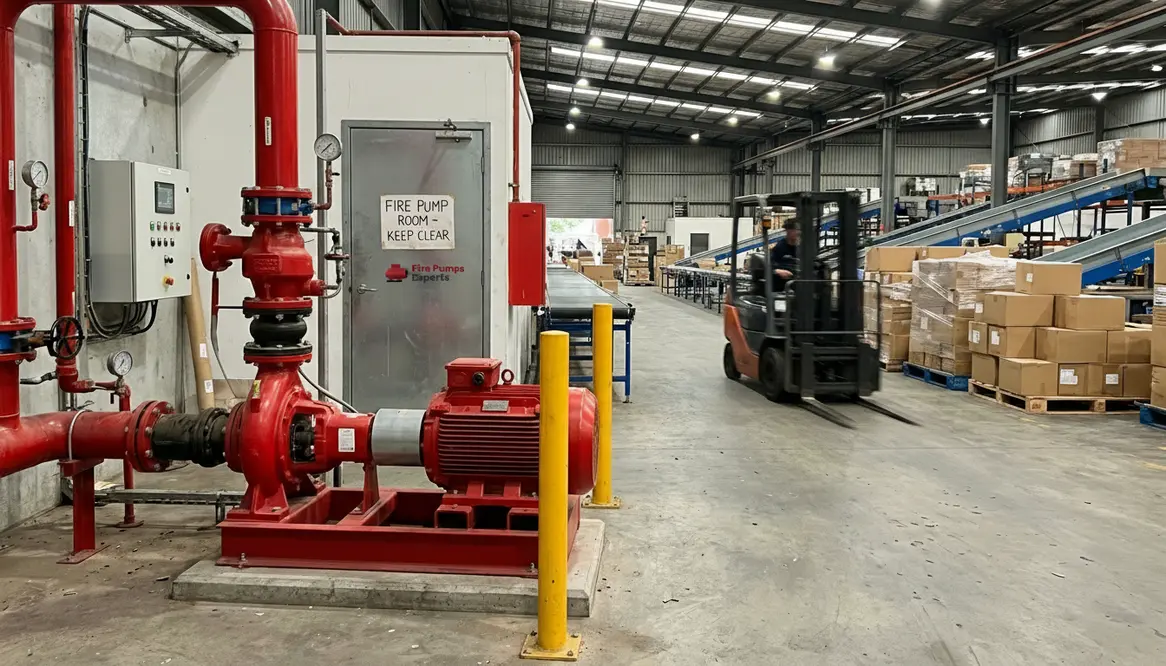
Fire Pump Needs for Urban Logistics Hubs Guide
I have spent enough time inside last mile delivery centers to know one thing for certain. These places move fast, think faster, and burn hotter than a summer blockbuster premiere. And right at the heart of their safety strategy sits a quiet hero most people never notice. I am talking about fire pump systems. When I discuss Fire pump needs for urban logistics hubs, I am not just checking a compliance box. I am talking about protecting millions in assets, nonstop operations, and a workforce that never really clocks out.
Why Fire Protection Matters in High Velocity Fulfillment Centers
First, let me set the stage. These facilities run around the clock. Conveyor belts hum like a well rehearsed orchestra, forklifts dance in tight aisles, and packages fly out the door faster than movie spoilers on opening night. Because of this intensity, fire risk climbs quickly.
However, the real challenge is not just fire risk. It is response time. In dense urban locations, fire departments face traffic, access limits, and vertical building layouts. Therefore, an internal fire pump system becomes the first line of defense, delivering immediate water pressure where it matters most.
And yes, without it, relying on municipal supply alone is like bringing a garden hose to a dragon fight. Not ideal.
Urban Density Raises the Stakes
High-rise storage racks, mezzanines, and tight loading zones concentrate fuel, people, and equipment into compact footprints. Any misstep with ignition sources, battery charging, or hot work can turn a small incident into a multi-level emergency before anyone has a chance to react.
That is why Fire pump needs for urban logistics hubs are not a nice-to-have upgrade. They are fundamental infrastructure for shaving precious seconds off response time and delivering the right water volume to the right floor at the right moment.
What makes fire pump systems essential for last mile delivery operations?
I will answer this directly. These systems ensure consistent water pressure, even when city supply dips. They activate quickly, support sprinkler systems, and keep suppression efforts strong from start to finish.
Moreover, modern logistics hubs often stack inventory high and pack layouts tight. Because of that, fire spreads vertically and laterally at alarming speeds. A properly designed pump system compensates for pressure loss across height and distance.
In addition, these systems integrate with alarms and controls, creating a coordinated response. When seconds count, automation removes hesitation. And in my experience, hesitation is where damage multiplies.
How Fire Pumps Protect Through Every Phase of a Fire Event
From the first heat signature to full suppression, fire pumps stabilize the one thing sprinklers desperately need: dependable water pressure. Transient pressure drops in municipal lines, simultaneous demand from nearby buildings, or elevation changes inside your hub all erode performance. A dedicated fire pump neutralizes those variables and turns a shaky external supply into a reliable internal lifeline.
Designing for Fire pump needs for urban logistics hubs
Now we get into the real meat of it. Designing for Fire pump needs for urban logistics hubs requires more than picking a pump off a shelf and calling it a day. I approach it like building a custom engine.
First, I evaluate building size, ceiling height, and storage density. Then, I factor in water supply variability. City systems are not always reliable under peak demand, especially in crowded districts.
Next, I consider redundancy. Because downtime in these facilities is not just inconvenient, it is expensive. Backup power, secondary pumps, and fail safe controls ensure the system performs under pressure. Literally.
Finally, I align everything with code requirements and insurance standards. Not because paperwork is fun, but because compliance keeps operations running and premiums from skyrocketing.
Key Design Factors
- Building height and layout complexity
- Water supply reliability
- Storage configuration and materials
- Required pressure and flow rates
System Components
- Electric or diesel fire pumps
- Controllers and monitoring systems
- Backup power integration
- Pressure maintenance pumps
Translating Design Choices Into Real-World Resilience
This is where Fire pump needs for urban logistics hubs turn from theoretical calculations into lived reality. Tight sites, shared utility corridors, limited equipment rooms, and landlord constraints mean every design decision needs both technical accuracy and practical creativity. The best systems are invisible on a good day and unstoppable on a bad one.
Common pitfalls I see and how to avoid them
Let me be blunt. I have seen systems installed that look great on paper but fail in practice. One common mistake is underestimating demand. Designers assume average conditions, but fires do not follow averages.
Another issue is poor maintenance planning. Even the best system becomes useless if it sits neglected. Regular testing, inspections, and performance checks are not optional. They are survival.
Then there is integration. A fire pump that does not communicate with alarms or sprinklers creates delays. And delays, as we know, are not your friend here.
So, I always push for a holistic approach. Design, install, maintain, and monitor as one continuous strategy.
Red Flags During Design and Operation
- Assuming municipal water will always deliver peak flow and pressure simultaneously
- Locating pumps where access for testing and repairs is a logistical nightmare
- Ignoring power quality issues that could knock electric pumps offline
- Treating commissioning as a formality instead of a live-fire drill for the system
How do I choose the right fire pump system for a logistics facility?
I start with the basics. What are the fire risks, and how fast can they escalate? From there, I match pump type to facility needs. Electric pumps work well where power is stable. Diesel pumps step in when reliability is questionable.
Then, I calculate required flow and pressure. This is not guesswork. It is based on hazard classification, building dimensions, and suppression system design.
After that, I think about future growth. Because these facilities evolve quickly, I prefer scalable systems that can handle expansion without a complete overhaul.
And finally, I never ignore usability. Operators should understand the system. If it feels like piloting a spaceship, something went wrong.
Matching Pump Strategy to Operational Strategy
Fast-turn, high-volume hubs need systems that treat every operational hour as game time. That means redundant starting methods, clear status indication, remote monitoring, and procedures that operations and safety teams actually rehearse. When Fire pump needs for urban logistics hubs are aligned with how the business runs, the system protects throughput instead of becoming a bottleneck when it is needed most.
Technology is changing the game
Here is where things get interesting. Smart monitoring now allows real time insights into pump performance. Sensors track pressure, flow, and system health continuously.
As a result, teams can detect issues before they become failures. Predictive maintenance replaces reactive scrambling. And frankly, that shift feels like going from dial up internet to high speed fiber.
Additionally, integration with building management systems creates a unified safety network. Everything talks, everything responds, and everything works together.
Where Data Meets Compliance
The smartest operators use connected fire pumps to turn maintenance logs, alarm histories, and performance trends into evidence. That evidence supports code compliance, insurance negotiations, and capital planning for future upgrades. It also sharpens understanding of Fire pump needs for urban logistics hubs over time, as real-world data replaces assumptions.
FAQ
Final thoughts and next steps
When I look at a last mile delivery center, I do not just see motion and machinery. I see risk, responsibility, and opportunity. Investing in the right fire pump system is not just about meeting codes. It is about protecting continuity, people, and reputation. If you are planning or upgrading a facility, now is the time to act. Get the system right, and everything else runs a little smoother, even when things heat up.
If you want a deeper technical breakdown, including example configurations and case studies, resources from organizations like https://firepumps.org can help frame the engineering side while you focus on the operational realities of your own hub.