Fire Pump Performance Modesto Buildings Guide
Introduction: Why Fire Pump Performance Matters in Modesto Commercial Buildings
I have spent enough time around commercial mechanical rooms to know one simple truth. Most people never think about a fire pump until the day they desperately need it. Then suddenly that quiet machine in the corner becomes the most important piece of equipment in the building. When we talk about fire pump performance Modesto buildings, we are not discussing theory or paperwork. We are talking about the difference between a controlled incident and a catastrophic loss.
Modesto is home to warehouses, manufacturing plants, distribution centers, hospitals, and large commercial complexes. These facilities operate around the clock. Consequently, their fire protection systems must do the same. A fire pump that hesitates, underperforms, or struggles to maintain pressure can compromise an entire suppression system. And trust me, fire does not politely wait while someone checks the manual.
So today I am walking through the real factors that shape reliable fire pump operation in large Modesto properties. Think of this as a calm conversation about serious machinery with a cup of coffee in hand and the building quietly humming in the background.
At a Glance: What This Guide Covers
- How fire pump performance Modesto buildings require changes in large facilities
- Practical steps to evaluate an existing fire pump
- Engineering factors that quietly influence reliability
- Maintenance strategies that keep systems inspection-ready
- Planning ahead for expansion, storage changes, and new hazards
If you are responsible for a commercial or industrial property in Modesto, this is the nuts-and-bolts perspective you need before the next fire marshal visit, insurance review, or real emergency.
Fire Pump Performance Modesto Buildings Must Achieve for Large Facilities
Commercial and industrial facilities in Modesto demand consistent water pressure across large sprinkler networks. Unlike small properties, these buildings often span hundreds of thousands of square feet. That means the pump must deliver steady flow across long pipe runs, high ceilings, and sometimes multiple levels.
1. Understanding System Demand
First, I always look at system demand. Warehouses with high rack storage require stronger sprinkler discharge than office spaces. Meanwhile, manufacturing plants may contain specialized suppression zones with different pressure requirements. Therefore the fire pump must match the highest demand point within the system so that the most remote or challenging hazard still receives code-compliant protection.
2. Water Supply Conditions in Modesto
Second, water supply conditions matter. Modesto municipal water systems are generally reliable, but pressure fluctuations still occur during peak use periods. Because of that, many large facilities rely heavily on their fire pumps to stabilize pressure during an emergency event. A properly selected pump smooths out those fluctuations so the sprinklers behave predictably instead of sputtering at the worst possible moment.
3. Pump Curve Alignment With Building Hydraulics
Third, I consider pump curve alignment. A fire pump operates best when its performance curve matches the building’s hydraulic design. If the pump is oversized, it can create pressure spikes that damage equipment or cause relief valves to lift. If it is undersized, sprinklers may never reach their required discharge density. Neither scenario wins any awards for safety, and neither represents the fire pump performance Modesto buildings are expecting when they sign off on final inspections.
4. The Role of Routine Testing
Finally, let us talk about testing. Fire pumps that sit idle for months behave a bit like me after a long vacation. They need a warm up. Weekly churn tests and annual flow testing confirm that the pump actually delivers the performance the design promised. This is where “on paper” design either proves itself or gets exposed in front of the test header.
How Do I Evaluate Fire Pump Performance in Modesto Buildings?
When I evaluate a system, I start with data before I start turning valves. Numbers tell the story. And unlike some Hollywood scripts, pump data rarely exaggerates.
I begin with the pump nameplate and design specifications. This confirms the rated flow and pressure the pump should achieve. Next, I compare that information with hydraulic calculations from the building’s fire protection design.
Then comes the hands on work.
Key Evaluation Steps
- Reviewing pump controller logs and past test reports
- Inspecting suction supply and backflow assemblies
- Running a churn test to confirm stable pressure
- Conducting a full flow test using calibrated gauges
- Checking for vibration, overheating, or unusual sounds
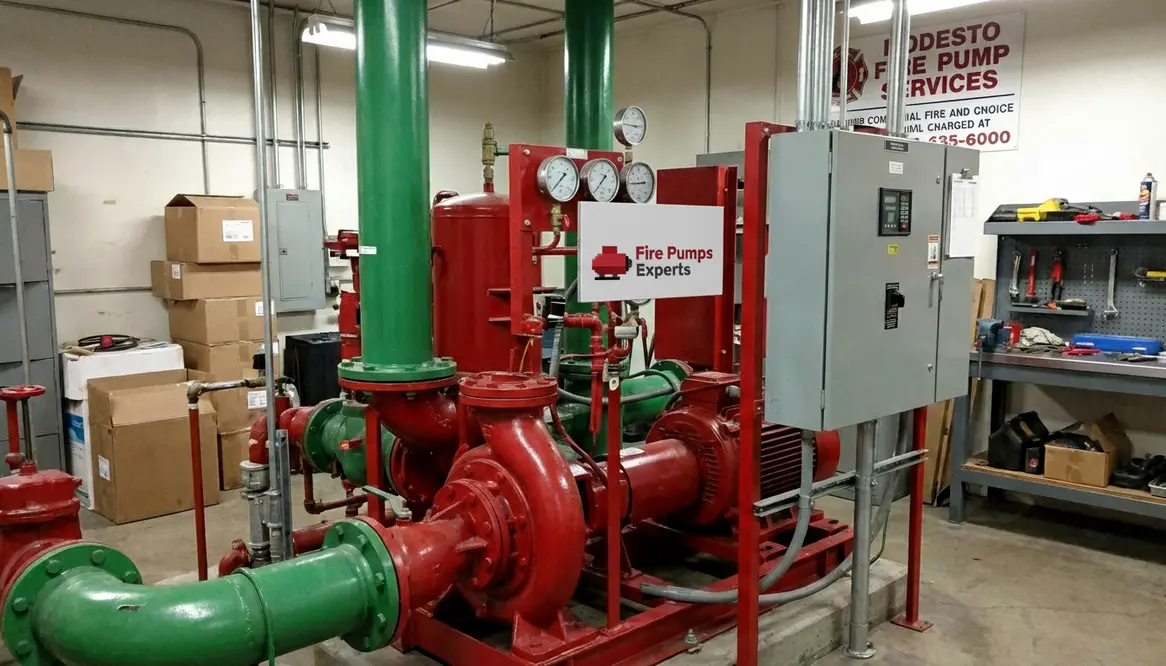
Meanwhile, I also pay attention to the environment around the pump. A cluttered pump room, poor ventilation, or electrical issues can quietly degrade performance. A fire pump room should feel organized and intentional. Not like someone stored their entire warehouse of mystery boxes next to critical life safety equipment.
Because when an emergency happens, the pump should start instantly. No drama. No hesitation. Just pure mechanical confidence.
Engineering Factors That Influence Pump Reliability in Large Facilities
Reliable fire pump performance does not happen by accident. It results from careful coordination between hydraulic design, equipment selection, and ongoing maintenance.
Several technical elements shape how well a pump performs inside Modesto commercial buildings.
| System Factor | Operational Impact |
|---|---|
| Incoming water supply stability | Determines how hard the pump must work to maintain pressure |
| Pipe friction loss in large networks | Influences pressure requirements across the building |
| High pile storage protection demands | Raises flow demand during suppression and stresses marginal pumps |
| Backup power availability | Keeps pumps running during power outages and grid instability |
| Controller response time | Ensures immediate pump startup when pressure drops |
Additionally, temperature and environmental conditions affect mechanical longevity. Modesto summers can be brutally hot. Consequently, pump rooms must maintain adequate ventilation so motors and controllers remain within safe operating ranges.
Another overlooked factor is diesel fuel quality for diesel driven fire pumps. Poor fuel maintenance can lead to delayed starts or engine issues. And if a diesel pump refuses to start during a fire event, that moment becomes the worst possible time to learn about fuel degradation.
In short, reliability comes from attention to detail. Not glamorous, perhaps. But neither is explaining to an insurance investigator why the pump failed.
Maintenance Strategies That Protect Fire Pump Performance Modesto Buildings Depend On
Maintenance is where theory meets reality. Even the best engineered pump will lose efficiency without consistent inspection and testing.
I approach pump maintenance like a long running television series. If you skip too many episodes, the plot stops making sense.
Core Maintenance Practices
Weekly churn tests verify that the pump starts automatically and holds pressure without flowing water. Meanwhile, monthly inspections confirm valves remain open, controllers are powered, and gauges read accurately.
However, the annual flow test is the main event. During this test, technicians simulate actual system demand by flowing water through test headers or flow meters. This confirms the pump still meets its rated capacity and validates the fire pump performance Modesto buildings were originally designed around.
For large commercial properties in Modesto, I also recommend tracking long term performance trends. If pressure slowly declines year after year, the pump may need internal inspection or impeller servicing.
Furthermore, major facilities should coordinate pump maintenance with broader fire protection system testing. Sprinklers, alarms, and pumps operate as one ecosystem. When one component struggles, the entire system feels the strain.
And let us be honest. A fire pump that runs flawlessly year after year is not boring. It is beautiful engineering quietly doing its job.
Planning for Future Expansion and System Demand
Modesto continues to grow as a logistics and industrial hub. Warehouses expand. Manufacturing lines evolve. Meanwhile, building owners often increase storage heights or add new production areas.
These changes can affect hydraulic demand across the sprinkler system.
For example, increasing rack storage height dramatically increases required sprinkler discharge density. If the existing fire pump cannot support the new demand, the system must be reevaluated.
Therefore I always encourage facility managers to involve fire protection engineers early during expansion planning. Waiting until construction is complete can lead to costly upgrades.
Additionally, large facilities should consider redundancy. Backup pumps, reliable generators, and properly sized water storage tanks help ensure the suppression system remains dependable during extreme conditions.
Because the goal is simple. When something goes wrong, the fire protection system should respond instantly. No suspense music required.
When to Call in a Fire Pump Specialist
If you are seeing fluctuating test results, unexplained noise, or changes in building usage, that is the moment to bring in certified professionals who live and breathe fire pumps. Teams like Kord Fire Protection’s fire pump service experts handle inspection, repair, and testing so fire pump performance Modesto buildings depend on stays consistent long after the ribbon cutting.
FAQ About Fire Pump Systems in Commercial Facilities
Conclusion
Strong fire protection begins with dependable equipment. When property owners understand the realities behind fire pump performance Modesto buildings rely on, they make smarter decisions about testing, maintenance, and system design. If you manage a large commercial or industrial facility, do not wait for an emergency to learn how your pump behaves. Partner with experienced specialists who focus on performance, reliability, and long term protection. Because when safety systems work flawlessly, the whole building sleeps a little easier.