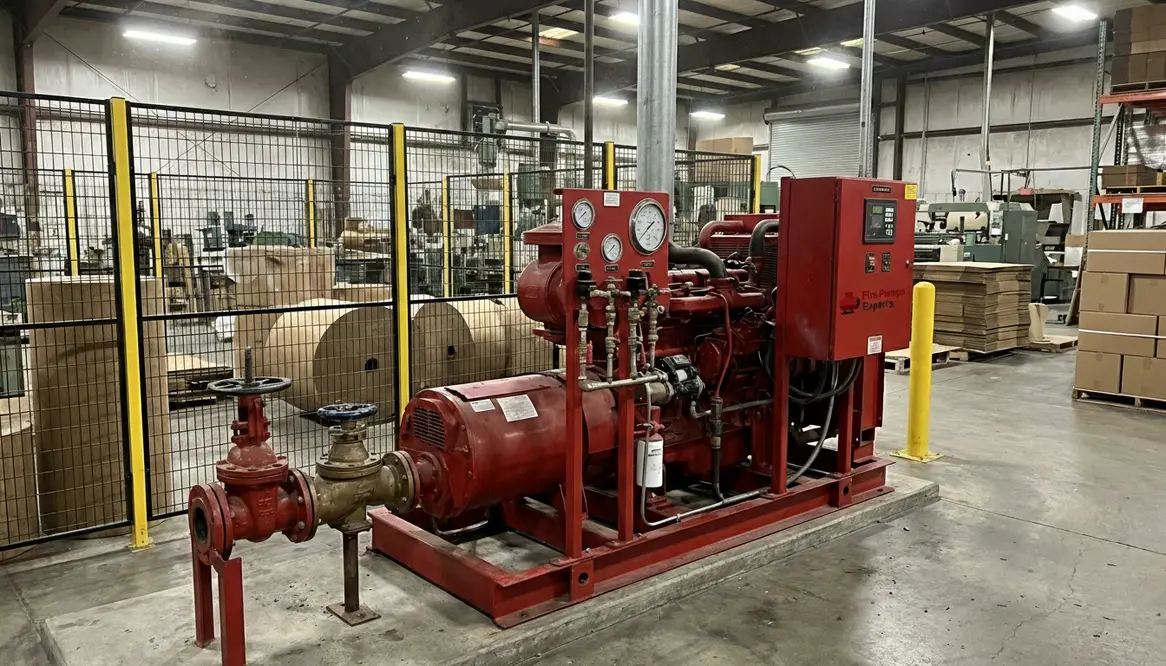
Fire Pump Planning for Corrugated Paper Plants
I have spent enough time inside industrial plants to know this truth: paper burns faster than a bad idea spreads in a meeting. That is exactly why Fire pump planning for paper-based production sits at the heart of every corrugated packaging facility I work with. In these environments, heat, dust, and continuous motion create a perfect storm. So I approach fire pump systems with calm precision, a bit of humor, and a firm respect for what is at stake. Because when things go wrong, you do not get a second take. This is not Hollywood. There is no slow motion hero moment. Just water, pressure, and preparation.
At a Glance: Why Corrugated Plants Are Different
- Continuous heat from corrugators and dryers
- High fuel load from rolls, sheets, and scrap paper
- Airborne paper dust that loves any open ignition source
- Tight layouts that let fire travel fast through conveyors and stacks
What That Means for Fire Pumps
- Fast, reliable start on demand
- Sustained pressure across large floor areas
- Capacity for simultaneous sprinkler and hose use
- Redundancy when one piece decides today is not its day
Why Corrugated Plants Demand Serious Fire Protection
Corrugated packaging plants are not your average industrial space. They run hot, they run fast, and they carry a surprising amount of combustible material. Paper dust alone can turn a small spark into a headline.
Because of that, I always treat these facilities as high hazard environments. The fire load builds quickly, and once ignition happens, it moves with purpose. Therefore, fire pumps must deliver immediate and sustained water flow. Not almost enough. Not eventually. Right now.
Moreover, insurance requirements and compliance standards do not leave much room for guesswork. NFPA guidelines set the baseline, but in practice, I often go beyond that. It is the difference between meeting code and actually protecting the operation.
Typical Ignition Sources In Corrugated Plants
- Overheated bearings and motors
- Friction from jammed conveyors
- Faulty electrical panels and MCC rooms
- Hot work near scrap collection zones
- Static discharge in dry, dusty areas
Where Fire Wants To Travel First
- Scrap conveyors and collection pits
- Finished goods storage and racking
- Roll storage with vertical stacks
- Undersides of mezzanines packed with cabling
- Dust accumulation on beams and equipment
Fire Pump Planning for Paper Based Production That Actually Works
When I design systems for these plants, I start with one simple question: what is the worst case scenario, and can this system handle it without hesitation?
Securing A Dependable Water Supply
First, I evaluate water supply. Municipal lines are not always reliable enough for large scale facilities. So, I often recommend dedicated storage tanks paired with diesel or electric fire pumps. Diesel tends to win in areas where power reliability feels like a gamble.
Balancing Pressure, Flow, And Coverage
Next, I focus on pressure and flow balance. Corrugators, storage areas, and converting lines each demand different coverage. Therefore, zoning becomes essential. I do not want a system that overperforms in one corner and underdelivers where it matters most.
Designing Redundancy On Purpose
Finally, redundancy is not optional. If one component fails, another must take over instantly. Because in fire protection, backup plans are not luxury features. They are survival tools. Fire pump planning for paper-based production only works when “what happens if this fails?” has a confident, boring answer.
Strategic Goals Of Fire Pump Planning for Paper-Based Production
- Limit fire spread before it reaches roll or finished goods storage
- Support firefighting access without collapsing system pressure
- Keep protection resilient during power loss or utility failures
- Align performance with both NFPA guidance and insurer expectations
Key Questions To Answer Early
- What is the single worst fire scenario in this facility?
- How many zones will likely demand water at once?
- Where are the bottlenecks: pumps, pipes, tanks, or power?
- How will maintenance actually be done, not just intended?
What Components Make a Fire Pump System Reliable in These Facilities
I like to think of a fire pump system as a team. And like any good team, every player has a job to do.
Core Components
- Pump unit with sufficient horsepower
- Controller that reacts without delay
- Jockey pump to maintain system pressure
- Reliable water source and storage
Support Systems
- Backflow prevention devices
- Alarm and monitoring systems
- Fuel supply for diesel units
- Regular testing connections
Each piece matters. If one fails, the whole system feels it. It is a bit like a band. If the drummer misses the beat, the entire performance falls apart. And in this case, the audience is a fire that does not care about your excuses.
How Do I Size a Fire Pump for a Corrugated Packaging Plant
I get this question a lot, and the answer is not one size fits all.
Start With Hazard Classification
I begin with hazard classification. Corrugated plants often fall into Extra Hazard Group categories due to combustible materials and process heat. From there, I calculate required flow rates based on sprinkler demand, hose streams, and facility layout.
Design For The Plant You Will Have, Not Just The One You See
Then I factor in future expansion. Because let us be honest, no plant stays the same forever. Planning for growth now saves a painful retrofit later.
Account For Real-World Losses
Additionally, I look at system losses. Pipe friction, elevation changes, and distance all eat into performance. So, I compensate early rather than scramble later.
In short, sizing is part math, part experience, and part healthy paranoia. Fire pump planning for paper-based production rewards the person who worries about the ugly details before the inspector, insurer, or fire department does.
Fire Pump Planning for Paper Based Production in High Output Facilities
High output plants introduce another layer of complexity. Continuous operations mean downtime is expensive. So, fire protection systems must integrate without disrupting production.
I often coordinate closely with operations teams. Together, we map out installation phases that minimize interruption. Because shutting down a corrugator line is not something anyone volunteers for.
Also, maintenance access becomes critical. If technicians cannot easily test or service the system, reliability drops over time. And a neglected fire pump is like a gym membership in January. Full of good intentions, but not doing much when it counts.
Therefore, I design with accessibility in mind. Clear space, logical layouts, and straightforward controls all contribute to long term performance.
High-Output Plant Priorities
- Protection that works around 24/7 production schedules
- Staged installations with minimal line downtime
- Clear egress and access for emergency responders
- Safe, simple routes for periodic full-flow testing
Design Choices That Help Fire pump planning for paper-based production Succeed
- Pump rooms with clear circulation, lighting, and labeling
- Valves and gauges visible without contortionist training
- Documented test procedures posted in the pump room
- Monitoring tied into plant dashboards where possible
Common Mistakes I See and How I Avoid Them
Even well funded projects can stumble. I have seen it happen more times than I would like.
Mistake 1: Underestimating Water Demand
One common mistake is underestimating water demand. Corrugated plants can have multiple hazard zones asking for water at the same time: roll storage, machine lines, and finished goods. If the pump and tank were sized with best-case optimism, reality has a way of exposing that.
Mistake 2: Trusting Municipal Supply A Little Too Much
Another is relying too heavily on municipal supply without backup. Hydrants may look impressive, but pressure and flow during a real event can be a different story, especially if neighboring users are also drawing hard on the system.
Mistake 3: Treating Testing As Optional Chores
Additionally, some facilities overlook routine testing, which quietly erodes system readiness. Valves freeze in place, batteries fade, fuel conditions change, and nobody notices until the one day it all matters.
I avoid these pitfalls by staying proactive. I push for realistic assessments, not optimistic guesses. I also emphasize scheduled testing and documentation. Because if a system has not been tested, it has not been proven.
And yes, I occasionally sound like the serious character in a disaster movie. The one everyone ignores until things go sideways. I am fine with that. Someone has to be that voice.
FAQ: Fire Pump Systems for Corrugated Packaging Plants
Below are some of the questions I hear most often when working on Fire pump planning for paper-based production projects in corrugated plants.
Final Thoughts and Next Steps
If you operate a corrugated packaging plant, do not leave fire protection to chance. I design systems that respond fast, perform under pressure, and support long term operations. Let us take a closer look at your facility and build a fire pump strategy that actually holds up when it matters most. Reach out today, and we will turn planning into protection with confidence and clarity.