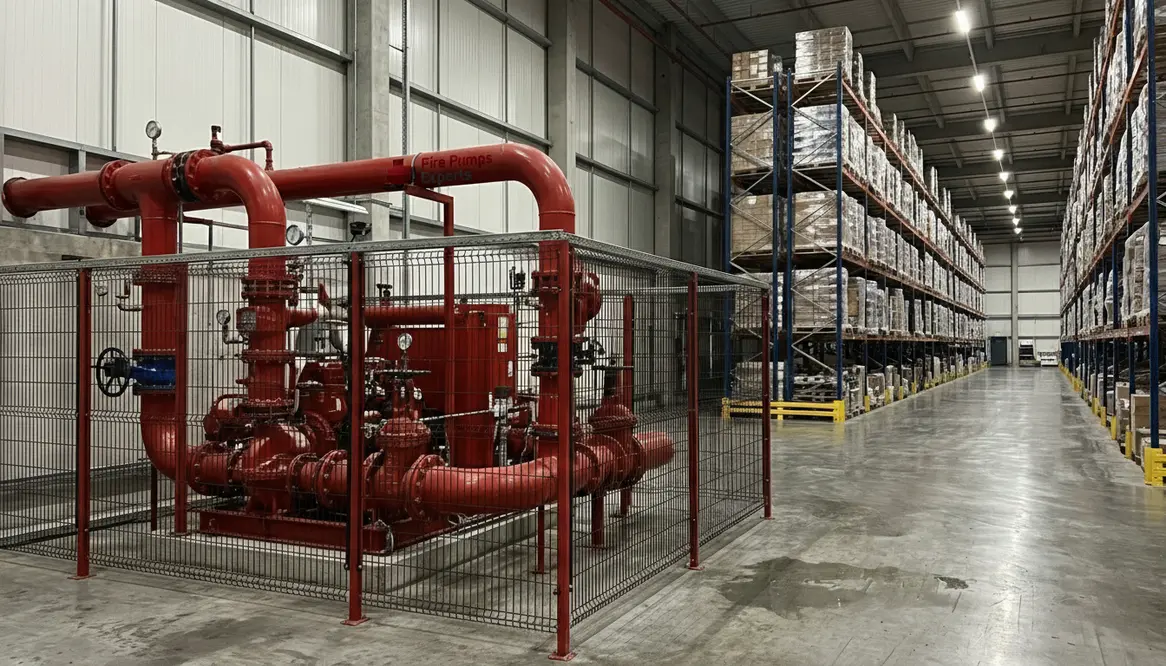
Fire Pump Planning for Large Volume Storage
Commanding water like an orchestra in the middle of a five alarm symphony starts with understanding how storage, risk, and pump performance collide.
I have spent enough time around industrial buildings to know one thing for certain. Water only behaves when you tell it to. And when it comes to Fire pump planning for large-volume storage, you are not just telling water what to do, you are commanding it like a conductor leading an orchestra in the middle of a five alarm symphony. In bulk storage warehouses, where inventory stacks high and risks climb even higher, a well designed fire pump system is not optional. It is the difference between a controlled incident and a headline nobody wants to read.
Why Bulk Storage Changes the Fire Protection Equation
Bulk storage warehouses are not your average commercial buildings. They store dense commodities, often stacked vertically, which means fire spreads faster and burns hotter. Because of this, I always approach warehouse fire pump design with a sharper lens.
For example, higher storage racks demand stronger water pressure and consistent flow. Additionally, commodities like plastics or chemicals introduce complex fire loads. Therefore, standard sprinkler systems alone may struggle without a properly sized fire pump backing them up.
And yes, I have seen facilities try to cut corners here. That usually works right up until it absolutely does not. Think of it like bringing a garden hose to a dragon fight. Brave, but misguided.
Fire pump planning for large-volume storage: where do I start?
I start with the fundamentals. Every time. First, I evaluate the hazard classification of the stored materials. Then, I look at building height, rack configuration, and water supply reliability. These factors shape everything that follows.
Next, I determine the required flow and pressure. In large scale storage, this often means high demand systems that must sustain performance over time. Therefore, I focus on pumps that can handle extended operation without failure.
After that, I assess redundancy. Because in industrial settings, downtime is not just inconvenient, it is expensive. Backup power, secondary pumps, and fail safe controls are not luxuries. They are expectations.
Core Components That Carry the Load
When I design systems for bulk storage facilities, I rely on a few critical components working together seamlessly.
Fire Pumps
These are the heart of the system. Electric or diesel driven, they must meet the required flow at peak demand. I often lean toward diesel in facilities where power reliability is questionable.
Water Supply
A pump is only as good as its source. Therefore, I ensure that tanks, reservoirs, or municipal supplies can sustain the required duration.
Controllers
These act like the brain. They monitor pressure and activate the pump when needed. A good controller responds fast and does not overthink it. Kind of like a seasoned firefighter.
Testing and Monitoring Systems
Regular testing keeps everything honest. Flow tests, pressure checks, and automated monitoring systems ensure the pump performs when it matters most.
Balancing Performance and Efficiency
Now, here is where things get interesting. Oversizing a fire pump might seem like a safe move. However, too much pressure can damage the system and create unnecessary wear. On the other hand, undersizing is simply not an option.
So, I aim for precision. I match the pump curve to the system demand. Additionally, I account for future expansion because warehouses tend to grow like that one drawer in your kitchen that somehow collects everything.
What I Prioritize
- Accurate demand calculations
- Reliable power sources
- Compliance with NFPA standards
- Ease of maintenance access
What I Avoid
- Guesswork in system sizing
- Ignoring future storage changes
- Underestimating fire load
- Skipping routine testing plans
Fire pump planning for large-volume storage in modern facilities
Today’s warehouses are smarter. Automation, robotics, and high density storage systems are becoming the norm. Because of this, fire pump strategies must evolve.
I now integrate fire pump systems with building management systems. This allows real time monitoring and quicker response times. Additionally, remote alerts help facility managers act before small issues become big problems.
And let me tell you, there is something satisfying about seeing a system respond instantly without hesitation. It is like watching a well rehearsed scene in a great film. Everything hits its mark.
Common Pitfalls I See Too Often
Even experienced operators make mistakes. However, most of them are avoidable.
One major issue is neglecting regular maintenance. A fire pump that sits idle for years may not perform when needed. Therefore, I always stress routine testing.
Another problem is poor system integration. Pumps, sprinklers, and alarms must work together. If they do not, response times suffer.
Finally, some facilities fail to update systems as storage configurations change. That is like upgrading your car engine but keeping bicycle brakes. It does not end well.
FAQ: Bulk Storage Warehouse Fire Pump Requirements
Fire pump planning for large-volume storage raises a lot of recurring questions, especially when facilities scale up, automate, or change commodities. Getting clear, consistent answers up front can prevent expensive redesigns and compliance problems later.
Final Thoughts and Next Steps
When I look at a bulk storage warehouse, I do not just see shelves and pallets. I see risk, responsibility, and opportunity. Fire pump planning for large-volume storage is where preparation meets precision. If you operate a commercial or industrial facility, now is the time to evaluate your system, refine your design, and ensure every component performs under pressure. Connect with experienced professionals, review your setup, and take control before the unexpected does.
Treat Fire pump planning for large-volume storage as a strategic asset, not a check-box exercise. When pumps, power, water supply, and controls all pull in the same direction, you do more than satisfy a code requirement—you protect people, product, and the future of the operation.