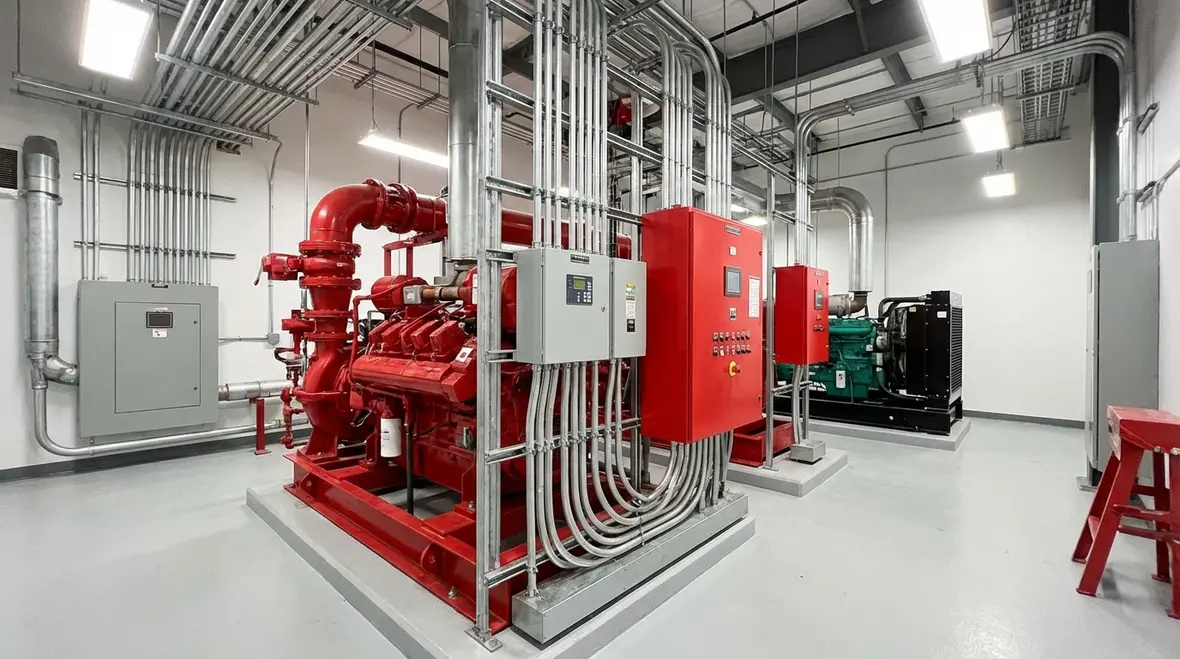
Fire Pump Power Supply NFPA Requirements Simplified
A practical, straight-talking guide so your fire pump doesn’t quit when everything else does.
Fire Pump Power Supply Requirements Explained
If you’ve ever found yourself face-to-face with the fire pump standards manual — say, NFPA 20 — you know it reads like a cross between a legal contract and a sleep aid. Fortunately, I’m here to walk you through fire pump power supply NFPA requirements in a way that doesn’t feel like cramming for your engineering license. We’re talking steel, volts, spinning impellers, and backup plans — and yes, it’s all much more exciting than it sounds. At least when someone like me explains it. Buckle up, commercial and industrial facility operators. This one’s for you.
Whether it’s a high-rise in downtown Chicago, a sprawling manufacturing plant, or a major property with millions on the line, that fire pump better be ready when the flames throw a tantrum. So let’s break down what it takes to keep those pumps juiced up, without getting lost in the fine print.
At-a-Glance: What This Guide Covers
- What NFPA 20 really expects from your power supply
- How main and backup power should actually be designed
- What happens when you cut corners
- How to think like a paranoid (smart) facility designer
Why Power Supply Matters More Than Tony Stark’s Arc Reactor
Here’s the kicker — it doesn’t matter how powerful your fire pump is if the power supply can’t keep up. That’s like having a Ferrari with no gas. In a fire, seconds turn into headlines, lawsuits, and insurance nightmares. Your facility can’t afford failure — which is exactly why the NFPA 20 lays out detailed, unflinching standards for your fire pump power supply setup.
The power source must be reliable, consistent, and independent enough to outlast more than just the initial zap of the fire. Poor planning here can leave your entire protection system crashing harder than your favorite website on Cyber Monday.
Reality Check: Old Generators & Wishful Thinking
And here’s something spicy: A surprising number of building managers assume the backup generator from 2002 is still “good enough.” Spoiler alert — it’s not. NFPA 20 isn’t asking. It’s telling. If you care about passing inspections, or more importantly, surviving a real emergency, the fire pump power supply NFPA requirements are not where you want to start improvising.
Here’s What NFPA 20 Says Without Putting You to Sleep
Let’s translate the great wisdom of the fire pump power supply NFPA requirements into clear, practical instructions:
- Main Power Source: It must be directly connected from the utility service (not after another system), and it should be totally independent of the rest of the building’s electrical system.
- Alternate Power Source: If you’re using an electric motor-driven fire pump, NFPA 20 says throw in a second source, like an emergency generator or a separate utility connection. Because redundancy isn’t just a luxury — it’s lifesaving.
- Transfer Switches: Not optional — these need to be listed for fire pump service and mounted in a way that fire, water, or a full-blown system meltdown won’t knock them out of commission.
- Overcurrent Protection? Nope! You read that right. No breakers, no fuses on the fire pump circuit that could trip during normal startup. NFPA 20 wants your fire pump to turn on like Beyoncé at Coachella — no interruptions.
Why All This Red Tape Exists
It’s all designed for maximum reliability. Because when fire shows up like a surprise party nobody wanted, you want to be ready… not re-reading a missed bullet in Chapter 9, Section 6. The fire pump power supply NFPA requirements are written the way they are because failure at the wrong moment is simply not an option.
How Commercial Facilities Actually Get This Done
Now, let’s trade the comfy-code-talk for real-world sweat and steel. In the field, commercial and industrial properties tackle these requirements by designing their fire pump systems alongside electrical engineers from day one. No building owner wants to retrofit later. That’s like adding plumbing after finishing marble floors.
Manufacturing Facility
Needs massive power due to machinery. Fire pump lines often connect to a reliable, high-capacity switchboard with isolated feeds. Paired with diesel-driven pump backups or generators, they want brute-force dependability.
High-Rise Commercial Building
Needs constant pressure for sprinkler zones stacked dozens of stories above. The main feed may come directly from a dedicated utility transformer, while a generator sits comfortably on standby, ready to jump in.
These scenarios prove why planning isn’t about checking boxes — it’s investing in resilience. And when you’ve got hundreds or even thousands of lives in your hands, that’s not something you want to Google during a fire drill. Getting the fire pump power supply NFPA requirements right is the difference between “we were prepared” and “we thought we were prepared.”
How Backup Power Should *Actually* Work
Here’s a painful truth — having a backup generator doesn’t guarantee success unless it switches fast and runs clean. We’re talking “Wakanda-tech-efficiency” fast. Many real-world failures come from setups where the generator kicks in slower than a Monday morning IT department.
NFPA 20 clearly outlines the transfer time: the alternate power source must bring the pump back online within 10 seconds of main power loss. That’s faster than most people can find the “mute” button on a Zoom call.
Backup Power Health Checklist
- Voltage levels stay within acceptable limits under load
- Transfer switch ratings match or exceed pump demand
- Battery capacity on diesel starters supports extended runtimes
- Fuel tank sizing aligns with your risk profile and code expectations
- Automatic exercising timers keep the generator from getting “lazy”
Because you want that backup source humming, not huffing and puffing three hours into a building fire.
Pro tip: Install automatic exercising timers so your generator doesn’t get… well, lazy. Hey, it’s just like us — it works best when it’s not surprised.
What Happens When You Get It Wrong? (Spoiler: It’s Not Great)
I had a client — we’ll call him Bill because he might be reading this — who once tried to power his mid-rise fire pump off the same circuit feeding elevator motors and vending machines. When we explained the load priorities, his look was like someone told him cookies were canceled. Don’t be Bill.
Improper power supply setups lead to pump failures, failed inspections, code violations, lawsuits, and nightmares involving insurance adjusters with clipboards. Trust me, those folks don’t miss anything.
The Real-World Cost of Cutting Corners
- Pump fails when main power drops
- Fire protection inspectors red-tag your system
- Repairs and retrofits cost more than doing it right the first time
- Insurance coverage gets complicated after a loss
- Worst case: people and property are put in avoidable danger
Worst of all — should a fire hit while your pump’s out cold, the consequences go beyond code citations. Lives, property, businesses… all put at risk by a missed detail. And yes, that’s heavy. But so is a five-alarm fire, so let’s take it seriously — with a few jokes sprinkled in, of course.
Design Everything Like Failure Is Inevitable
You know who’s paranoid? Successful facility designers. Every single component in their fire pump power supply design assumes the worst will happen. And that’s a good thing.
- They isolate circuits like stowaways on the Titanic.
- They choose cables and conduits that laugh in the face of heat.
- They wall off equipment in 2-hour-rated rooms like medieval castles.
They don’t just meet NFPA 20. They dance with it, wine and dine it, and then build systems better than code asks. Because when you build above minimums, you never fall below them when it matters most.
Think Strategically About NFPA 20
When you treat the fire pump power supply NFPA requirements as your design baseline instead of your finish line, everything changes. You start planning for redundancy, survivability, and maintenance access instead of just plan approval.
That mindset separates “technically compliant” systems from those that actually work on the worst day your building will ever see.
FAQs: Fire Pump Power Supply, Served in Snack Form
Before we wrap up, let’s hit a few of the most common questions people ask once they start looking seriously at fire pump power supply NFPA requirements and how they play out in real buildings.
Let’s Not Play with Fire
If your fire pump power design still includes guesswork, assumptions, or 90s-era generators, it’s time to call the pros. Experienced fire pump specialists know exactly how to keep your commercial or industrial facility protected, compliant, and resilient — no fluff, no fine print confusion, just expert solutions.
Don’t wait for a crisis. Let’s power up your fire protection system the right way — build to meet and exceed the fire pump power supply NFPA requirements today and bring confidence back to your building’s backbone.