Fire Pump Reliability in Critical Facilities Guide
I have spent enough time around pump rooms to know one thing for certain. When everything is working, no one notices. However, the moment something fails, everyone suddenly becomes an expert. That is why the topic of fire pump reliability critical facilities matters more than most people realize. In hospitals, airports, data centers, high rise towers, and industrial complexes, fire protection systems are not just compliance checkboxes. They are lifelines.
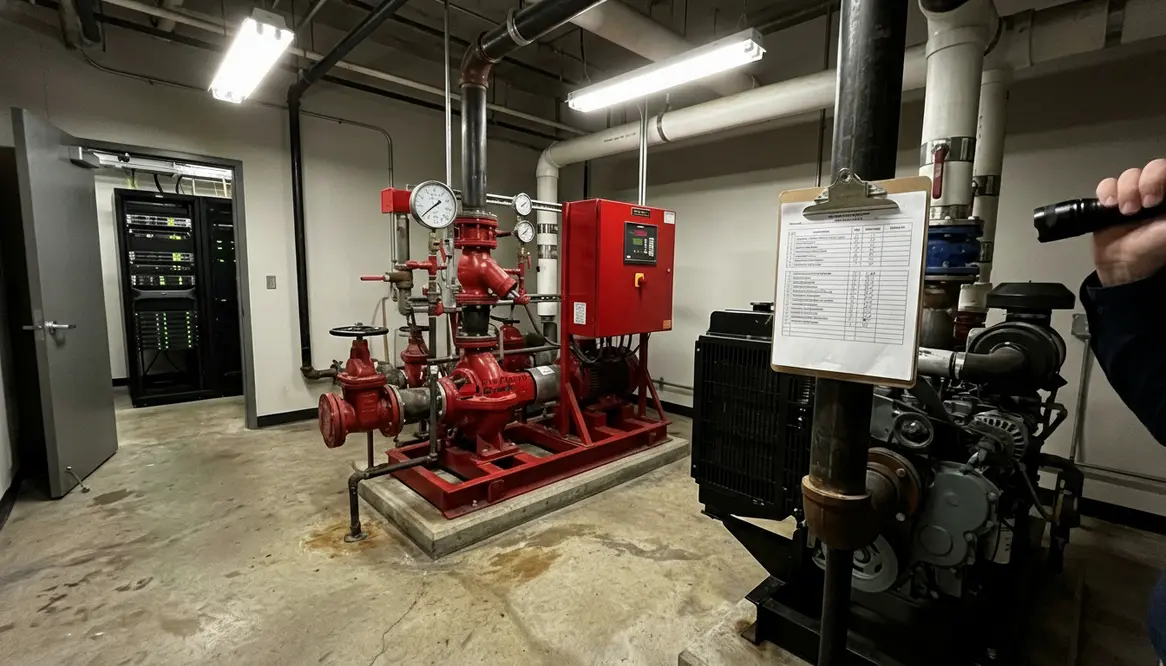
Fire pumps sit quietly in mechanical rooms like the unsung heroes of building safety. They do not ask for applause. They simply wait for the moment when pressure drops and water must move fast. And when that moment comes, they have exactly one job. Start. Deliver pressure. Keep running. If they fail, the entire fire protection system can stumble. Consequently, reliability becomes the foundation of fire safety for major commercial and industrial properties.
Today I want to walk through how we actually protect that reliability. Not with buzzwords or fancy marketing talk, but with practical thinking that keeps these systems ready when the alarm bells start ringing.
Why Fire Pump Reliability Matters in Critical Facilities
Let me paint a picture. Imagine a large hospital campus at two in the morning. Most patients are asleep, the hallways are quiet, and the building’s fire suppression system stands ready. Suddenly, a sprinkler head activates in a mechanical space. In that moment, the entire response depends on the fire pump delivering water pressure instantly.
In critical infrastructure, downtime is not an option. Hospitals protect lives. Data centers protect information that powers half the modern economy. Airports move thousands of people every hour. Therefore, the reliability of a fire pump directly affects operational continuity and life safety.
Moreover, these facilities often have complex sprinkler layouts and high demand systems. Large buildings need consistent pressure across multiple floors and zones. Without a dependable pump, water may never reach the most remote sprinklers.
It reminds me of the Millennium Falcon from Star Wars. When the hyperdrive works, the heroes escape. When it fails, well… things get interesting very quickly. Fire pumps operate under the same principle. They must work every single time. That is why fire pump reliability critical facilities is not a theoretical idea; it is a day-to-day responsibility.
A Quick Reality Check
In many buildings, fire pumps are installed, accepted by the authority having jurisdiction, and then slowly fade into the background. As long as the annual inspection tag is present, people assume everything is fine. The truth is less comforting. Reliability is not guaranteed by a single test. It is earned, over time, through design, maintenance, and a culture that treats fire protection as essential infrastructure.
If your operation cannot afford downtime, you cannot afford to treat the pump room as an afterthought.
How Do I Ensure Fire Pump Reliability in Critical Facilities?
Most facility managers ask this question in exactly those words. The answer is simple in theory and disciplined in practice. Reliability comes from three pillars.
1. Correct system design
First, engineers must size and configure pumps based on real demand. Oversized pumps create pressure issues. Undersized pumps cannot supply the system. Additionally, proper controllers, drivers, and backup power sources are essential for commercial and industrial facilities.
2. Routine testing and inspection
Secondly, weekly and monthly testing keeps the system alive. A pump that sits idle too long becomes unpredictable. Regular churn tests and flow testing confirm the pump can start and perform under load.
3. Preventive maintenance
Finally, maintenance protects the small parts that often cause big failures. Controllers, batteries, seals, and valves require attention. Ignoring them is a bit like ignoring the oil light in your car. Sure, it might run for a while. But eventually the engine will file a formal complaint.
When these three practices work together, fire protection systems remain dependable across large scale facilities. This is the practical backbone of fire pump reliability critical facilities teams depend on during real emergencies.
Common Reliability Threats Inside Pump Rooms
Even the best equipment can struggle when conditions around it go sideways. Over the years, I have seen a handful of issues appear again and again in major commercial properties.
Controller failures
The controller acts as the brain of the fire pump system. Electrical faults, aging components, or improper testing can prevent the pump from starting when pressure drops.
Diesel engine problems
Many large facilities rely on diesel driven pumps for backup power independence. However, stale fuel, weak batteries, or neglected cooling systems can reduce reliability dramatically.
Valve alignment mistakes
It may sound simple, yet closed or partially closed valves remain one of the most common issues found during inspections.
Corrosion and aging components
Over time, mechanical parts wear down. Bearings, seals, and shafts do not last forever. If inspections miss early warning signs, failures can happen during emergency demand.
Consequently, the pump room must receive the same respect as any other mission critical mechanical system. Treating it this way is the only realistic path to sustainable fire pump reliability critical facilities are built on.
Design and Maintenance Practices That Strengthen Reliability
Strong reliability does not happen by accident. Instead, it comes from deliberate design and disciplined service practices.
Below are the practices I see working best in large commercial and industrial facilities.
Operational planning
- Install redundant power sources
- Provide proper room ventilation
- Design suction supply with stable water sources
- Include clear monitoring systems
- Allow enough space for maintenance access
Maintenance strategy
- Conduct weekly churn tests
- Schedule annual flow tests
- Inspect diesel fuel systems regularly
- Verify controller alarms and signals
- Track performance trends over time
Additionally, digital monitoring has become increasingly valuable. Smart sensors and system alerts now help teams catch pressure changes, abnormal temperatures, and performance drift long before a failure appears.
In other words, the pump can now tell us when something feels wrong. Think of it as a mechanical version of your smartwatch reminding you to stand up and move around.
If you are looking for a partner to keep these practices on track, a specialized fire pump service provider like Kord Fire Protection can handle testing, inspection, and maintenance while your team focuses on operations.
Building Resilience for Large Commercial Properties
Reliability also depends on how a facility approaches risk. In large properties, fire pumps must perform under challenging conditions. Power outages, water supply disruptions, and mechanical wear can all occur at inconvenient times.
Therefore, resilient systems include layered protections.
Backup power and redundancy
First, backup power ensures pumps operate during electrical failures. Diesel driven units or generator backed electric pumps provide this safety net.
Next, redundant pumps can support facilities where uninterrupted protection is critical. Data centers and large hospitals often implement multiple pump arrangements for this reason. When one component is out of service, another stands ready.
People, training, and awareness
Finally, trained personnel matter just as much as hardware. Facility engineers who understand pump behavior can detect warning signs early. A small vibration or unusual controller alarm might seem minor, yet experienced operators recognize the story behind it.
After all, technology helps. However, a skilled human still remains the best diagnostic tool in the building. Combine that skill with a structured program around fire pump reliability critical facilities require, and you end up with systems that are ready for bad days, not just good ones.
FAQ: Fire Pump Reliability in Commercial and Industrial Facilities
These are the questions that come up most often when discussing fire pump reliability critical facilities teams must manage.
The Quiet Guardian of Critical Infrastructure
Fire pumps rarely receive attention when buildings operate smoothly. Yet they stand ready every hour of every day, waiting for the moment when protection becomes necessary. Reliable systems protect people, property, and business continuity across major commercial and industrial facilities.
If your facility depends on fire safety that cannot fail, now is the time to review testing, maintenance, and system design. The right expertise keeps your fire pump ready long before the first sprinkler activates. In the end, fire pump reliability critical facilities rely on is not about perfection; it is about preparation, discipline, and a quiet confidence that when the alarm sounds, the system will respond exactly as designed.