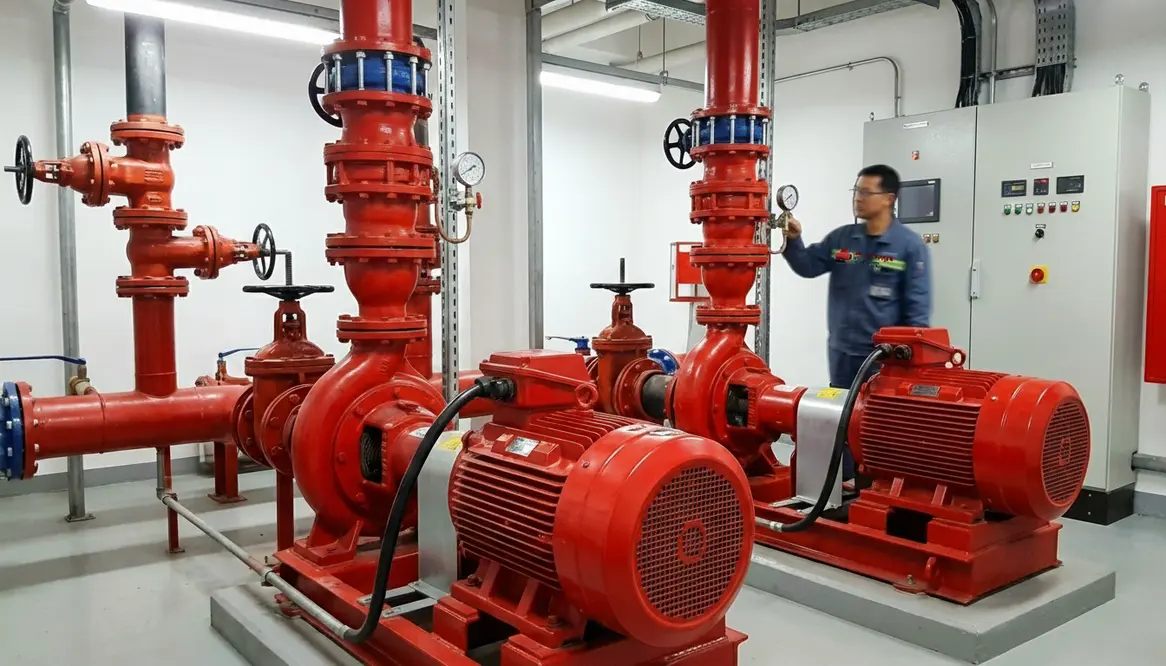
Fire Pump Requirements for Advanced Care Campuses
I have spent enough time around mechanical rooms to know one truth. When things go wrong, they go wrong fast. That is exactly why Fire Pump Requirements for Research Hospitals matter so much, especially when we scale that thinking up to advanced care campuses. These are not just buildings. They are living systems filled with critical equipment, vulnerable patients, and teams that cannot afford interruption. So today, I am going to walk you through what really matters, without the jargon fog, and maybe with a light chuckle or two along the way.
What makes advanced care campuses different from standard facilities
First, let me set the stage. An advanced care campus is not your average commercial building with a coffee machine and a fire extinguisher tucked in a corner. Instead, it is a complex ecosystem of surgical suites, labs, imaging centers, and inpatient care zones. Because of that, fire protection systems must operate with absolute precision.
More importantly, these campuses often run 24 hours a day. Therefore, any fire pump system must deliver uninterrupted performance. I like to think of it as the difference between a family sedan and the Batmobile. Both move, but only one is built for extreme scenarios.
Additionally, redundancy is not optional. Backup power, multiple pump configurations, and layered controls ensure that if one component fails, another steps in immediately. In this environment, hesitation is not just inconvenient. It is dangerous.
Fire Pump Requirements for Research Hospitals applied to large campuses
Now, when I reference Fire Pump Requirements for Research Hospitals, I am really talking about a higher standard of reliability and compliance. These requirements translate seamlessly into advanced care campuses because both environments demand precision.
For example, flow rates must meet the most demanding hazard classification within the campus. That means designers cannot cut corners by averaging needs across spaces. Instead, they must plan for peak demand scenarios.
Furthermore, controllers must be listed and approved for critical applications. This is not the place for experimental setups or budget shortcuts. As much as I enjoy a good DIY project, this is not the time to channel your inner home improvement show.
Also, testing and maintenance protocols must be rigorous. Weekly churn tests, annual flow testing, and continuous monitoring systems ensure readiness. In other words, the system must always be ready to perform like it is opening night on Broadway.
How do I design a fire pump system for maximum reliability
I approach this with one guiding principle. Assume failure will happen, and design so it does not matter.
To achieve that, I focus on several key elements:
Power supply: Dual power sources are critical. Electric pumps often pair with diesel backups. If one fails, the other keeps the system alive.
Pump configuration: I often recommend multiple pumps instead of a single oversized unit. This allows staged operation and redundancy.
Location: Fire pump rooms must be protected, accessible, and isolated from flood risks. A pump underwater is about as useful as a submarine with screen doors.
Control systems: Smart monitoring allows facility teams to detect issues early. That means fewer surprises and more control.
Because of these considerations, the system becomes resilient rather than merely compliant.
Key compliance standards I always follow
When it comes to compliance, I do not improvise. I follow established codes that have been refined over decades. Most notably, NFPA 20 governs fire pump installation, while NFPA 99 addresses healthcare facilities.
In addition, local codes often introduce stricter requirements. Therefore, coordination with authorities having jurisdiction is essential. Skipping that step is like ignoring airport security and hoping for the best. It will not end well.
Another important factor is documentation. Every component, test, and inspection must be recorded. This not only ensures compliance but also creates a clear operational history for the facility.
What I prioritize
- Reliable pump performance
- Code compliant installation
- Clear maintenance access
- Redundant power systems
What I avoid
- Single points of failure
- Undersized equipment
- Poor room placement
- Inconsistent testing routines
Common mistakes I see in advanced care projects
Even seasoned teams can slip up. However, I have noticed a few patterns that repeat more often than they should.
First, underestimating demand. Designers sometimes base calculations on average usage rather than peak scenarios. That is a risky gamble.
Second, poor coordination between disciplines. Fire protection, electrical, and mechanical systems must work together. Otherwise, you end up with conflicts that delay projects and compromise safety.
Third, neglecting long term maintenance. A system that is difficult to service will eventually be neglected. And neglected systems fail. It is as predictable as a plot twist in a superhero movie.
Finally, overlooking future expansion. Advanced care campuses grow over time. Therefore, fire pump systems must be scalable to handle increased demand.
Why Fire Pump Requirements for Research Hospitals still set the benchmark
I keep coming back to Fire Pump Requirements for Research Hospitals because they represent a gold standard. They demand precision, accountability, and resilience.
Moreover, these requirements push teams to think beyond minimum compliance. They encourage proactive design and continuous improvement. That mindset is exactly what advanced care campuses need.
As a result, adopting these principles leads to safer facilities, smoother operations, and fewer surprises when it matters most. For deeper technical context around fire pumps in complex facilities, resources such as https://firepumps.org can help frame the big picture while still keeping you anchored to Fire Pump Requirements for Research Hospitals that actually work in the real world.
FAQ
Conclusion
If you are planning or upgrading an advanced care campus, now is the time to get your fire pump strategy right. I recommend aligning with proven standards, investing in redundancy, and working with experts who understand complex commercial systems. When safety, uptime, and compliance are on the line, there is no room for guesswork. Reach out today and make sure your facility is ready for anything, because preparation always beats regret.