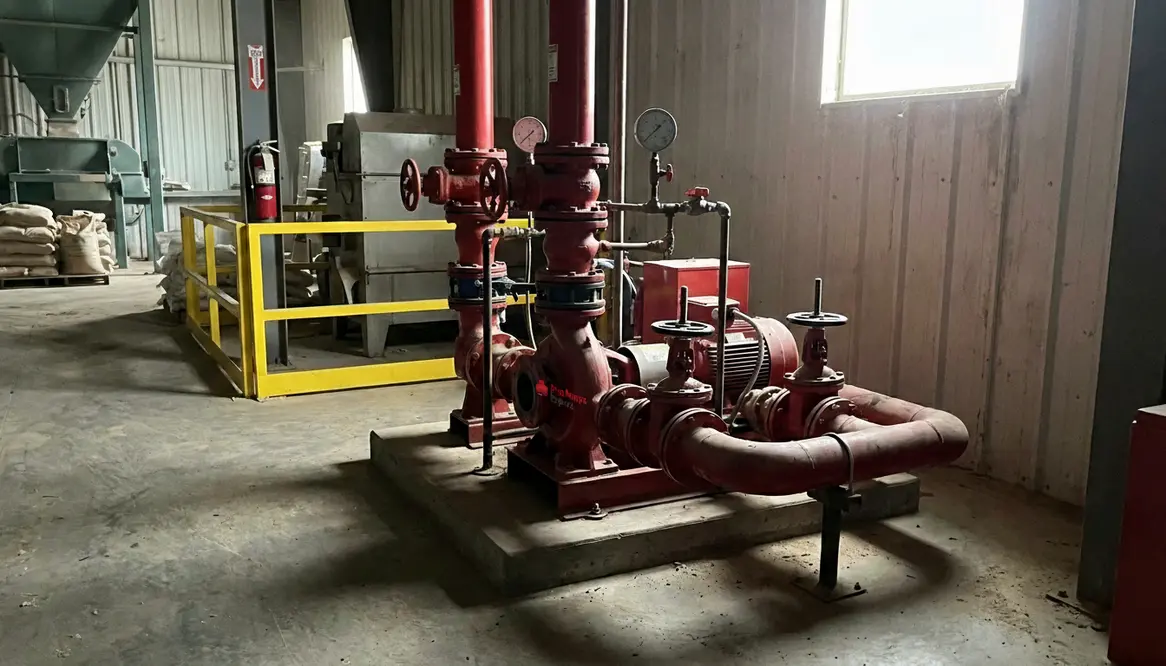
Fire Pump Requirements for Agricultural Processing
I have spent years walking through processing floors where grain dust hangs in the air like a quiet warning, and where one spark could turn productivity into panic. That is why Fire protection for farm-to-market operations is not just a checkbox for compliance. It is a system that stands between continuity and catastrophe. In agricultural processing facilities, fire pumps play a central role. They do not just move water. They buy time, protect assets, and keep operations running when things go sideways.
What fire pump requirements actually mean for processing plants
When I talk about fire pump requirements, I am not talking about a one size fits all solution. Each agricultural processing facility carries its own risks. Grain elevators, feed mills, and food processing plants all deal with combustible dust, high heat equipment, and continuous operations. Because of that, fire pumps must deliver consistent pressure and flow under demanding conditions.
Typically, I ensure systems align with NFPA 20 standards. That means reliable power sources, proper pump sizing, and redundancy where failure is not an option. If your pump cannot maintain pressure during peak demand, it is about as useful as a screen door on a submarine. And yes, I have seen systems that close to useless.
Additionally, water supply matters just as much as the pump itself. Whether it is a dedicated tank or municipal connection, I always plan for worst case demand. Fires do not politely wait for optimal conditions.
Fire protection for farm-to-market operations in high hazard zones
Not all areas inside a facility carry equal risk. Processing zones with dust collection systems, dryers, and conveyors tend to be the most dangerous. Therefore, I design fire pump systems that prioritize these high hazard areas first.
For example, I often integrate pumps with deluge or sprinkler systems that activate quickly in dust prone environments. Because dust explosions escalate fast, response time becomes everything. A delay of even a few seconds can turn a manageable event into something you would rather watch in a movie than experience in real life.
Moreover, I account for corrosion and wear. Agricultural facilities are not gentle environments. Moisture, chemicals, and debris can degrade components. So I choose materials and layouts that stand up to long term use without constant babysitting.
Key design priorities
- Consistent pressure under peak load
- Durable materials for harsh environments
- Quick activation in high risk zones
- Backup power integration
Operational considerations
- Routine testing without disruption
- Easy maintenance access
- Integration with detection systems
- Scalability for future expansion
How I size and select fire pumps for agricultural facilities
I approach pump selection like casting a role in a film. You need the right fit, not just a big name. Oversizing wastes energy and money. Undersizing creates risk. So I calculate flow demand based on hazard classification, sprinkler design, and facility layout.
Most agricultural processing plants require high capacity pumps, often diesel or electric driven depending on reliability needs. I also consider jockey pumps to maintain system pressure without cycling the main pump constantly. Think of it as keeping the engine warm rather than flooring it every time.
Another factor I never ignore is power reliability. If the grid fails during an emergency, an electric pump alone will not cut it. That is why backup diesel driven pumps often become part of the system. Redundancy here is not overkill. It is common sense.
Maintenance and testing that actually keeps systems ready
A fire pump that looks great on paper but fails during a test is a liability. Therefore, I emphasize routine inspection and testing schedules that match real world conditions. Weekly churn tests, monthly inspections, and annual flow testing are not just recommendations. They are essential.
However, I also know operations cannot stop every time someone wants to check a valve. So I design systems with accessibility in mind. That way, teams can test and maintain equipment without shutting down production lines. Efficiency matters, but not at the expense of safety.
And yes, documentation matters too. If it is not recorded, it did not happen. Regulators love records almost as much as accountants love spreadsheets.
Fire protection for farm-to-market operations and compliance strategy
Compliance is not just about passing inspections. It is about building a system that works under pressure. I align fire pump installations with NFPA standards, local codes, and insurance requirements. This layered approach reduces risk and avoids costly surprises later.
Additionally, I coordinate with engineers, facility managers, and safety teams early in the process. When everyone works from the same plan, the result is a system that integrates smoothly into daily operations. No last minute scrambling. No awkward retrofits.
In my experience, the best systems are the ones you rarely think about because they just work. Like a good bass line in a song, steady and reliable.
Why Fire protection for farm-to-market operations changes design choices
From harvest to processing
Fire protection for farm-to-market operations has to account for seasonal surges, variable storage conditions, and constant material movement. Pumps are specified to handle fluctuating demand curves so that coverage does not thin out when silos are full, conveyors are loaded, and dryers are at peak output.
From processing to shipping
Loading bays, packaging lines, and finished goods warehouses bring forklifts, shrink wrap, and palletized product into the same space. Fire protection for farm-to-market operations in these zones depends on pumps that can support extended hose streams and sprinklers simultaneously while still maintaining code-required residual pressures.
FAQ: Fire pump requirements in agricultural processing facilities
Fire protection for farm-to-market operations often starts with questions about standards, pump types, and realistic testing schedules. The most common questions I hear are answered below.
Final thoughts and next steps
If you are running a processing facility, you already know how quickly small issues can grow. Fire pumps are your quiet insurance policy, always ready but rarely noticed. I recommend taking a hard look at your current system, testing its limits, and upgrading where needed. If you want a setup that protects your operation without slowing it down, now is the time to act. The right system today prevents headlines tomorrow.
If you are unsure where to start, reviewing NFPA 20-driven pump design, your current water supply, and your highest hazard processing zones will give you a clear picture of what must change. For more technical resources, you can explore guidance and reference material at https://firepumps.org and then tailor those insights to the specific risks inside your own walls.