Fire Pump Requirements for Detention Annexes Guide
I have spent years walking through facilities that most people only see in movies, and let me tell you, the drama is rarely where you expect it. It is not always in the cells or control rooms. Often, the real tension hides behind walls, inside pipes, and beneath pump housings. That is where Fire Pump Requirements for Detention Annexes quietly take center stage. In auxiliary correctional structures, where expansion meets pressure, fire safety is not just a checklist. It is a lifeline. And yes, it deserves more attention than the latest true crime binge.
Why auxiliary correctional structures demand sharper fire safety
Auxiliary buildings often grow out of necessity. Overflow housing, medical annexes, intake units. However, these spaces rarely get the same design love as the main facility. That is where risk creeps in.
Because these structures handle high occupant loads with controlled movement, evacuation is not simple. You cannot just swing open doors and say, “Alright folks, single file.” Therefore, fire systems must work faster, smarter, and with absolute reliability.
Additionally, annexes often sit farther from central infrastructure. That distance can weaken water pressure or delay response time. So, while the building may look like a side character, its fire protection system needs a starring role.
Fire Pump Requirements for Detention Annexes explained simply
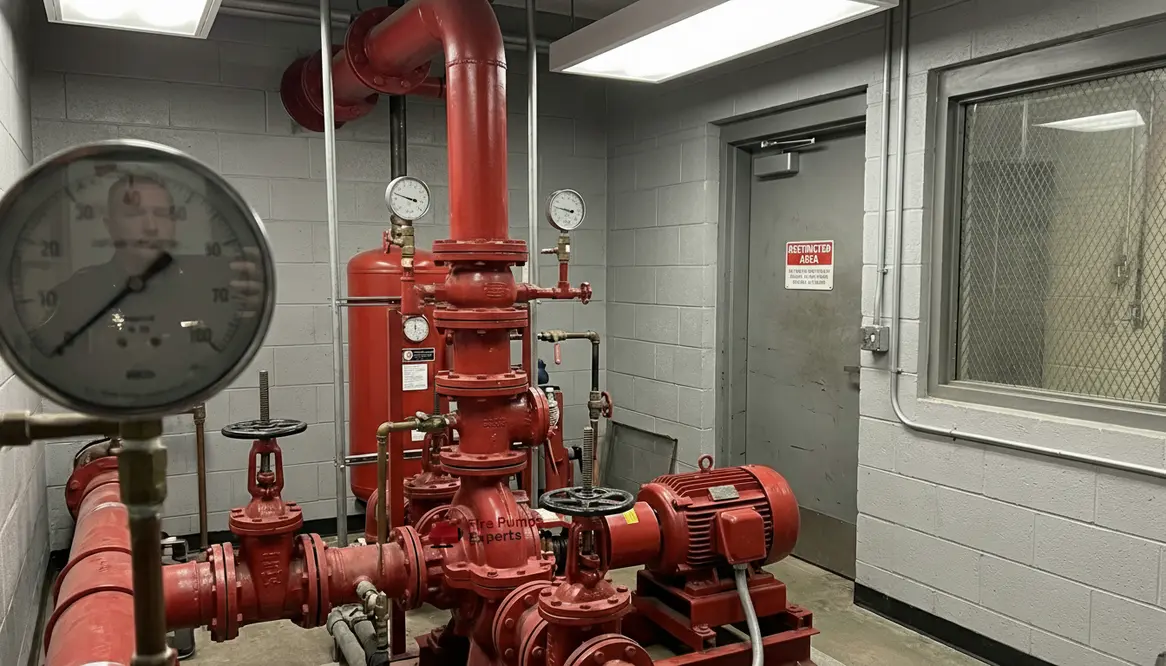
I like to think of fire pumps as the unsung heroes. No cape, no applause, just raw pressure doing the job. When it comes to Fire Pump Requirements for Detention Annexes, the goal is simple. Deliver consistent water flow when everything else is going wrong.
In these environments, redundancy is not optional. It is expected. Facilities must ensure:
Reliable water supply
The system cannot depend on a single municipal line. Backup sources or storage tanks are often necessary.
Automatic activation
When heat rises, the system responds immediately. No waiting for human intervention.
Secure placement
Equipment must be protected from tampering while still accessible for maintenance. Think Fort Knox, but for pumps.
Consistent pressure levels
Even at peak demand, the system must maintain flow across all zones, including the farthest cell block.
And yes, if the pump fails, everything else starts to look like a bad sequel. Nobody wants that.
How do I design fire protection for detention annex expansions?
I get this question a lot, usually from project managers staring at blueprints like they are decoding ancient symbols. The answer is not mystical, but it does require precision.
First, I evaluate the building layout and occupant density. Then, I map hazard zones. Kitchens, laundry areas, and mechanical rooms tend to raise the stakes. After that, I align suppression systems with those risks.
However, the real trick is integration. The annex system must work seamlessly with the main facility. That means synchronized alarms, compatible pump capacity, and unified control systems.
Moreover, I always plan for future expansion. Because if there is one thing correctional facilities love, it is adding “just one more wing.”
Key Design Focus
- Water supply reliability
- Pressure consistency
- System redundancy
- Secure equipment access
Common Pitfalls
- Undersized pumps
- Poor integration with main systems
- Limited maintenance access
- Ignoring future expansion needs
Inspection routines that actually prevent disasters
Let me be blunt. A fire pump that is not tested is just an expensive paperweight. And no facility manager wants to explain that during an incident review.
Regular inspections are where theory meets reality. Weekly churn tests, monthly flow checks, and annual full performance evaluations keep systems honest. In addition, digital monitoring has made it easier to catch issues early.
Still, human oversight matters. I have seen sensors pass a system that a trained ear knew was struggling. Sometimes, experience beats technology. Think of it as the difference between auto tune and a live performance.
Furthermore, documentation is critical. Inspectors, auditors, and compliance teams expect clear records. If it is not documented, it did not happen.
Fire Pump Requirements for Detention Annexes in real operations
Once systems are installed, the real test begins. Daily operations introduce variables no blueprint can predict. Staffing changes, equipment wear, even seasonal water supply shifts can impact performance.
Therefore, I always emphasize operational readiness. Staff must understand how the system behaves, not just where it is located. Training sessions should include live demonstrations and emergency simulations.
Also, coordination with local fire departments is essential. When responders arrive, they should not be guessing. Clear system layouts and connection points save precious time.
And let us be honest, in a high security environment, confusion is the last thing anyone needs. This is not a scene from an action movie where chaos somehow works out.
Technology upgrades that make a real difference
Modern fire protection has come a long way. स्मार्ट sensors, remote diagnostics, and automated alerts have transformed how facilities manage risk.
For detention annexes, these upgrades provide an extra layer of assurance. Real time data allows teams to respond before small issues become big problems.
Additionally, energy efficient pump systems reduce operational costs without sacrificing performance. So yes, safety and savings can coexist. It is not a myth.
However, technology should support, not replace, solid design and maintenance practices. Even the smartest system cannot fix poor planning.
FAQ: Fire safety for auxiliary correctional structures
Conclusion
Fire safety in auxiliary correctional structures is not a side project. It is a core responsibility that protects lives, assets, and operations. If you are managing or upgrading a facility, now is the time to review your systems, align with proven standards, and invest in reliable infrastructure. Work with experts who understand complex commercial environments and demand performance under pressure. Because when it comes to fire protection, close enough is never good enough.