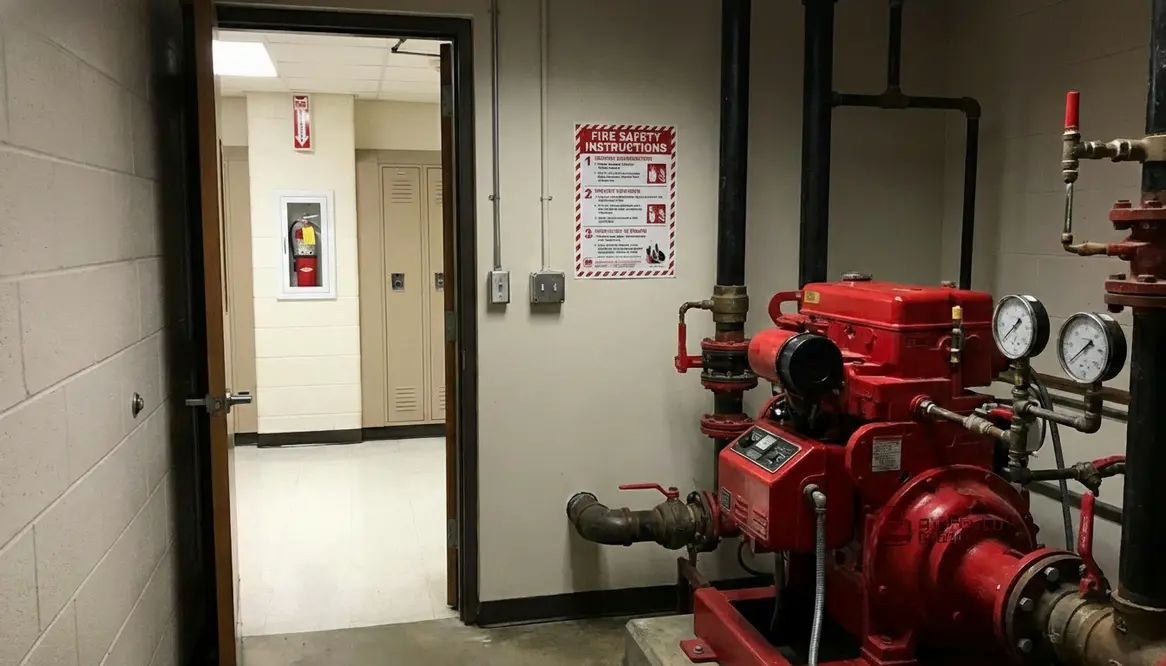
Fire Pump Requirements for Elementary Schools Guide
I have spent years walking through educational facilities, from sprawling campuses to compact elementary schools, and one truth keeps showing up like a dependable character in a long running series. Fire safety is not optional. It is foundational. And right at the heart of that foundation sits a critical piece of infrastructure that often goes unnoticed until it matters most. The Fire Pump Requirements for Elementary Schools are not just technical checkboxes. They are lifelines, quietly waiting behind walls and in pump rooms, ready to perform without hesitation.
So today, I want to walk you through fire safety in educational facilities with clarity, a touch of humor, and the kind of steady confidence you would expect from someone who has seen what happens when preparation meets reality.
Why fire safety in schools deserves serious attention
Let me put it simply. Schools are full of life, energy, and occasionally chaos that rivals a Marvel battle scene, minus the capes. Because of that, fire safety planning cannot be an afterthought. It has to be deliberate and layered.
First, we are dealing with high occupancy buildings. Hundreds, sometimes thousands, of students and staff move through these spaces daily. Therefore, evacuation planning must be seamless. Additionally, many occupants are young, which means they rely heavily on clear guidance and properly functioning systems.
Moreover, schools often contain labs, kitchens, and electrical equipment. Each adds a layer of fire risk. When you combine these factors, you get a setting where prevention and response must work together like a well rehearsed orchestra.
Fire Pump Requirements for Elementary Schools explained simply
Now let us address the phrase that tends to make people’s eyes glaze over at first glance. The Fire Pump Requirements for Elementary Schools are essentially guidelines that ensure enough water pressure and flow are available to fight a fire effectively.
In many cases, municipal water systems alone cannot provide consistent pressure, especially in larger or multi story school buildings. That is where fire pumps step in. They boost water pressure so sprinklers and standpipe systems perform exactly as designed.
However, it is not just about installing a pump and calling it a day. These systems must meet strict codes, undergo routine testing, and integrate with the building’s fire protection strategy. Otherwise, it is like owning a sports car that never leaves the garage. Looks impressive, does nothing.
When you unpack the Fire Pump Requirements for Elementary Schools, you uncover a framework that connects design engineers, facility managers, and local authorities around one shared goal: reliable water delivery when it is needed most.
What are the key components of a reliable school fire protection system
If someone asked me this over coffee, I would say it comes down to coordination. Every component must work in harmony.
Core elements that have to work together
• Fire pumps that maintain adequate water pressure during emergencies
• Automatic sprinkler systems that activate quickly and control fire spread
• Fire alarms and detection systems that alert occupants without delay
• Emergency power supplies that keep systems running during outages
Maintenance: the unglamorous hero
Additionally, regular inspection and testing tie everything together. Without maintenance, even the best system can fail. And unlike a forgotten gym membership, you cannot afford neglect here.
How modern educational facilities integrate fire safety with smart design
Today’s schools are evolving. Open layouts, flexible learning spaces, and advanced technology are becoming the norm. However, these design trends must align with fire safety strategies.
For example, open concept designs can allow fire and smoke to travel more freely if not properly managed. Therefore, engineers incorporate zoning, smoke control systems, and carefully placed sprinklers.
Smart monitoring steps in
At the same time, fire pump systems are being integrated with smart monitoring tools. Facility managers can now track performance in real time, receive alerts, and schedule maintenance proactively. It is a bit like having a fitness tracker for your building, except instead of counting steps, it is ensuring your fire protection system is always ready.
Smart design makes it easier to meet Fire Pump Requirements for Elementary Schools without turning the building into a maze of visible pipes and equipment. The protection is there; it just blends intelligently into the architecture.
Comparing proactive vs reactive fire safety approaches
Proactive approach
- Regular system testing
- Compliance with fire pump standards
- Staff training and drills
- Early detection systems
- Lower long term risk
Reactive approach
- Minimal maintenance
- Delayed upgrades
- Limited preparedness
- Higher system failure risk
- Increased damage potential
As you can see, the difference is not subtle. It is the difference between control and chaos. And if I may add a little sarcasm, chaos is rarely a good look for a school administrator.
How do fire pump standards impact large educational facilities
Here is where things get particularly relevant for commercial and large scale properties. Fire pump standards directly influence how effectively a building can respond to a fire emergency.
In larger educational campuses, water demand increases significantly. Therefore, properly designed pump systems ensure that every corner of the facility receives adequate coverage. This includes auditoriums, gymnasiums, and multi story classroom buildings.
Furthermore, compliance with established fire pump guidelines helps facilities meet regulatory requirements and avoid costly penalties. More importantly, it ensures that when the system is called upon, it performs without hesitation.
I have seen facilities that treated these standards as optional suggestions. Let me just say, that approach ages about as well as outdated CGI in early 2000s movies.
For campuses that include elementary, middle, and high school buildings, aligning with Fire Pump Requirements for Elementary Schools often becomes the baseline that lifts the safety standard across the entire property.
FAQ about fire safety in educational facilities
Conclusion
Fire safety in educational facilities is not just about compliance, it is about responsibility at scale. When systems like fire pumps are properly designed, installed, and maintained, they create a quiet layer of protection that stands ready every second of every day.
If you manage or design large educational properties, now is the time to evaluate your systems, align with proven standards, and ensure nothing is left to chance. Because when it comes to safety, preparation always wins. For deeper technical resources, you can explore training and reference material at https://firepumps.org and compare it with your current campus strategy.