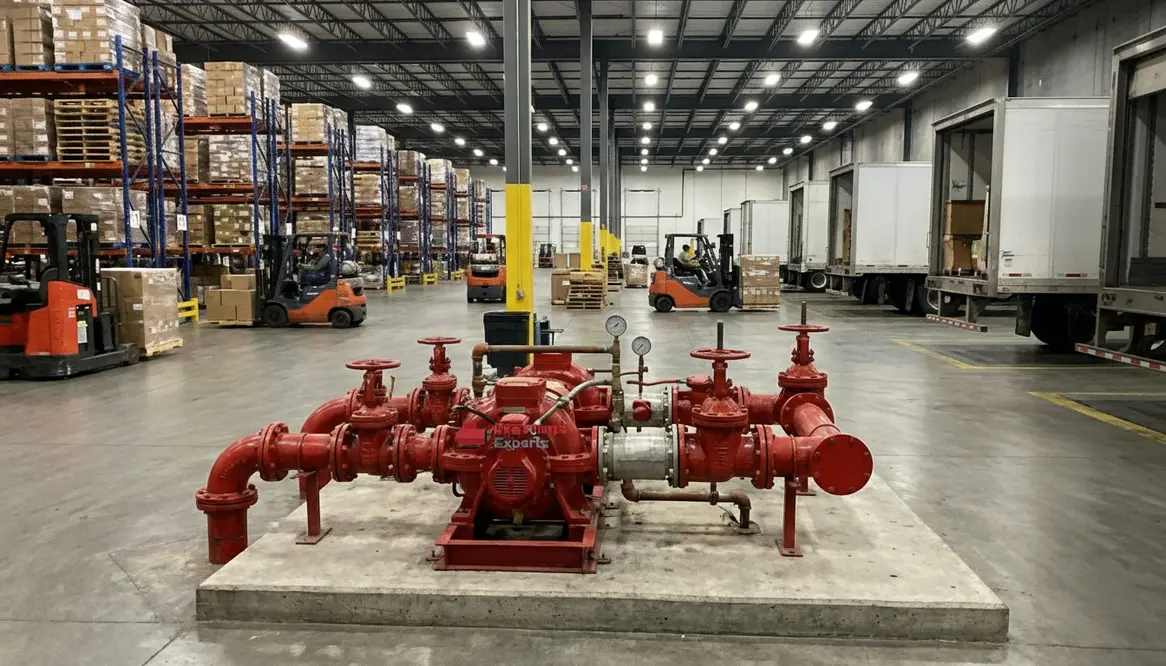
Fire Pump Requirements for Freight Terminals
In freight terminals, risk moves as fast as the cargo. The right fire pump setup keeps pace without getting in the way of operations.
I have spent years around large industrial properties, and if there is one place where risk moves as fast as the cargo, it is a freight terminal. In these environments, Fire protection for freight handling and staging is not just a box to check. It is a system that quietly stands guard while forklifts hum and trailers shuffle in and out like a well choreographed dance. And yes, when it fails, things escalate faster than a summer blockbuster explosion scene.
So let me walk you through what really matters when it comes to fire pump requirements in freight terminals, without the fluff and with just enough wit to keep you awake.
Why freight terminal fire pumps are a different beast
Freight operations rarely sit still. Loads turn quickly, staging areas swell and shrink, and hazards morph with every shift. Fire protection for freight handling and staging has to keep up with all of that motion, not yesterday’s floor plan.
That is why pump selection, power, and monitoring are not paperwork exercises. They are survival tools for busy terminals that cannot afford a single catastrophic interruption.
What makes freight terminals uniquely demanding for fire pumps?
Freight terminals are not your average warehouse. They are high velocity environments. Goods move constantly, storage layouts shift, and hazards change by the hour. Therefore, fire pump systems must be designed with flexibility and strength in mind.
For starters, water demand can spike quickly. Large open bays, high piled storage, and mixed commodities all increase fire load. As a result, fire pumps must deliver consistent pressure across wide areas without hesitation. Think of it as the difference between a garden hose and a movie fire hydrant scene. One is polite. The other means business.
Additionally, redundancy becomes essential. If one component fails, operations cannot afford downtime. So, dual pump configurations or backup power sources are often necessary. Because in freight terminals, “we’ll fix it later” is not a strategy anyone wants to test during an emergency.
Key fire pump design standards for freight terminals
When I design or evaluate systems for large scale facilities, I always start with compliance. However, I do not stop there. Codes are the baseline, not the finish line.
Important considerations include:
Flow and pressure requirements
Fire pumps must meet calculated demand based on hazard classification. In freight terminals, that often means high density storage or mixed use hazards. Consequently, pumps must sustain pressure across sprinkler systems, hose connections, and any specialized suppression zones.
Reliable power supply
Electric pumps need dependable power. Diesel pumps, on the other hand, provide independence but require maintenance. Therefore, many facilities use both, ensuring continuous operation even during outages.
System integration
Modern freight facilities rely on automation. Fire pumps should integrate with alarm systems, monitoring software, and emergency controls. This way, alerts are immediate and response times shrink dramatically.
Testing and accessibility
A fire pump tucked away like a forgotten gym membership is a liability. Easy access for inspection and testing ensures the system performs when called upon. Because unlike your treadmill, this equipment cannot gather dust.
Fire protection for freight handling and staging: aligning pump capacity with operations
Now, this is where things get interesting. Freight terminals evolve. Seasonal surges, new clients, or operational changes can all shift fire risk. Therefore, pump capacity must align with real world use, not just original design assumptions.
For example, staging areas often become temporary storage zones. As a result, fire load increases without formal redesign. I have seen facilities unknowingly outgrow their fire protection systems simply by getting busier. A good problem for business, but a risky one for safety.
So, I recommend periodic hydraulic recalculations and system reviews. It is a bit like updating your phone. Ignore it long enough, and things stop working the way they should.
When Fire protection for freight handling and staging is treated as a living system instead of a static project, pumps, piping, and coverage actually match what is happening on the floor instead of an old drawing set.
Common mistakes that weaken fire pump performance
Even well funded facilities can stumble. And often, the mistakes are surprisingly avoidable.
Undersized pumps
Choosing a pump based on minimum requirements instead of future growth leads to performance gaps. Growth is inevitable. Plan for it.
Poor maintenance practices
Weekly testing and routine inspections are not optional. Skipping them is like ignoring a check engine light and hoping for the best.
Inadequate water supply
A powerful pump without sufficient water is like a sports car with no fuel. Storage tanks, municipal supply, and backup sources must all be evaluated carefully.
Lack of professional oversight
Freight terminals are complex. Fire pump systems should be designed and maintained by specialists familiar with large commercial and industrial facilities. Anything less invites risk.
Design priorities for modern freight terminals
Let me break this down into a clear comparison, because sometimes seeing it side by side makes all the difference.
Priority focus
- Reliable pressure
- Backup systems
- Scalable design
- Monitoring integration
Why it matters
- Ensures consistent suppression across large footprints
- Maintains operation during power or equipment failure
- Adapts to changing storage and throughput demands
- Provides real time alerts and system transparency
Each of these elements works together. Remove one, and the system starts to feel like a band missing its drummer. Technically still music, but something is off.
Keeping Fire protection for freight handling and staging aligned with these priorities is how terminals stay resilient when something goes very wrong at the worst possible time.
How often should fire pumps be tested in freight terminals?
I get this question a lot, and the answer is straightforward. Fire pumps should be tested weekly, with more detailed inspections conducted monthly and annually.
However, frequency alone is not enough. Testing must simulate real demand conditions. Otherwise, you are just going through the motions. And in fire protection, motion without meaning is a dangerous game.
Additionally, documentation matters. Detailed records help identify trends, predict failures, and ensure compliance with regulatory standards. In other words, paperwork today prevents headaches tomorrow.
For terminals that treat Fire protection for freight handling and staging as a core operational system, testing becomes part of the rhythm of the site, not an afterthought squeezed in when someone remembers.
FAQ: Fire pump requirements for freight terminals
Conclusion
If you manage or operate a freight terminal, do not leave fire pump performance to chance. I have seen firsthand how the right system protects operations, assets, and people without fanfare. Take the next step and partner with specialists who understand large scale industrial environments. Because when the pressure is on, literally, you want a system that performs like a seasoned professional, not an understudy hoping for the best.