Fire Pump Requirements for Insurance Inspections
I have walked through enough mechanical rooms to know one thing. A fire pump is rarely glamorous. It hums quietly in the background like a bass player in a jazz band, unnoticed until the moment everything depends on it. Yet when it comes to fire pump requirements insurance inspections, that quiet machine suddenly becomes the star of the show. Insurance auditors do not care how beautiful your lobby looks or how many smart thermostats you installed. They care about one question. Will your fire protection system actually work when the building needs it?
For commercial and industrial property owners, that question can shape insurance rates, compliance status, and sometimes whether coverage continues at all. So today I am pulling back the curtain on how fire pump compliance fits into insurance audits. And yes, we will keep it practical, a little entertaining, and hopefully less painful than reading a 300 page equipment manual.
Why Insurance Auditors Care So Much About Fire Pumps
Insurance companies think in risk. Not feelings, not hopes, not crossed fingers. Just risk. A properly maintained fire pump dramatically reduces the potential loss from a major fire in large commercial or industrial buildings. Therefore, insurers treat it as a critical life safety system.
When auditors review a property, they look for documented proof that the fire pump meets established standards. Typically that means compliance with NFPA 20 installation rules and NFPA 25 inspection, testing, and maintenance procedures.
However, the conversation goes deeper than simply checking boxes.
First, auditors want to confirm that the pump can deliver its required pressure and flow. High rise towers, manufacturing plants, data centers, and distribution warehouses rely on this pressure to push water across long pipe networks.
Second, they examine maintenance records. Consistent testing shows that the system works under real conditions rather than just theoretical ones.
Finally, they verify that facility teams follow proper inspection schedules. Because a fire pump that has not been tested in months behaves a little like that treadmill in the garage. It technically exists, but nobody trusts it when things get serious.
How I Prepare for fire pump requirements insurance inspections
Whenever I prepare a commercial property for insurance review, I focus on organization first. Auditors love documentation almost as much as accountants love spreadsheets.
Here is what I gather before anyone from the insurance company even walks through the door.
Documentation and operational proof
- Weekly churn test logs
- Annual flow test reports
- Maintenance service records
- Controller inspection reports
- Driver performance checks for diesel units
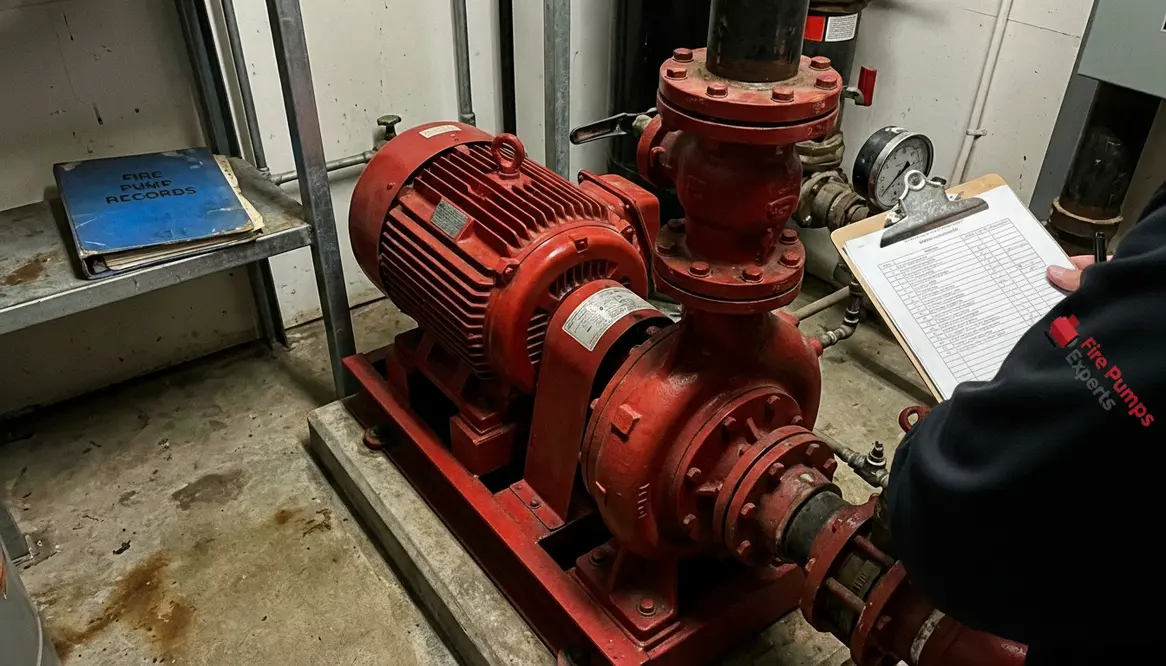
Next, I physically inspect the fire pump room. Insurance auditors notice details quickly. The room should remain clean, accessible, and properly ventilated. Valves must be locked in the correct position, gauges must function correctly, and controllers must display normal operation.
Then I review system performance history. If pressure drops or unusual vibrations appear in past reports, I address them early. Because explaining a known issue during an audit feels a lot like explaining a mysterious dent in your car to an insurance adjuster. It is awkward and rarely ends cheaply.
Finally, I confirm that testing aligns with insurance expectations. Many insurers expect weekly pump churn tests and annual flow tests performed by qualified technicians. Missing records can trigger corrective actions or higher premiums. That is why understanding the details behind fire pump requirements insurance inspections gives you such an advantage.
What Insurance Inspectors Actually Look for in Fire Pump Systems
Insurance auditors tend to follow a structured evaluation. They examine mechanical reliability, documentation accuracy, and operational readiness. While the checklist varies slightly between carriers, several core areas appear almost every time.
Mechanical condition
Inspectors evaluate pumps, drivers, controllers, suction piping, and discharge connections. They also look for leaks, corrosion, vibration, and unusual noises.
Performance testing
Annual flow testing verifies that the pump can deliver rated capacity. Auditors compare results against original manufacturer performance curves.
Control systems
The controller must start automatically when system pressure drops. Backup power sources must operate correctly as well.
Monitoring and alarms
Modern systems often connect to building management or fire alarm systems. Inspectors confirm signals transmit correctly.
In large facilities such as distribution hubs or industrial plants, inspectors often spend extra time reviewing redundancy and backup capabilities. Because when a facility holds millions of dollars in equipment or inventory, insurers want reassurance that the fire pump will not take the day off.
If you want an example of how a professional team approaches these systems day to day, look at a dedicated service provider’s overview such as the fire pump service page at https://kordfire.com/fire-pump/. It is a good reminder of how much detail sits behind what can seem like a simple box on an insurance form.
What does an insurance audit expect from fire pump records
This is one of the most common questions I hear from facility managers. And the answer is surprisingly simple. Auditors want clear proof that your system receives consistent care.
Records should show testing frequency, technician credentials, and measurable performance results. But equally important, they must be easy to understand.
Below is a simple breakdown I follow.
Operational Testing
- Weekly churn tests
- Monthly diesel driver checks
- Controller functionality tests
- Battery inspections
Annual Verification
- Full flow performance testing
- Relief valve verification
- Pressure gauge calibration
- Comprehensive mechanical inspection
When records show consistency across these areas, insurance inspections move quickly. When records are incomplete, auditors start digging deeper. And trust me, nobody wants an auditor digging through mechanical room binders like an archaeologist searching for lost civilizations.
Common Compliance Issues Found During fire pump requirements insurance inspections
Even well managed facilities occasionally run into compliance issues. Over time, I have seen several patterns repeat across commercial and industrial properties.
Missing or incomplete test records
Sometimes tests happen but the paperwork never gets filed properly. Unfortunately, from an insurance standpoint, undocumented work might as well not exist.
Delayed annual flow testing
Large properties sometimes postpone flow testing because it requires planning and water discharge coordination. However, auditors rarely accept delays.
Controller or alarm faults
A small electrical fault can prevent automatic pump start. Therefore inspectors always test controller response.
Poor pump room conditions
Storage boxes, dust buildup, or blocked access routes raise immediate red flags. Fire pump rooms should remain dedicated to life safety equipment.
When these issues appear, insurers may require corrective action reports or additional verification testing. In some cases, policy terms can change until compliance returns. The better you understand how fire pump requirements insurance inspections flag these problems, the easier it becomes to stay ahead of them.
Building a Reliable Fire Pump Compliance Strategy
For large commercial properties, compliance works best when it becomes routine rather than reactive. I recommend creating a predictable inspection rhythm that mirrors NFPA schedules while also satisfying insurance expectations.
First, assign clear responsibility for fire pump oversight. Someone in facility management should track testing schedules and maintain records.
Next, partner with experienced fire protection professionals who understand large scale systems. Industrial facilities often operate complex pump configurations that require specialized knowledge.
Then implement digital record tracking whenever possible. Electronic logs make it easier to present documentation during audits.
Finally, treat every inspection as practice for the next insurance review. Because when compliance becomes part of daily operations, insurance audits feel less like interrogations and more like routine checkups.
Seeing the fire pump as your quiet bodyguard
Think of it this way. Your fire pump is not just equipment. It is the quiet bodyguard protecting your building twenty four hours a day. And even Batman keeps his gear well maintained.
When you build a strategy around the real-world expectations of fire pump requirements insurance inspections, you are not just chasing paperwork. You are investing in a system that stands between your facility and potentially catastrophic loss.
FAQ About Fire Pump Compliance and Insurance Audits
Facility teams bring the same questions to almost every audit cycle. Here are straightforward answers that align with how most insurers and fire protection professionals structure expectations.
Protecting Your Property Before the Next Audit
Fire pump compliance is not just paperwork for insurance companies. It is the foundation of real fire protection for large commercial and industrial buildings. When systems are tested, documented, and maintained correctly, insurance inspections become smooth and predictable.
If your facility needs guidance preparing for the next audit, working with experienced fire pump specialists ensures your system stays ready when it matters most. Treat those binders, digital logs, and pump test graphs as a living record of how seriously you take fire pump requirements insurance inspections, not as a once-a-year scramble.
In the end, that quiet machine in the pump room does not ask for much. A clean space, a consistent testing schedule, and someone who pays attention when the gauges start telling a different story. Give it that, and it will keep doing what it does best: standing guard over your building, your people, and your insurance coverage.