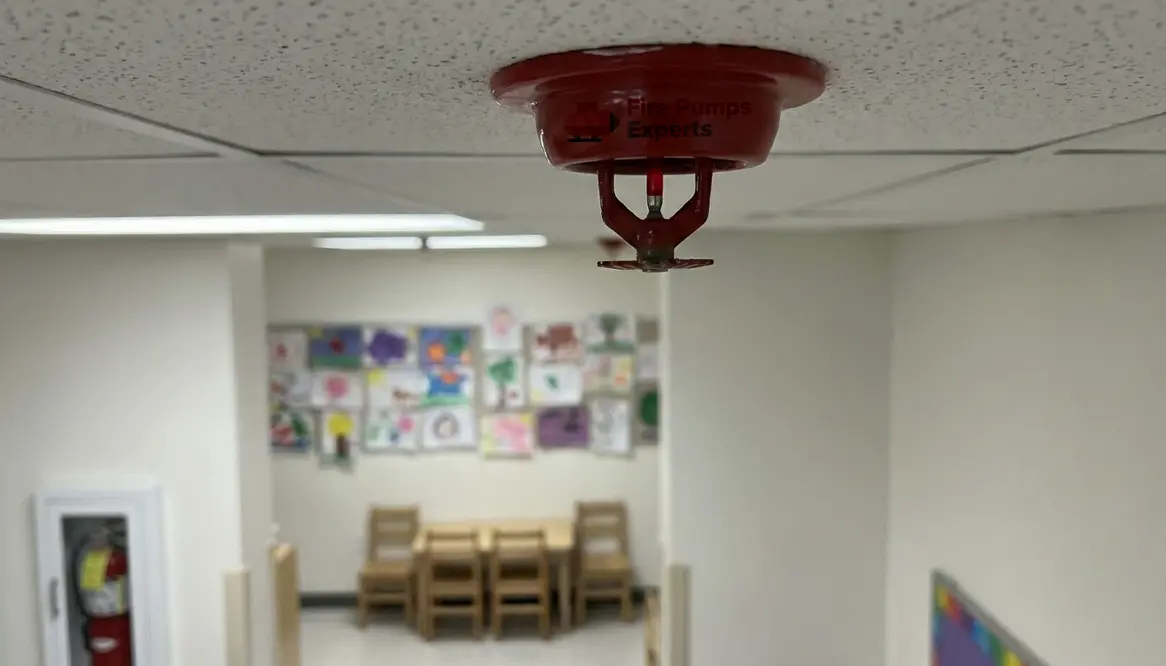
Fire Pump Requirements for Preschools Design Guide
Practical, field-tested guidance on Fire Pump Requirements for Preschools that keeps kids safe, systems reliable, and designers sane.
I have spent enough time around fire protection systems to know one thing for certain. When it comes to safety, small learning facilities cannot afford small thinking. Fire Pump Requirements for Preschools often get treated like an afterthought, as if a modest building deserves a modest plan. However, codes, risks, and real world incidents say otherwise. While the building may be smaller, the responsibility is anything but. And frankly, if a fire pump could talk, it would probably say, “I don’t care how cute the finger paintings are, I need to perform.”
So, let me walk you through how I approach fire pump considerations in these environments, with a steady hand and just enough humor to keep things from feeling like a 300 page code manual.
Why preschools need serious fire pump thinking
Small kids, limited mobility, and staffed classrooms change the evacuation equation. Fire Pump Requirements for Preschools need to be treated like those for any commercial occupancy, not like a slightly upgraded house system with cute murals.
What fire pump size do small educational facilities actually need
First things first, size matters. But not in the way most people assume. I do not start with square footage alone. Instead, I look at hazard classification, sprinkler demand, and water supply reliability. While smaller learning facilities may fall under light hazard occupancy, that does not automatically mean a smaller pump will do the job.
In fact, I often see undersized systems installed because someone thought “it is just a preschool.” However, when demand calculations come into play, especially with remote areas and hose allowances, the numbers tell a different story. Therefore, I always align pump capacity with actual system demand, not assumptions.
A quick reality check
Guessing fire pump size is like bringing a squirt gun to a dragon fight. Entertaining, but not effective. Demand calculations, not gut feelings, decide whether Fire Pump Requirements for Preschools are actually being met.
Fire Pump Requirements for Preschools and code compliance realities
Now, let us talk codes. Because codes are not suggestions, no matter how politely they are written. Fire Pump Requirements for Preschools are shaped by national standards like NFPA 20, along with local amendments that can be surprisingly strict.
Additionally, I pay close attention to water supply conditions. If municipal pressure cannot meet system demand, a fire pump becomes mandatory. This is not optional, and inspectors will not be charmed by a well decorated classroom.
Code-driven decisions that matter
- NFPA 20 requirements guide pump selection, installation, and acceptance testing.
- Local amendments may add layers, especially for facilities serving very young children.
- Backup power may not always be mandated, but it is increasingly expected where evacuation is slower.
Moreover, backup power often enters the conversation. While not always required, it is increasingly expected in facilities serving vulnerable populations. After all, reliability during an emergency is not the time to roll the dice.
Consequently, compliance is not just about passing inspection. It is about ensuring performance when it matters most.
How do I plan for reliability without overbuilding
This is where balance comes in. I aim for systems that are robust, yet practical. Overbuilding can strain budgets, while underbuilding creates risk. Neither is acceptable.
So, I focus on three key elements.
- First, I ensure consistent water supply through proper testing and verification.
- Second, I select pumps with proven performance curves that match real demand conditions.
- Third, I incorporate monitoring systems that alert operators before small issues become big problems.
Keep reliability simple
Meanwhile, I avoid unnecessary complexity. Because if a system requires a PhD to operate, it will eventually fail in the field. Simplicity, when done right, is reliability.
Design considerations that often get overlooked
I have seen it more times than I care to count. A well designed fire pump system on paper that struggles in reality because of overlooked details.
For instance, suction piping is often undersized or poorly configured. This can cause cavitation, which is a fancy way of saying your pump starts acting like it drank too much coffee and forgot how to function.
Additionally, room conditions matter. Fire pumps need proper ventilation and temperature control. Too hot or too cold, and performance suffers.
Pump room pitfalls
- Cluttered rooms that double as storage spaces.
- Valves and gauges tucked behind obstacles.
- No clear access for testing equipment or maintenance crews.
Then there is accessibility. If maintenance crews cannot easily reach components, routine inspections get skipped. And skipped inspections lead to surprises. The bad kind.
Therefore, I treat the pump room as a critical space, not an afterthought tucked behind storage boxes and forgotten holiday decorations.
Fire Pump Requirements for Preschools in growing facilities
Growth changes everything. What works today may not work tomorrow. I always ask one simple question. Will this system still perform if the facility expands?
Because expansion is common in smaller learning environments. More classrooms, more occupants, more demand. Consequently, fire pump systems must be designed with future capacity in mind.
That does not mean oversizing dramatically. Instead, I look for scalable solutions. For example, selecting pumps that can handle slight increases in demand or planning space for future upgrades.
Think of it like buying shoes for a growing child. You do not buy clown shoes, but you also do not buy something they will outgrow next week.
Designing for “tomorrow kids”
Fire Pump Requirements for Preschools should anticipate the extra wing, added classrooms, or expanded multipurpose spaces that always seem to appear five years after opening.
Maintenance and testing that actually gets done
Even the best system is only as good as its upkeep. And here is the honest truth. Maintenance plans often look great on paper and fall apart in practice.
So, I design with maintenance in mind. Weekly churn tests, annual flow tests, and routine inspections must be straightforward. Additionally, I recommend clear documentation and training for facility staff.
Making maintenance preschool-proof
- Clear access paths to valves, controllers, and test headers.
- Logical labeling that does not require a translator.
- Simple, step-by-step test procedures staff can follow without panic.
Because when systems are easy to maintain, they actually get maintained. And that consistency is what keeps everything ready when needed.
Besides, no one wants their fire pump debut to feel like a surprise cameo gone wrong.
FAQ
Final thoughts and next steps
When I look at fire protection in smaller learning facilities, I see more than code compliance. I see responsibility. Fire Pump Requirements for Preschools are not just checkboxes. They are safeguards that protect lives, staff, and futures. If you are planning, upgrading, or evaluating a system, now is the time to act. Work with experienced professionals who understand commercial grade fire pump systems and can design for performance, reliability, and growth. Because when the moment comes, your system should not hesitate.
If you want deeper technical references, resources like https://firepumps.org and current NFPA standards are a solid starting point, but the real impact comes from applying those requirements thoughtfully in the preschool context.