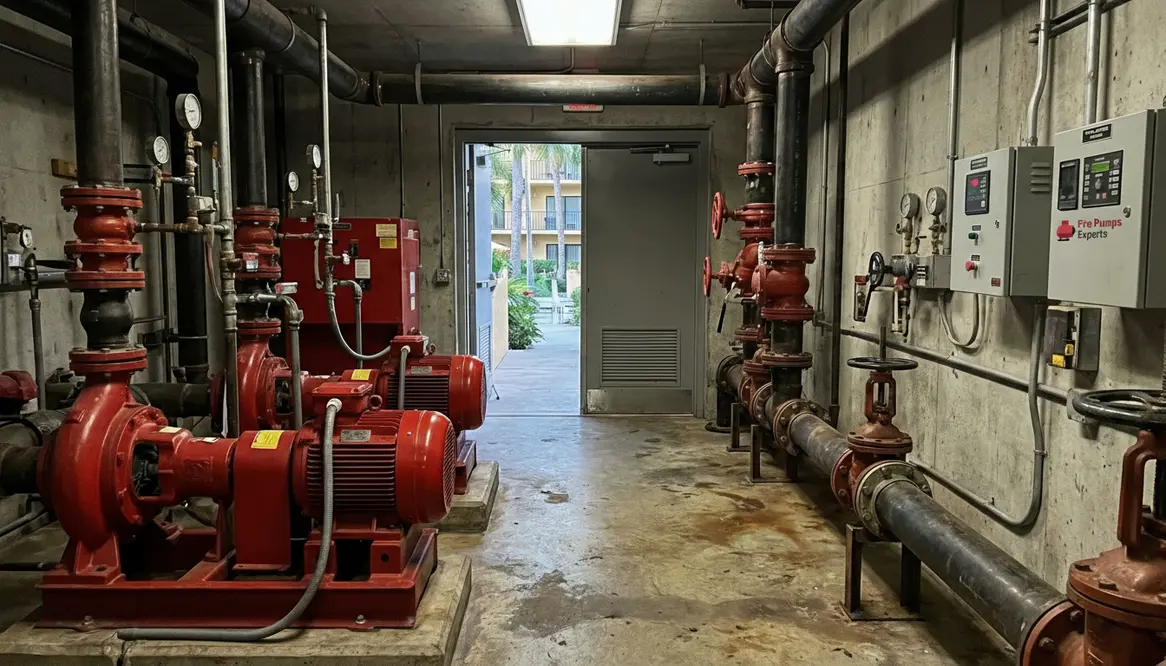
Fire Pump Requirements for Timeshare Resorts
I have walked through more mechanical rooms than I can count, and I will tell you this right now. Fire pump compliance is not the place to cut corners, especially in vacation ownership properties where guests expect safety without ever thinking about it. When I talk about Fire Pump Requirements for Timeshare Resorts, I am talking about the quiet backbone of life safety. It is the system that stands ready like a seasoned bodyguard. Calm. Reliable. And hopefully never needed. But always prepared.
Now, let us take a steady walk through what really matters here, with a bit of clarity, a touch of humor, and no unnecessary jargon to slow us down.
What makes fire pump systems different in vacation ownership properties
First, timeshare resorts are not your average buildings. They behave more like hotels, yet operate like residential communities. Because of this, occupancy constantly shifts. New guests arrive. Others leave. Meanwhile, the fire protection system must perform flawlessly every single day.
Therefore, fire pump compliance for shared ownership resorts demands consistency. Unlike a typical office building that empties at night, these properties stay alive around the clock. Consequently, the fire pump must meet higher reliability expectations and stricter inspection routines.
Additionally, many of these properties span large footprints with multiple buildings. That means water demand can vary. So, the pump must be sized and maintained with precision. Otherwise, it is like bringing a garden hose to a five alarm fire. Not a great look.
Fire Pump Requirements for Timeshare Resorts explained simply
I like to keep things simple. At its core, compliance comes down to three pillars. Proper design. Routine testing. Documented maintenance.
Proper design
Proper design ensures the system meets required flow and pressure. Engineers must consider building height, sprinkler demand, and water supply conditions.
Routine testing
Routine testing is where many properties slip. Weekly or monthly churn tests are not optional. They confirm the pump starts and runs correctly. Skip these, and you are gambling with safety.
Documented maintenance
Documented maintenance ties everything together. Inspectors want proof. Not stories. Not guesses. Real logs that show consistent care.
And yes, paperwork can feel about as exciting as watching paint dry. But in this case, that paperwork can save lives and protect your investment.
How often should fire pumps be tested in a timeshare resort
Let me answer this the way most facility managers wish someone had from day one. Frequently, consistently, and without shortcuts.
Weekly churn tests verify that the pump starts automatically. Monthly checks go deeper. Annual flow tests confirm full performance under load.
However, it is not just about frequency. It is about execution. A rushed test is like a skipped workout. Technically done, but not doing much good.
Moreover, trained professionals should oversee these tests. Commercial and large scale properties need experienced technicians who understand complex systems. This is not a DIY weekend project. Leave that energy for assembling furniture with confusing instructions and leftover screws.
Common compliance mistakes I see again and again
I have seen patterns over the years, and they tend to repeat like a catchy song you did not ask for.
First, neglected documentation. Logs go missing. Reports stay incomplete. Then inspection day arrives, and suddenly everyone is searching like it is a treasure hunt.
Second, delayed repairs. A small issue today becomes a major failure tomorrow. Fire pumps do not fix themselves. If they did, we would all be out of a job.
Third, improper testing conditions. Running a test without simulating real demand gives false confidence. It is like testing a race car in a parking lot and calling it ready for the track.
What works well
- Scheduled testing routines
- Professional maintenance teams
- Clear documentation systems
- Immediate issue resolution
What causes problems
- Skipping inspections
- Untrained staff handling systems
- Incomplete records
- Ignoring early warning signs
Why compliance is more than just passing an inspection
It is tempting to treat compliance like a finish line. Pass the inspection and move on. However, that mindset misses the point entirely.
Fire pump compliance for vacation ownership facilities is about risk reduction. It protects guests, staff, and property value. Furthermore, it supports insurance requirements and reduces liability exposure.
Think of it like maintaining an aircraft. You do not wait for turbulence to check the engines. You stay ready at all times.
And let us be honest. In hospitality, reputation matters. One failure can echo louder than a hundred successes. So, staying compliant is not just smart. It is essential.
Fire Pump Requirements for Timeshare Resorts and long term performance
Long term reliability does not happen by accident. It is built through discipline and expertise.
First, invest in high quality equipment from the start. Second, partner with experienced service providers who specialize in commercial and large property systems. Third, commit to a proactive maintenance schedule.
Additionally, technology now allows remote monitoring and alerts. These tools provide early warnings before problems escalate. It is like having a smoke detector for your fire pump system itself.
Over time, these practices extend equipment life and reduce unexpected downtime. And in this business, surprises are rarely the good kind.
If you are looking for deeper technical guidance, resources like https://firepumps.org can help you interpret standards while you focus on running your resort.
FAQ about fire pump compliance
What are Fire Pump Requirements for Timeshare Resorts?
They include proper system design, regular testing, and documented maintenance to meet fire safety codes.
How often should fire pumps be tested?
Weekly churn tests, monthly inspections, and annual full flow testing are standard.
Who should service fire pump systems?
Licensed professionals experienced with commercial and large scale properties.
Why is documentation important?
It proves compliance and ensures systems are consistently maintained.
What happens if a system fails inspection?
You may face fines, required repairs, and increased liability risk.
Keep your systems ready when it matters most
Fire pump compliance is not flashy. It will not make headlines or win design awards. Yet, it quietly protects everything that does matter. If you manage a vacation ownership property, now is the time to evaluate your system, tighten your processes, and partner with experts who understand complex commercial environments. Because when safety calls, your system should not hesitate. And neither should you.