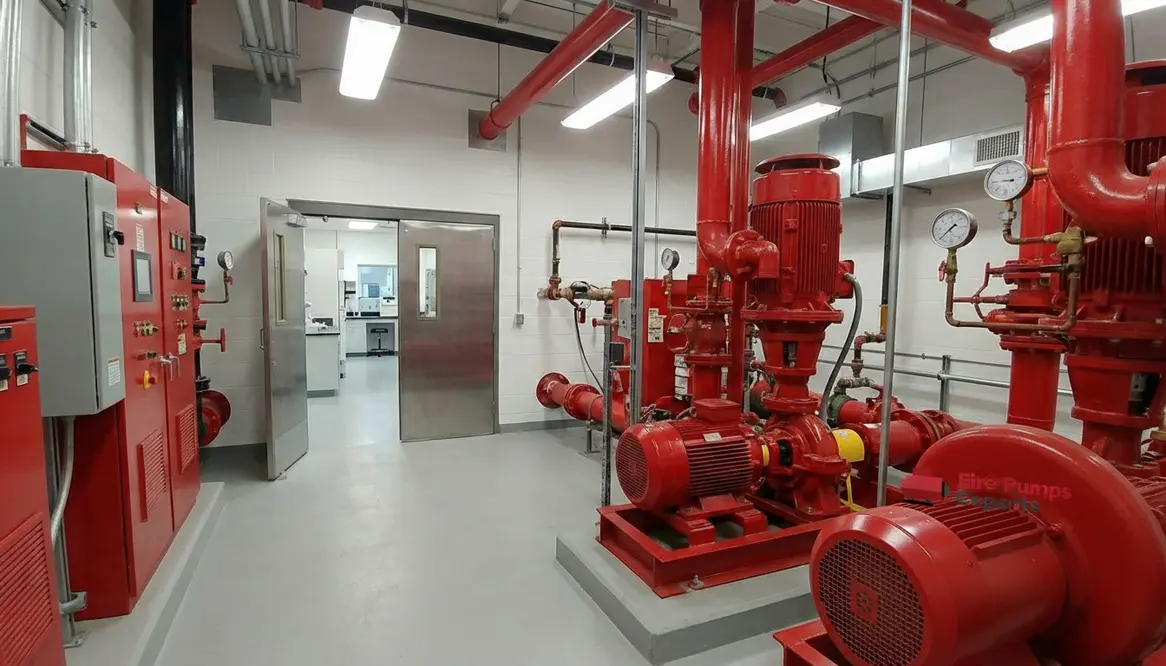
Fire Pump Room Design for Research Lab Safety
I have spent enough time around pump rooms to know one truth. When things go quiet, it usually means everything is working exactly as it should. And in the world of research laboratory fire safety, quiet is a beautiful thing. Because behind that silence sits a system ready to roar to life in seconds. Developers who understand fire pump room design are not just checking a box. They are protecting high value assets, complex operations, and in many cases, years of research that cannot be replaced.
So let me walk you through what actually matters. Not the textbook version. The real world version.
What Developers Need to Know First About Fire Pump Rooms
I like to start simple. A fire pump room is the heart of a building’s fire protection system. However, unlike your heart, this one needs space, ventilation, and zero excuses for failure.
First, location matters more than most people expect. You want easy access for maintenance crews, but also protection from flooding, freezing, and accidental damage. Therefore, placing it in a basement without proper drainage is like parking a sports car in a swamp. It might look fine at first, but it will not end well.
In addition, developers need to think about long term access. Equipment gets replaced. Controllers get upgraded. If your layout requires a team of contortionists to swap a motor, you have already made a costly mistake.
Environmental Risks Developers Should Consider Early
Flood zones, nearby chemical storage, seismic activity, and local climate all shape how you plan the fire pump room. Ignoring these factors is an easy way to end up with a design that looks compliant on paper but fails when it matters most.
For facilities with a focus on research laboratory fire safety, those environmental risks can multiply. Sensitive experiments, flammable liquids, and specialty gases demand a fire protection system that is hardened against the unexpected, not just built for a normal office tower.
Designing for Reliability in Commercial and Industrial Buildings
Now let us get into the part that separates a good design from one that keeps you up at night.
Reliability starts with power. Fire pumps need a dependable power source, often backed by generators. In large scale commercial and industrial facilities, redundancy is not optional. It is expected. Because when power fails during an emergency, that is not irony. That is a lawsuit waiting to happen.
Then there is water supply. A fire pump cannot do much without consistent pressure and volume. So, developers must coordinate with municipal systems or on site storage solutions early in the design phase. Otherwise, you risk building a system that looks impressive on paper but struggles under real demand.
And yes, ventilation matters. Pumps generate heat. Controllers do too. Without proper airflow, you are essentially slow cooking your own equipment. No chef required.
Redundancy, Monitoring, and Testing
Reliability does not stop at installing the right horsepower and calling it a day. Multiple power feeds, emergency generators, and automatic transfer switches keep the system alive when the rest of the building is in chaos.
Add continuous monitoring, alarms tied into the building management system, and a straightforward testing program, and you go from “code minimum” to a system you can trust in the middle of the night.
In facilities driven by research laboratory fire safety standards, this level of redundancy and monitoring is not extravagance. It is the only rational way to protect experiments that may represent years of work and significant investment.
How Layout Impacts Maintenance and Compliance
I have seen beautifully engineered systems ruined by poor layout decisions. It happens more often than people admit.
Clearances around pumps, valves, and controllers are not just suggestions. They exist so technicians can inspect, test, and repair equipment without dismantling half the room. Therefore, planning for human movement is just as important as planning for water flow.
Also, code compliance plays a major role here. Standards from NFPA and local authorities dictate spacing, access, and safety features. While it might feel restrictive, these guidelines are built on decades of lessons learned the hard way.
And trust me, no one wants to be the next lesson.
Layout Tips That Make Technicians’ Lives Easier
- Provide straight, unobstructed approach paths to major components.
- Keep valves, gauges, and controllers at a comfortable working height.
- Use logical, labeled piping runs so troubleshooting does not turn into a maze.
- Reserve wall and floor space for future upgrades and additional equipment.
Key Components Every Developer Should Plan For
Fire Pump Unit
This is the engine of the system. নির্বাচন it based on required flow and pressure.
Controller
Acts as the brain. It ensures automatic startup and monitors performance.
Jockey Pump
Maintains system pressure and prevents unnecessary pump cycling.
Backflow Preventer
Protects the water supply from contamination.
Test Header
Allows performance testing without triggering the full system.
Relief Valves
Prevents over pressurization, which is just as dangerous as low pressure.
Each of these components plays a role. Remove one or undersize it, and the entire system becomes less reliable. It is like assembling the Avengers but leaving out Iron Man. Technically possible, but not advisable.
Integration With the Rest of the Building
A strong pump room design recognizes that these components do not operate in isolation. They interact with incoming utilities, discharge piping, fire department connections, and building controls. When those touchpoints are coordinated early, you avoid last minute improvisation that tends to age badly.
How Fire Pump Design Supports Research Laboratory Fire Safety
Now we return to where things get especially critical. In environments focused on research laboratory fire safety, the stakes are higher. These facilities often house sensitive materials, expensive equipment, and ongoing experiments.
Because of this, fire pump systems must respond instantly and perform consistently. Delays or pressure drops can mean more than property damage. They can disrupt operations, compromise safety protocols, and lead to extended downtime.
Therefore, developers should integrate fire pump design with the broader fire protection strategy. This includes sprinklers, suppression systems, and alarm integration. Everything must work together. Not eventually. Immediately.
Why Labs Cannot Rely on “Good Enough” Fire Protection
Laboratories push buildings harder than typical commercial tenants. High density equipment loads, specialized ventilation, and hazardous materials mean that even a small fire can escalate quickly if water is not delivered precisely where and when it is needed.
This is where the connection between a well designed pump room and effective research laboratory fire safety becomes obvious. A few extra hours of design coordination up front can be the difference between a minor incident and a major shutdown.
What Mistakes Should Developers Avoid?
I will keep this part honest and direct.
First, underestimating future demand. Buildings evolve. Tenants change. Equipment loads increase. So, designing only for current needs is short sighted.
Second, ignoring maintenance realities. If your system cannot be easily tested or serviced, it will not be maintained properly. And a neglected system is a liability.
Third, cutting corners on materials or installation. Saving money upfront often leads to higher costs later. That is not wisdom. That is expensive optimism.
Finally, failing to coordinate across disciplines. Fire protection does not exist in isolation. It interacts with electrical, structural, and mechanical systems. Collaboration is not optional. It is essential.
A Better Way to Approach Coordination
Bringing fire protection engineers into the conversation as early as possible pays off. Joint reviews with mechanical, electrical, and structural teams spotlight conflicts long before they reach the field. When the project includes research laboratory fire safety goals, early coordination is not just “nice to have” but a core design requirement.
FAQ: Fire Pump Room Design
Conclusion
Fire pump room design is not just a technical requirement. It is a long term investment in safety, reliability, and operational continuity. When you approach it with intention, you reduce risk and protect what matters most. If you are planning a commercial or industrial project, now is the time to get it right. Partner with experts who understand the details, because in this field, details are everything.
For more technical resources and practical guidance on fire pump systems, visit https://firepumps.org and align your next project with proven best practices.