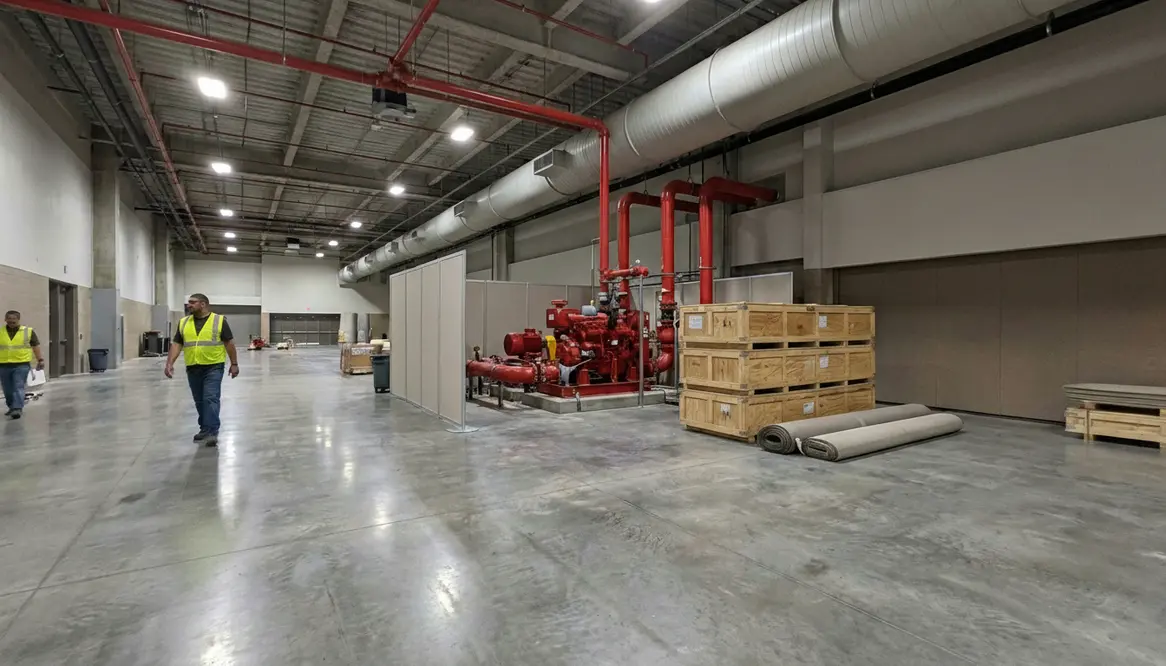
Fire Pump Systems for Convention and Exhibition Centers
I have spent years looking at buildings that never really sleep. Convention and exhibition centers are living, breathing machines. One day they host tech expos with robots that wave at you, the next day they welcome thousands of people hunting for the world’s best coffee bean. Through it all, one thing must remain constant. Safety. That is where fire pump selection by building type steps in, quietly doing its job like a backstage crew member who never misses a cue.
When I approach these massive venues, I do not see just walls and ceilings. I see wide open halls, fluctuating occupancy, and complex layouts. So right from the start, I rely on fire pump selection by building type to guide every decision. It shapes how I think about pressure, flow, and reliability before a single valve turns.
Why Convention Centers Demand a Different Fire Protection Mindset
Convention centers are not your average commercial property. They are vast, flexible, and often unpredictable. One week, a space might hold lightweight booths. The next, it could support heavy equipment displays that rival a movie set. Because of this, I plan systems that adapt without hesitation.
Moreover, these buildings often include multiple zones, high ceilings, and long pipe runs. As a result, standard approaches fall short. I need fire pumps that can maintain consistent pressure across distance and elevation. Otherwise, water becomes more of a suggestion than a solution.
And let’s be honest. When thousands of people gather in one place, even a small delay in response is unacceptable. That is why I design systems that react quickly and perform without drama. Think of it as the difference between a dial up connection and fiber internet. Nobody has patience for lag when it matters most.
How I Approach Fire Pump Selection by Building Type in Large Venues
I start by studying how the building behaves. Not just how it looks on paper, but how it actually functions during peak events. This is where fire pump selection by building type becomes more than a phrase. It becomes a strategy.
I evaluate water demand across different zones, especially areas with high hazard risks like kitchens, storage zones, and temporary installations. Then, I factor in system redundancy. Because in a building this size, a single point of failure is simply not acceptable.
Additionally, I consider future expansion. Convention centers evolve. New halls get added. Systems get upgraded. So I choose fire pumps that can scale without forcing a complete overhaul. It is a bit like buying shoes for a growing kid. You leave room to grow, or you end up paying twice.
What Type of Fire Pump Works Best for Exhibition Halls
If you are asking me this directly, here is the straight answer. It depends on the demand profile, but I often lean toward split case or vertical turbine pumps for these environments.
Split case pumps offer reliability and high flow capacity, which suits large open spaces. On the other hand, vertical turbine pumps shine when the water supply comes from underground sources or tanks. Both options handle the scale and pressure requirements that convention centers demand.
However, the real decision comes down to matching the pump to the building’s layout and risk profile. That is why fire pump selection by building type remains central to every project I touch. It keeps decisions grounded in reality, not guesswork.
Design Challenges You Cannot Ignore
High Ceilings
Water must travel farther and maintain pressure, which pushes pump performance requirements higher.
Variable Occupancy
System demand can shift dramatically depending on the event size and type.
Complex Layouts
Long pipe runs and multiple zones require precise hydraulic calculations.
Temporary Installations
Exhibits can alter risk levels overnight, which means flexibility is key.
Because of these factors, I never rely on a one size fits all approach. Instead, I build systems that adapt and respond with consistency.
Integrating Fire Pumps with the Bigger Safety Picture
A fire pump does not operate in isolation. It is part of a larger ecosystem that includes sprinklers, alarms, and control systems. So I make sure everything communicates effectively.
For example, when a sprinkler system activates, the fire pump must respond instantly and maintain steady pressure. At the same time, monitoring systems should provide real time feedback. This coordination ensures that the entire system performs like a well rehearsed orchestra, not a garage band figuring it out mid song.
Additionally, I focus on maintenance access and testing capabilities. A system that cannot be easily tested is a system that will eventually fail when it matters most. And that is not a risk I am willing to take.
Understanding Fire Pump Selection by Building Type for Centers
Convention and exhibition centers sit in a unique category. The whole idea of fire pump selection by building type becomes especially important here because these buildings can shift from calm to hectic overnight. You might have an industry trade show one week and a packed concert the next. The fire pump system has to be ready for both without flinching.
This is where careful analysis of occupancy, floor area, and hazard classification comes into play. Kitchens, fuel powered equipment displays, temporary stages, and dense booth layouts all influence water demand and pressure needs. Treating all centers the same would be lazy and dangerous. Instead, I match the pump configuration to how the building is actually used, not just how it looks on a glossy brochure.
If there is one habit I recommend to every facility team, it is to periodically revisit fire pump selection by building type whenever the center adds new halls, renovates spaces, or changes how events are hosted. The building evolves, and the protection strategy should evolve with it.
FAQ Quick Answers
Final Thoughts and Next Steps
When I design fire protection for convention and exhibition centers, I think beyond today. I plan for crowds, change, and the unexpected. With the right fire pump selection by building type, you gain more than compliance. You gain confidence. If you are managing a large commercial property, now is the time to review your system, strengthen weak points, and ensure your building is ready for anything that walks through its doors.