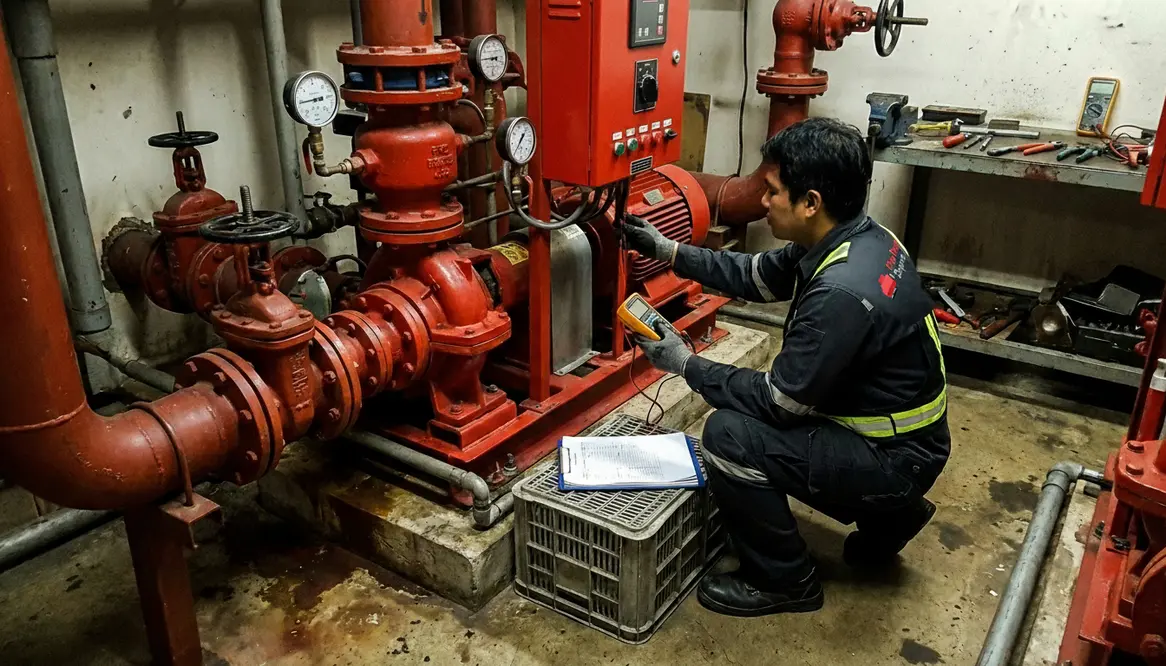
Fire Pump Service Visit Inspection and Testing Guide
I have walked into more mechanical rooms than I can count, and every time I begin a fire pump service visit, I treat it like stepping onto a movie set where the stakes are very real. Somewhere between the hum of motors and the quiet confidence of well engineered systems, there is a story unfolding. And much like a good narrator, I am there to make sure nothing goes off script. Today, I will walk you through what really happens during one of these visits, without the fluff, without the mystery, and with just enough humor to keep things from feeling like a compliance manual.
Setting the Stage for a Fire Pump Service Visit
First, I arrive with purpose. No dramatic slow motion entrance, but close enough. I review the system history, because every pump has one. Previous test results, past repairs, and performance notes all tell me what kind of day this might be.
Then, I perform a visual inspection. I check for leaks, corrosion, loose fittings, and anything that looks like it has had a long week. Meanwhile, I also confirm that controllers, valves, and gauges are accessible and in good shape. If something looks off, it usually is. And yes, sometimes it is as simple as a valve someone forgot to open. It happens more often than people admit.
At this stage, I am not fixing anything yet. I am observing, documenting, and building a clear picture. Because jumping ahead without context is like skipping to the final scene of a movie and pretending you understand the plot.
Why the first impressions matter
Those opening minutes of a fire pump service visit set the tone. A clean, organized room with clear access and updated tags usually hints at a system that has been cared for. A cluttered space with dust on the gauges and mystery stains under valves tells me I am in for a more interesting day than I probably wanted.
The goal is simple: understand the personality of the system before asking it to perform. That way, when I start testing, the results make sense instead of feeling like random numbers on a page.
How Do I Test a Fire Pump System Properly?
I get this question a lot, and the answer is straightforward. I test it like it matters, because it does.
I begin by running the pump through a full operational test. This includes churn, rated, and peak flow conditions. Each phase tells me something different about performance. Churn shows stability. Rated flow confirms design expectations. Peak flow reveals how the system behaves under stress.
While the pump runs, I monitor pressure, flow rates, vibration, and motor performance. Additionally, I listen. A pump speaks in subtle ways. A strange vibration or unusual sound can signal issues long before a gauge does.
And yes, standing next to a roaring pump during peak flow feels a bit like being in an action movie. The difference is, this is not special effects. This is the real deal, and I take it seriously.
If you want a deeper breakdown of testing requirements and schedules, resources like the fire pump testing overview at Kord Fire Protection and technical references such as firepumps.org can help translate standards into practical steps for your own site.
Inside the System Check: Components That Matter
Now, let us break things down a bit further. A proper inspection during a fire pump service visit covers more than just the pump itself.
Mechanical focus
- Inspect pump casing and seals
- Check alignment between pump and motor
- Evaluate bearings and lubrication
- Confirm coupling integrity
Electrical and control focus
- Test controller functionality
- Verify automatic start sequences
- Inspect wiring and connections
- Check alarm and signal outputs
By splitting attention between mechanical and electrical components, I ensure nothing slips through the cracks. Because if one side fails, the whole system feels it.
Performance Validation and Real World Readiness
Once testing is complete, I move into validation. This is where numbers meet expectations. I compare the results against manufacturer standards and system design criteria.
If performance falls short, I do not shrug and move on. Instead, I identify the cause. It could be wear, blockage, or even system changes that were never documented. Large commercial and industrial facilities evolve over time, and sometimes the fire protection system gets left behind.
At this point, I also ensure that everything complies with applicable standards. Because compliance is not just paperwork. It is the difference between a system that works on paper and one that works when it counts.
Translating test results into real decisions
A good fire pump service visit does not stop at “pass” or “fail.” It turns test curves, pressure readings, and controller logs into clear recommendations: what to fix now, what to watch, and what to budget for before it becomes urgent.
Documentation That Actually Means Something
After all the testing and inspection, I document everything clearly. Not vague notes, not rushed summaries, but precise records that tell the full story.
I include performance data, observed issues, and recommended actions. Then, I make sure the facility team understands what it all means. Because a report no one understands is about as useful as a smoke detector with no batteries.
Clear documentation helps facility managers plan maintenance, avoid surprises, and keep systems reliable. And in large scale properties, that level of clarity is not optional. It is essential.
Turning reports into roadmaps
A strong report from a fire pump service visit should read like a roadmap for the next year: what needs attention first, what can wait, and how to phase upgrades so budget, downtime, and risk all stay manageable.
Common Surprises I Encounter
Even with the best maintained systems, surprises happen. However, some show up more often than others.
- Closed valves that should be open
- Controllers set incorrectly after previous work
- Gradual performance loss due to unnoticed wear
- System modifications that were never tested properly
Each one tells a story. And while none of them are ideal, catching them during a scheduled inspection is far better than discovering them during an emergency.
Patterns that show up again and again
The longer you perform inspections, the clearer the patterns become. The facilities that treat every fire pump service visit as a chance to learn and correct trends usually avoid emergencies. The ones that treat it like a box to check are the ones that feature in the horror stories people tell at training sessions.
FAQ: Quick Answers You Can Use
What is included in a fire pump inspection?
A full inspection includes visual checks, operational testing, component evaluation, and performance validation.
How long does a service visit take?
Most visits take a few hours, depending on system size and complexity.
Why is flow testing important?
Flow testing confirms the pump can deliver the required pressure and volume under real conditions.
How often should pumps be serviced?
Commercial and industrial systems typically require regular weekly, monthly, and annual testing.
What happens if issues are found?
I document them and recommend corrective actions to restore full performance.
Keep Your System Ready When It Matters Most
At the end of the day, a fire pump service visit is not just a checklist. It is a commitment to readiness. I make sure every component performs, every test tells the truth, and every system stands ready for the moment it is needed most. If your facility depends on reliability, now is the time to schedule a professional inspection and keep your fire protection system operating without compromise.
Treat each fire pump service visit as an opportunity to tighten up the story your system is telling: fewer unknowns, fewer surprises, and far fewer plot twists when alarms sound for real.