Fire Pump Solutions for Logistics Warehouse Safety
I have spent years around large scale facilities, and if there is one question I hear more than most, it is this: How to protect logistics operations from fire risk without slowing down the pace of business. Warehouses move fast. Forklifts glide like dancers, inventory stacks like a game of Tetris, and deadlines never blink. However, fire does not care about your shipping schedule. So today, I will walk you through fire pump solutions that keep logistics warehouses protected, compliant, and quietly resilient in the background.
Why Fire Pumps Matter in High Velocity Warehouses
First, let me set the stage. Logistics warehouses are not your average buildings. They are vast, packed tight, and often filled with combustible goods. Therefore, when a fire starts, it spreads quickly and aggressively.
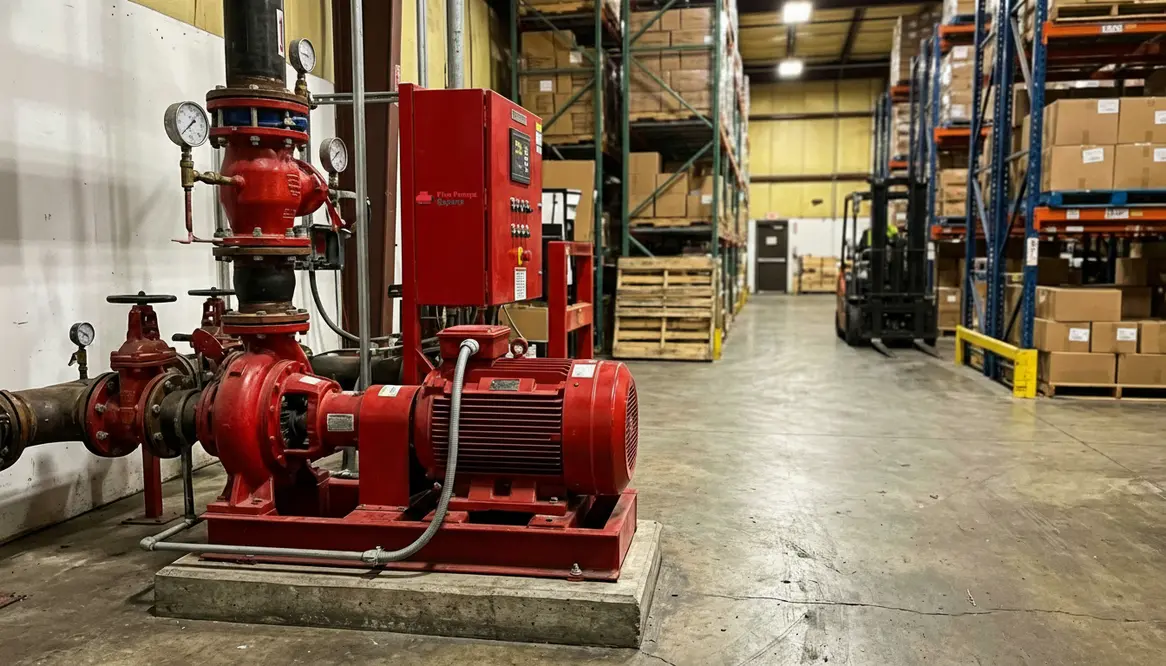
Fire pumps step in as the backbone of your fire protection system. They ensure water reaches every sprinkler head with enough pressure to actually do its job. Without them, your system is like a superhero without powers. Impressive suit, no results.
Moreover, modern warehouses often rely on high pile storage. This increases fire load dramatically. As a result, standard municipal water pressure is rarely enough. That is where industrial grade fire pump systems become essential.
How to protect logistics operations from fire risk with the right system design
I always tell clients that design is where protection begins. You cannot fix a weak system with good intentions later.
To protect logistics operations from fire risk effectively, I focus on aligning three key elements. First, hazard classification. Second, storage configuration. Third, water demand.
For example, warehouses storing plastics or flammable goods require higher flow rates. Meanwhile, automated storage systems may need more precise sprinkler coverage. Therefore, I design fire pump systems that match real world conditions, not just code minimums.
Additionally, redundancy plays a quiet but critical role. A backup pump or dual power source ensures that if one component fails, the system keeps running. Because in fire protection, failure is not a learning opportunity. It is a headline.
Design choices that actually move the needle
When working through How to protect logistics operations from fire risk at the design stage, I lean heavily on accurate hydraulic calculations, realistic worst case scenarios, and a clear understanding of how your warehouse operates at 3 p.m. on a peak shipping day, not just during a quiet walkthrough.
What type of fire pump is best for large logistics facilities
If you are asking this, you are already thinking like a pro.
In most logistics warehouses, I lean toward electric fire pumps for reliability and consistency. However, diesel fire pumps serve as a strong backup, especially in areas where power stability is questionable. Think of diesel pumps as the rugged off road vehicles of fire protection. Not flashy, but they get the job done when conditions turn rough.
Here is how I typically frame the options:
Electric Fire Pumps
Reliable, lower maintenance, and ideal for facilities with a stable power infrastructure. They integrate cleanly with automation, monitoring, and building management systems, which helps when you are mapping out How to protect logistics operations from fire risk over the long term.
Diesel Fire Pumps
Independent operation and excellent for backup, particularly where grid reliability is sketchy. They need more maintenance, fuel management, and ventilation planning, but they bring a rugged resilience that pure electric systems cannot match during extended outages.
Vertical Turbine Pumps
Best for facilities drawing water from tanks, reservoirs, or underground sources. They shine where space is limited at ground level but water supply lives below it, such as deep wells or large containment tanks.
Ultimately, the right choice depends on your facility layout and risk profile. There is no one size fits all solution, despite what a sales brochure might suggest with suspicious enthusiasm.
Common gaps I see in warehouse fire protection systems
Now, let me be candid. Even well funded logistics facilities make avoidable mistakes.
One common issue is undersized pumps. On paper, everything looks compliant. In reality, the system struggles to deliver adequate pressure during peak demand. Consequently, sprinkler performance drops when it matters most.
Another gap is poor maintenance. Fire pumps are like gym memberships. They only work if you actually use them properly. Regular testing ensures the system performs under real conditions, not just in theory.
Also, I often see mismatched components. A high capacity pump paired with outdated piping or valves creates bottlenecks. Therefore, I always emphasize system harmony over individual upgrades.
Gaps that directly undermine protection
When people ask How to protect logistics operations from fire risk but then skip annual flow testing, valve inspections, or controller checks, what they really protect is a false sense of security. The system has to be battle ready, not just paperwork ready.
How to protect logistics operations from fire risk through smart monitoring
Technology has changed the game, and thankfully, it is not just for streaming services and arguing with smart speakers.
Today, advanced monitoring systems allow me to track pump performance in real time. I can detect pressure drops, flow inconsistencies, and mechanical issues before they become failures.
In addition, integrating fire pump systems with building management platforms gives facility managers better visibility. This means faster response times and fewer surprises.
More importantly, data driven insights help refine long term fire protection strategies. Over time, this reduces risk while improving operational continuity.
From alarms to analytics
Smart monitoring shifts the question from “Is the pump on?” to “Is the entire system performing exactly as designed under real operating conditions?” That is the level of clarity you want when you are serious about How to protect logistics operations from fire risk across many locations and changing inventory profiles.
Balancing compliance and operational efficiency
Let us be honest. Compliance can feel like a moving target. Codes evolve, standards tighten, and inspections never seem to arrive on a convenient day.
However, I approach compliance as a strategic advantage rather than a burden. A well designed fire pump system not only meets regulations but also supports uninterrupted operations.
Safety and risk reduction
Improved safety for personnel
Reduced downtime during incidents
Stronger insurance positioning
Long term asset protection
Performance and reputation
Consistent water pressure delivery
Reliable emergency response
Lower risk of system failure
Enhanced facility reputation
When these elements align, your warehouse runs smoother, safer, and with far fewer unpleasant surprises. Pair that with a clear strategy for How to protect logistics operations from fire risk, and your fire pump setup becomes a competitive advantage instead of a line item you only remember during the next inspection.
FAQ Fire Pump Solutions for Logistics Warehouses
What is the main role of a fire pump in a warehouse
It boosts water pressure to ensure sprinklers can control or extinguish fires effectively.
How often should fire pumps be tested
Weekly visual checks and monthly performance tests are standard for commercial systems.
Can one fire pump serve a large warehouse
Yes, but only if it is properly sized and designed for the facility’s fire load and layout.
Do logistics warehouses need backup fire pumps
In most cases, yes. Redundancy improves reliability and ensures continuous protection.
What causes fire pump failure
Common causes include poor maintenance, power issues, and incorrect system design.
Conclusion
Protecting a logistics warehouse is not about checking boxes. It is about building a system that stands ready when everything else goes wrong. If you are serious about safeguarding your facility, I encourage you to invest in a fire pump solution designed for real world demands. Work with experts who understand large scale operations, and take action before risk turns into reality. Because in this business, preparation is everything.