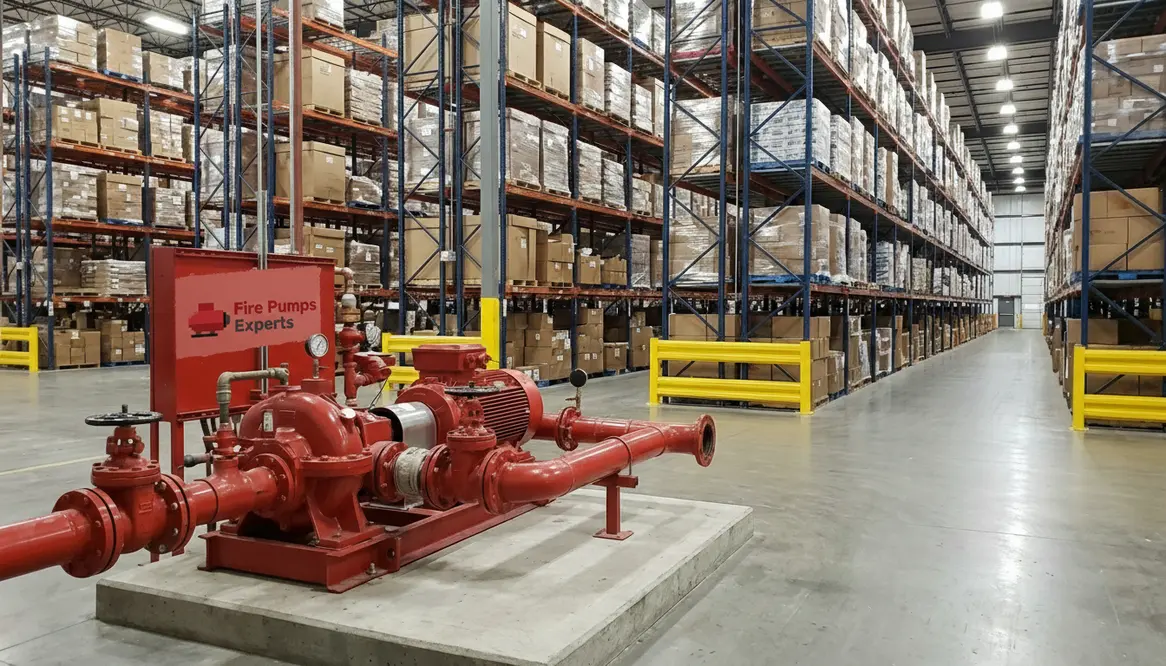
Fire Pump Systems for 3PL Fire Protection
I have spent enough time inside large distribution centers to know one thing: when things go wrong, they go big. In the world of Fire protection for outsourced logistics operations, especially in 3PL facilities, there is no room for guesswork. These buildings move goods at high speed, stack inventory sky high, and rely on constant motion. So when a fire risk enters the picture, it is not a small problem. It is a full scale event waiting to happen. That is where fire pump systems quietly step in, like the unsung hero who never asks for applause… but absolutely deserves it.
What makes fire pump systems essential in 3PL facilities?
I will keep this simple. Water pressure alone often cannot meet the demands of large scale warehouses. These buildings stretch across hundreds of thousands of square feet. In addition, they feature high rack storage and dense commodity loads. Because of this, sprinkler systems need a serious boost. That is exactly what a fire pump delivers.
Think of it like this. If your sprinkler system is the body, the fire pump is the heartbeat. Without it, everything slows down at the worst possible moment. And unlike your morning coffee, you cannot just skip it and hope for the best.
Moreover, 3PL operations constantly change inventory types. One month it is paper goods, the next it is plastics or electronics. Each brings a different fire load. So, a properly designed pump system ensures consistent performance regardless of what is sitting on those shelves. Fire protection for outsourced logistics operations must allow for that kind of constant change without missing a beat.
Designing fire pump systems for outsourced logistics operations
When I approach system design, I focus on precision. Every facility has its own rhythm, and the fire pump must match it. Fire protection for outsourced logistics operations is not about copying and pasting a standard setup. Instead, it requires a tailored approach that accounts for storage height, commodity classification, and water supply conditions.
First, I evaluate the water source. Municipal supply might work, but often it falls short. Therefore, on site water storage paired with a diesel or electric fire pump becomes necessary. Diesel pumps bring reliability during power outages, while electric pumps offer efficiency and lower maintenance. Choosing between them is less about preference and more about risk tolerance.
Next, I consider system demand. High piled storage demands higher flow rates and pressure. Consequently, I size the pump to meet worst case scenarios, not average conditions. Because when it comes to fire protection, average is not good enough. The entire strategy for Fire protection for outsourced logistics operations has to be built around worst day performance, not best day convenience.
Key components that keep everything running smoothly
Now let us break it down a bit. A fire pump system is not just one piece of equipment. It is a coordinated team, and each part has a job to do.
Column A
- Fire pump unit: The main driver of water flow and pressure
- Controller: The brain that starts and monitors the pump
- Water supply: Tanks or municipal connections feeding the system
Column B
- Jockey pump: Maintains system pressure and prevents false starts
- Relief valves: Protect against over pressurization
- Test headers: Allow routine performance verification
Each component plays its part. However, the magic happens when they work together seamlessly. If one fails, the whole system can stumble. And in a 3PL facility, that stumble can cost millions. No pressure, right?
How do I maintain fire pump reliability in large logistics hubs?
I treat maintenance like a ritual. Not glamorous, but absolutely necessary. Weekly churn tests, monthly inspections, and annual flow testing all serve one purpose: confidence. Because when a fire starts, there is no time to troubleshoot.
Additionally, I pay close attention to data. Modern systems provide performance metrics that reveal early warning signs. A slight drop in pressure or an unusual vibration can signal trouble ahead. So, instead of reacting, I stay ahead of the curve.
And yes, documentation matters. Inspectors love it, insurance companies demand it, and frankly, it keeps everyone honest. Skipping maintenance is like ignoring a check engine light. It never ends well, and it usually costs more in the long run.
Fire protection for outsourced logistics operations at scale
Scaling fire protection is where things get interesting. 3PL providers expand quickly. New clients arrive, inventory shifts, and facility layouts evolve. Therefore, fire pump systems must be flexible enough to adapt without compromising performance.
I often recommend designing with future capacity in mind. Installing a slightly larger pump or leaving room for system upgrades can save major headaches later. Because tearing out and replacing equipment mid operation is about as fun as rebooting your computer during a deadline. It is painful and always poorly timed.
Furthermore, integration with building management systems adds another layer of control. Real time monitoring allows facility managers to respond faster and make informed decisions. In a high stakes environment, that visibility is invaluable. The long game of Fire protection for outsourced logistics operations is about tying pumps, sprinklers, alarms, and data together in a way that actually supports daily business, not just code compliance.
Common pitfalls I see in 3PL fire pump setups
Over the years, I have seen patterns. Some mistakes repeat themselves, and they are worth calling out.
- Undersized pumps that cannot meet peak demand
- Poorly maintained equipment that fails during testing
- Ignoring changes in stored commodities
- Inadequate water supply planning
Each of these issues can undermine an otherwise solid system. However, they are avoidable with proper planning and ongoing attention. It is not rocket science, but it does require discipline. And maybe a little less optimism and a little more realism. When Fire protection for outsourced logistics operations is treated as a living system instead of a one-time project, these pitfalls are a lot easier to avoid.
FAQ: Fire pump systems in 3PL facilities
Final thoughts and next steps
Fire pump systems are not just equipment. They are a commitment to safety, continuity, and smart risk management. If you operate a 3PL facility, now is the time to evaluate your setup, plan for growth, and ensure your system can handle whatever comes next. Connect with experienced professionals who understand large scale operations and can design solutions that truly perform when it matters most. For deeper technical guidance on pump selection, standards, and layouts, resources such as https://firepumps.org can help frame the conversations you have with your design and risk teams.