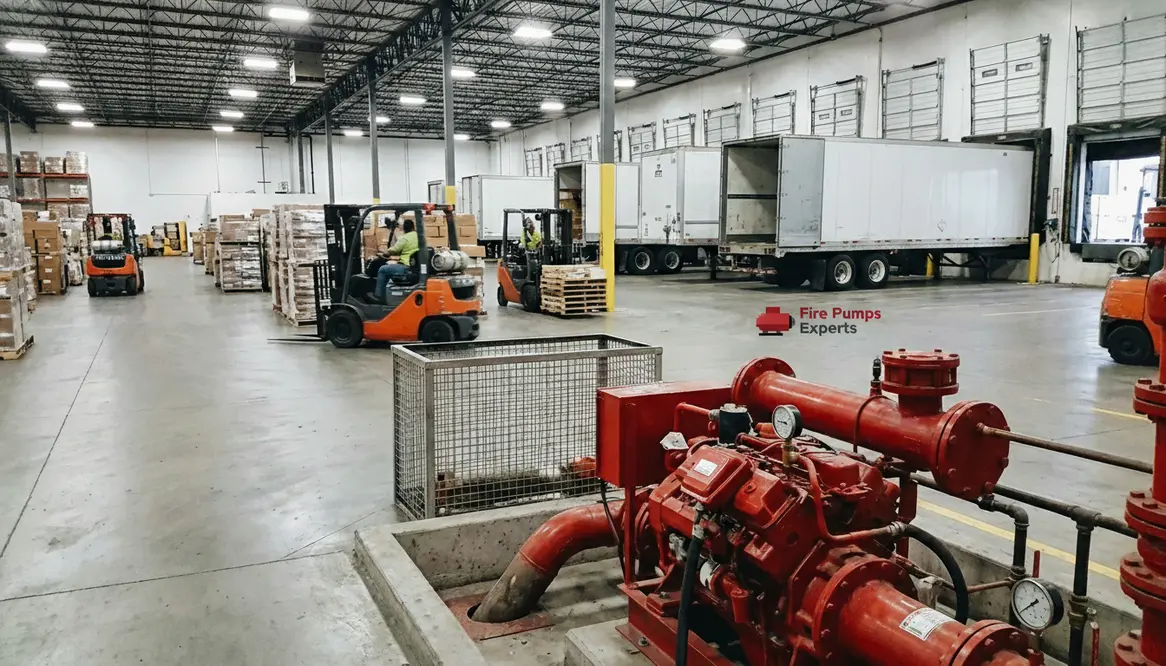
Fire Pump Systems for Cross Dock Facilities
I have walked through more loading docks than I can count, and I can tell you this much: nothing moves faster than a cross dock facility on a tight schedule. Pallets fly, trucks rotate, and somewhere in that controlled chaos, risk quietly tags along for the ride. Fire safety in fast-turnover freight operations is not a luxury. It is a system that must keep up with the pace, not trail behind it. And that is where the right fire pump solution earns its keep, calmly, reliably, like the bass line in a good song you almost forget is there until it stops.
Why cross dock facilities demand specialized fire pump systems
I have seen traditional fire protection setups struggle in these environments. Cross dock facilities are not static warehouses. They breathe, they shift, and they rarely slow down. Because of that, fire pumps must deliver consistent pressure even when water demand spikes across multiple zones at once.
Additionally, large open bays and constant vehicle movement create airflow patterns that can accelerate fire spread. So, I design systems that respond quickly and maintain steady flow without hesitation. Think of it like trying to keep up with a freeway at rush hour. You do not bring a bicycle to that job.
Moreover, redundancy matters. If one pump fails, another must step in instantly. In my experience, facilities that invest in layered protection sleep better at night. And yes, their insurance providers tend to smile a bit more too, especially when Fire safety in fast-turnover freight operations is treated as a strategic priority instead of a checkbox.
What makes cross dock fire risk different?
Fast truck turns, stacked pallets, mixed commodities, and constant airflow create a setting where a small ignition can escalate quickly. The fire pump system has to anticipate that tempo and maintain stable pressure while multiple suppression zones engage at once.
Where does the fire pump fit in?
It is the anchor that stabilizes the entire protection strategy. Sprinklers, hydrants, and hose stations rely on it to deliver pressure on demand. When designed correctly, it quietly turns Fire safety in fast-turnover freight operations into an embedded part of daily logistics instead of an afterthought.
How do I size a fire pump for high velocity freight hubs?
I start with demand, not guesswork. Flow rate and pressure requirements come from hazard classification, building size, and sprinkler design. However, cross dock operations add a twist. The system must handle simultaneous activation across wide areas.
So I calculate peak demand scenarios, not average ones. Then I add a margin because reality has a habit of exceeding expectations. After that, I align the pump curve with the system curve to ensure performance stays stable under pressure. Literally.
Furthermore, I consider water supply limitations. Municipal systems are not always as reliable as we would like. When that happens, I integrate storage tanks or booster configurations. It is a bit like bringing your own backup band when the venue sound system looks suspicious.
Balancing capacity, redundancy, and budget
Cross dock operators live by efficiency metrics, so every capital investment gets scrutinized. The trick is to size pumps and tanks to satisfy code, insurer expectations, and operational risk without building a gold-plated monument. Done right, Fire safety in fast-turnover freight operations becomes a competitive advantage rather than an overhead burden.
Fire safety in fast-turnover freight operations and system reliability
Reliability is where good systems become great ones. In these facilities, downtime is not just inconvenient. It is expensive. Therefore, I prioritize fire pumps that can start instantly and run continuously without fluctuation.
Electric pumps work well when power is stable. However, I often recommend diesel driven pumps as a backup. Power outages do not send calendar invites, and they rarely arrive at a convenient time.
In addition, I incorporate automated testing and monitoring. Real time alerts allow facility managers to catch issues before they become problems. Because if a fire pump fails during an emergency, that is not a plot twist anyone wants to experience.
Key design priorities I follow:
- Consistent pressure across multiple dock zones
- Redundant pump configurations
- Fast startup response
- Integration with building management systems
Common mistakes I avoid:
- Undersizing pumps for peak demand
- Ignoring water supply variability
- Skipping routine testing protocols
- Overcomplicating control systems
Smart controls and monitoring make all the difference
I like systems that think ahead. Modern fire pump controllers can monitor pressure changes, detect faults, and even predict maintenance needs. That is not science fiction. That is just good engineering finally catching up with reality.
Because cross dock facilities operate around the clock, I integrate remote monitoring whenever possible. Facility teams can check system health from anywhere, which is especially useful when operations span multiple locations.
Also, data matters. Over time, performance trends reveal weak points. Maybe a valve responds slower than expected. Maybe pressure dips during peak loading hours. With the right insights, I can fine tune the system before small issues grow into big ones.
Turning data into practical decisions
When trends show recurring low pressure at specific times, that is a hint to revisit zoning, sequencing, or even pump selection. This is where Fire safety in fast-turnover freight operations becomes an ongoing conversation rather than a one-time design submittal.
Installation strategies that respect operational flow
I never design in a vacuum. Cross dock facilities cannot afford long shutdowns, so installation must work around ongoing operations. That means phased implementation and careful coordination with facility managers.
For example, I often stage equipment in sections to avoid disrupting key loading zones. It is a bit like renovating a kitchen while still cooking dinner every night. Tricky, but absolutely doable with the right plan.
Additionally, I place fire pumps and related equipment where they remain accessible but protected. Heavy traffic areas and critical infrastructure do not always mix well. A forklift operator should not have to play a real life version of bumper cars with a fire pump skid.
Designing for inspections, not just installation
Inspectors, maintenance techs, and operators all need clear access to valves, controllers, test headers, and gauges. When that is planned early, Fire safety in fast-turnover freight operations stops getting in the way of daily work and starts supporting it.
Conclusion: Build a system that works as hard as your facility
If your cross dock facility runs at full speed, your fire protection system should too. I design fire pump solutions that match that pace, delivering reliability, strength, and peace of mind. When you are ready to upgrade or build new, work with experts who understand these environments inside and out. Let us create a system that performs when it matters most and keeps your operation moving without interruption.
If you want to explore design standards, case studies, and component options in more depth, you can start with resources at https://firepumps.org and then tailor those principles to the specific rhythms of your own facility.