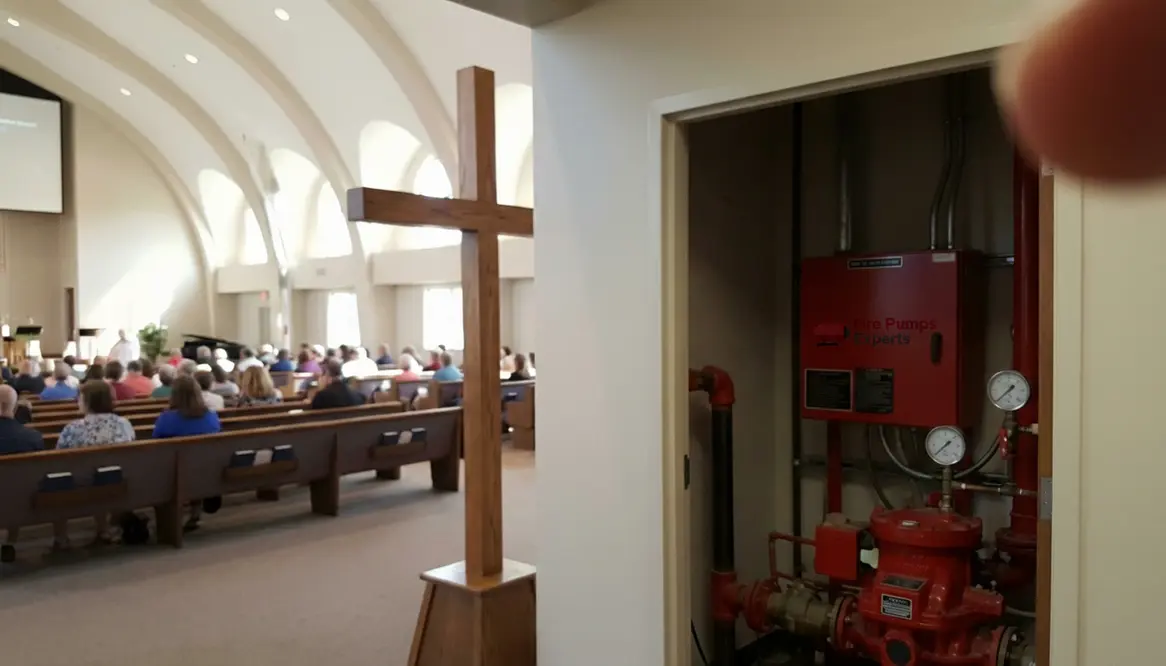
Fire Pump Systems for Faith Based Assembly Halls
I have spent enough time walking through large assembly halls to know one thing for sure. When people gather, risk gathers with them. That is why Fire Pump Systems for Faith-Based Assembly Halls are not just a technical add on. They are a quiet guardian, standing ready behind the walls while sermons echo and choirs rise. And yes, while nobody shows up on Sunday thinking about fire protection, I certainly do. Someone has to be the calm voice in the background, making sure the building stays as safe as it is inspiring.
Why large gathering spaces demand serious fire protection
First, let me paint the picture. You have high ceilings, wide seating areas, complex electrical systems, and often a full calendar of events. Add hundreds or even thousands of occupants, and suddenly, the stakes rise fast.
Because of that, fire protection in these buildings is not optional or basic. It must be engineered for scale. A standard system simply cannot handle the pressure or flow needed in an emergency. That is where specialized fire pump solutions step in.
Moreover, many faith based facilities double as community centers. Weddings, concerts, outreach programs, and sometimes even food services all operate under one roof. Each adds a layer of complexity. And while that is beautiful for community building, it also demands a more robust fire safety backbone.
What makes Fire Pump Systems for Faith-Based Assembly Halls unique
I like to think of these systems as the strong, silent type. They do not show off, but when called upon, they perform without hesitation.
Unlike smaller systems, fire pumps in large assembly halls must deliver consistent water pressure across vast distances. Additionally, they need to activate quickly and maintain flow even when multiple sprinkler zones engage at once.
Here is where things get interesting. These systems are not one size fits all. They must align with building height, occupancy load, and local fire codes. Think of it like tailoring a suit. You would not wear a tuxedo meant for someone else, unless you are auditioning for a comedy sketch.
Furthermore, redundancy plays a major role. Backup power sources, diesel driven pumps, and carefully designed control systems ensure reliability. Because when the moment comes, there is no room for hesitation.
How do I know what fire pump capacity my building needs?
This is the question I hear most often, and honestly, it is the right one to ask.
The answer starts with a full system analysis. Engineers evaluate sprinkler demand, standpipe requirements, and building layout. Then, they calculate the required gallons per minute and pressure levels needed to protect every corner of the facility.
However, it does not stop there. Local codes and insurance standards often push requirements higher. Therefore, I always recommend designing with a margin of safety. It is better to have a system that feels slightly overprepared than one that struggles under pressure.
And yes, there is a bit of math involved. Not the fun kind you see in movies where someone solves everything on a glass board in ten seconds. This is detailed, careful work. The kind that saves lives.
Key components that keep everything running smoothly
Every effective system relies on a few critical parts working in harmony. When one fails, the whole system feels it. So, I pay close attention to each element.
Core equipment
- Pump units sized for high demand
- Controllers that manage activation
- Reliable water supply connections
- Pressure maintenance systems
Support systems
- Backup power sources
- Monitoring and alarm integration
- Regular testing protocols
- Maintenance access design
In addition, integration with building systems matters. Fire alarms, sprinklers, and emergency controls must communicate clearly. Otherwise, you end up with a system that behaves like a group chat where nobody reads the messages.
Planning installation for large commercial faith facilities
Now, let us talk about installation. Because even the best design can fail if execution falls short.
First, I always coordinate with architects and engineers early. This ensures the pump room is accessible, ventilated, and compliant with code. It also prevents those awkward moments when someone realizes the equipment does not fit through the door.
Next, I focus on long term serviceability. These systems require regular inspection and testing. Therefore, clear access and proper layout make all the difference. A well installed system should not feel like a puzzle every time maintenance is needed.
Finally, I consider future growth. Many large religious campuses expand over time. Designing with scalability in mind avoids costly upgrades later. It is like leaving room for seconds at dinner. You may not need it now, but you will be glad it is there.
Common mistakes I see and how to avoid them
Even well intentioned projects can miss the mark. I have seen it happen more times than I would like to admit.
One common issue is underestimating demand. Another is relying on outdated infrastructure. Additionally, some projects treat fire pumps as an afterthought rather than a core system.
To avoid these pitfalls, I always recommend early planning, proper engineering, and ongoing maintenance. It is not glamorous work, but neither is dealing with preventable emergencies.
And if you are wondering, yes, skipping maintenance is the fire protection equivalent of ignoring a check engine light. It never ends well.
Fire Pump Systems for Faith-Based Assembly Halls in context
Across large campuses, Fire Pump Systems for Faith-Based Assembly Halls become the backbone of protection strategy. They support not just worship services, but conferences, classrooms, and community outreach that often stretch buildings to their limits.
Design teams that prioritize Fire Pump Systems for Faith-Based Assembly Halls usually find it easier to expand later, add new buildings, or integrate upgraded sprinkler zones without tearing everything apart. Planning smart at the start saves money and headaches down the road.
If you want to explore design standards and reference material that support Fire Pump Systems for Faith-Based Assembly Halls, a good place to begin is a technical resource library such as https://firepumps.org, alongside your local fire code requirements.
FAQ: fire pump systems in large assembly buildings
Conclusion: protecting what matters most
When I think about large gathering spaces, I do not just see buildings. I see communities, traditions, and moments that matter. That is why investing in the right fire pump solution is not just a technical decision. It is a commitment to safety and continuity. If you are planning or upgrading a commercial scale facility, now is the time to act. Build smarter, protect better, and let your space stand strong for years to come.